How to Close a Folding Table: Quick Steps
Folding tables are a staple in homes, event halls, schools, and offices, prized for their portability and space-saving design. But if you have ever struggled to collapse one, you know the frustration of stuck hinges, jammed locks, or accidentally pinching your fingers. The good news? Closing a folding table does not have to be difficult. With the right steps and awareness of your specific mechanism, you can fold it safely and smoothly every time.
This guide covers how to close a folding table across popular brands like Lifetime and Cosco, including detailed procedures for different locking systems, troubleshooting tips, and best practices for storage and maintenance. Whether you are packing up after a family dinner or breaking down event furniture, this step-by-step resource ensures a fast, safe, and damage-free process.
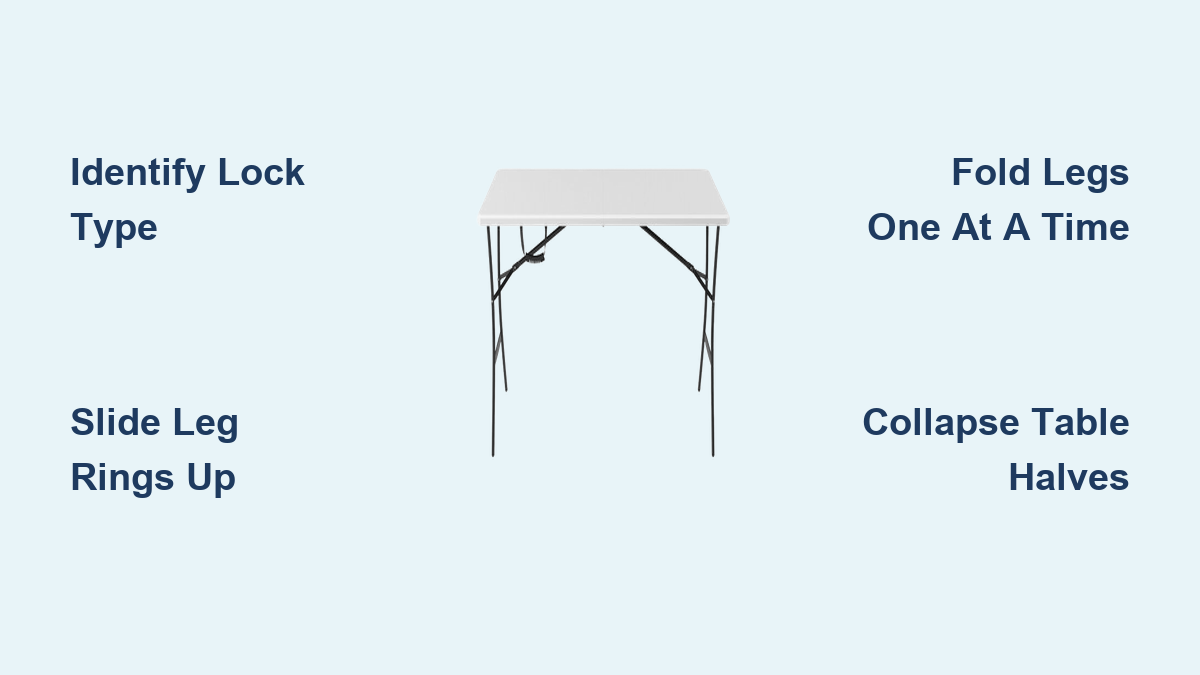
Identify Your Table’s Lock Type

Before attempting to fold, identify the locking mechanism. Using the wrong method can damage hinges or cause injury.
Manual Red Clip System (Lifetime)
Found on many residential Lifetime models, this system uses a bright red tab at the center edge of the frame. The clip must be manually moved to unlock before folding. If ignored, the table will not close, and forcing it may break the hinge.
Auto-Leg Lock Mechanism
Common in commercial-grade tables, this self-locking system automatically releases the central hinge when legs are fully folded. No red clip to adjust. Simply fold the legs, and the table halves will collapse freely.
Side Locking Levers (Cosco)
Cosco tables often use side-mounted levers near the frame ends. These must be pressed inward simultaneously to release tension. Some models also include a central button that requires knee pressure to disengage.
Steel Safety Rings on Legs
These sliding rings sit at the leg hinge knee. When down, they lock the leg open. To fold, slide them up toward the tabletop to release the leg for inward folding.
Prepare the Table for Folding
Proper preparation prevents damage and makes closing easier.
Clear and Clean the Surface
Remove all items from the table. Wipe down the top with a damp cloth to clear crumbs, liquids, or debris that could jam hinges or scratch surfaces during folding.
Choose the Right Surface
Lay the table on a flat, soft surface like carpet or a mat. This protects the tabletop finish and provides stability while you tilt and fold.
Position for Access
Turn the table so the carrying handle faces you. For most models, laying it on its side with the handle up gives the best access to leg locks and hinges.
Ensure Legs Are Fully Extended
Before folding, confirm legs are completely lowered and locked in place. Folding from a partially raised position can misalign the mechanism and cause jamming.
Fold the Legs First
Always fold the legs before collapsing the table in half.
Release Leg Locks
Locate the steel safety rings or sliders on the leg hinges. Slide them upward, away from the hinge joint, to unlock. On some models, this requires lifting the leg slightly to disengage.
Fold One Leg at a Time
Push one leg inward toward the center frame. Use gentle, steady pressure. Do not yank. Listen for a soft click indicating it is securely stowed. Repeat for the other leg on that side, then switch sides.
Pro Tip: Folding both legs at once can create uneven pressure and jam the mechanism. Always work one leg at a time.
Check for Resistance
If a leg will not fold, take these steps:
• Double-check that the lock ring is fully disengaged
• Inspect for debris in the hinge
• Apply light hand pressure directly on the hinge joint to release tension
Unlock the Center Hinge

This step varies by model, so know your type before proceeding.
Disable the Red Clip (Lifetime Manual Models)
On tables with a red locking tab, push the clip to the unlock position. It should move smoothly. If stiff, clean around the mechanism and avoid forcing it.
Confirm Auto-Lock Release (Self-Locking Models)
No manual action is needed. As long as legs are fully folded flat against the underside, the internal pin disengages automatically. If the halves will not close, recheck that legs are completely retracted.
Press Side Levers (Cosco Models)
Press both side levers inward at the same time. Use your thumbs, or if needed, apply knee pressure for even force. You should feel the frame release.
Activate Central Hinge Button (If Present)
Some Cosco and generic models have a button at the center hinge. Press down firmly, often with a knee, to unlock the fold. Keep legs folded first to ensure proper alignment.
Collapse the Table Halves
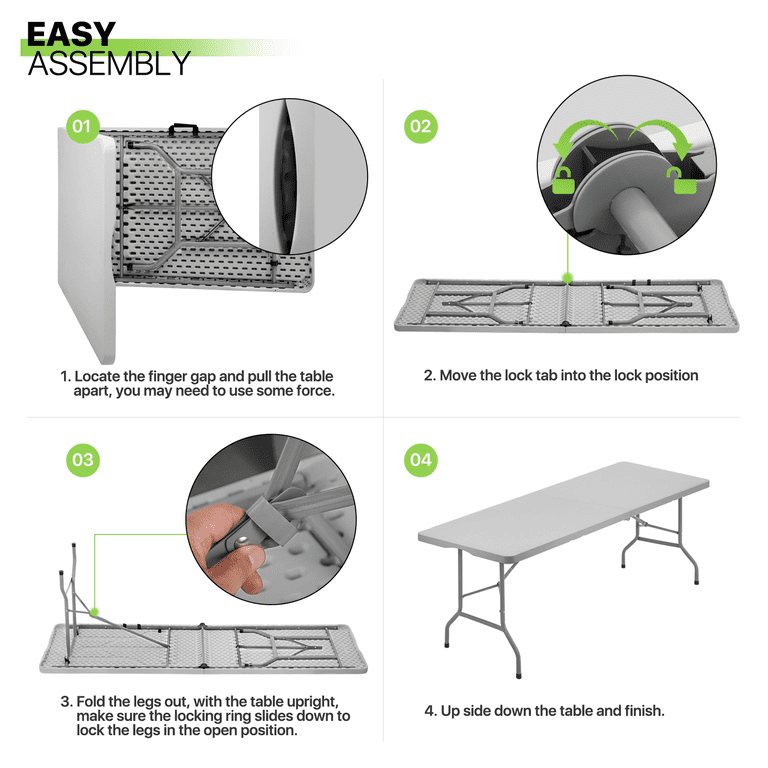
Now fold the table in half like a briefcase.
Grip at Safe Points
Use the molded finger gaps or hand slots along the edge. These indentations keep your fingers clear of the closing hinge, preventing pinched skin.
Apply Even Pressure
Push both halves together with steady, balanced force. Keep hands away from the hinge line. A solid click means the final lock has engaged.
Verify the Lock
After closing, perform these checks:
• Try to pull the halves apart slightly
• Confirm the carrying handle is accessible and on the outside
• Ensure no parts protrude or feel loose
Warning: Never place fingers in the hinge path during the final few inches of closure. This is the most common cause of pinched fingers.
Secure for Storage or Transport
A properly closed table is compact and safe to move.
Engage Final Latch or Strap
Many models have a built-in latch, clip, or Velcro strap. Fasten it to keep the table folded during transport and prevent accidental opening.
Store Flat or Upright
Choose one of these storage methods:
• Flat against a wall: Ideal for protecting the surface and saving floor space
• Upright on end: Saves room in closets or corners. Secure it to prevent tipping
• Stacked vertically: Only if tables are fully locked and aligned. Misalignment stresses bottom units
Avoid: Storing tables at an angle, partially open, or under heavy objects. This can warp hinges and reduce lifespan.
Troubleshoot Common Issues

Even with care, problems can occur. Here is how to fix them fast.
Table Will Not Fold at the Hinge
Cause: Center lock still engaged.
Fix for red clip models: Ensure the tab is fully in unlock position.
Fix for auto-lock: Confirm legs are completely folded flat. Partial retraction blocks release.
Legs Will Not Retract
Cause: Lock ring not disengaged or debris in hinge.
Fix: Slide the steel ring fully up the leg. Clean hinge area with a dry cloth. Apply slight upward lift to the leg while pressing the slider.
Mechanism Feels Jammed
Cause: Forced folding or uneven pressure.
Fix: Return table to fully open position. Fold legs one at a time with gentle, direct pressure. Never twist or yank the frame.
One Side Will Not Fold
Cause: Asymmetric lock release or misaligned leg.
Fix: Check both leg locks on the stiff side. Ensure even hand placement when folding. Wiggle the frame slightly to realign components.
Maintain Your Folding Table
Regular care extends lifespan and ensures smooth operation.
Clean After Every Use
Wipe the tabletop and frame with a damp cloth. Avoid harsh chemicals that degrade HDPE plastic or powder-coated steel.
Inspect Locks and Hinges
Monthly, check these components:
• Steel safety rings for smooth sliding
• Red clips or levers for cracks or stiffness
• Hinges for rust, grit, or wear
Lubricate if Needed
If hinges feel stiff, use a silicone-based lubricant, not oil-based. Apply sparingly to pivot points. Wipe excess to avoid attracting dust.
Note: Check manufacturer guidelines. Some warranties void if improper lubricants are used.
Transport Safely
Avoid damage and injury during moves.
Use Built-In Handles
Grip side handles with both hands. Distribute weight evenly, especially on 6-foot and 8-foot models.
Two-Person Lift for Large Tables
Tables over 6 feet are heavy when closed. Use two people to prevent back strain and drops.
Secure in Vehicles
Place the table flat in your trunk or truck bed. Ensure it is fully locked and will not shift during transit. A sudden bump could cause it to spring open.
Final Checklist: Close Any Folding Table Safely
Use this checklist before storing your table:
• Cleared surface and cleaned tabletop
• Positioned table on soft, flat surface
• Identified lock type (red clip, auto-lock, side levers)
• Slid leg rings up to unlock
• Folded legs inward, one at a time
• Disengaged center lock (manual or confirmed auto-release)
• Folded halves using finger gaps, fingers clear of hinge
• Heard or confirmed final click
• Secured with latch or strap
• Stored flat, upright, or stacked, never angled
Frequently Asked Questions About Closing a Folding Table
Why will my folding table not close?
The most common reason is that the center lock is still engaged. For tables with a red clip, ensure the tab is fully in the unlock position. For self-locking models, make sure legs are completely folded flat, as the auto-release only triggers at full retraction.
How do I fold a Lifetime folding table?
First, slide the steel safety rings up on both leg hinges to release the legs. Fold each leg inward one at a time, listening for a click. Then push the red manual clip to unlock. Finally, grip the finger gaps and push the halves together until you hear the final click.
What causes hinges to stick on folding tables?
Debris in the hinge mechanism, lack of lubrication, or forcing the legs can cause sticking. Clean the hinges regularly and apply silicone lubricant if needed. Always use gentle, steady pressure rather than forcing components.
Can I stack folding tables when they are closed?
Yes, but only when fully locked. Stack them vertically with perfect alignment to avoid stressing the bottom unit. Do not stack too high, as the weight can warp the hinges over time.
How do I close a Cosco folding table?
Start by sliding the leg rings toward the center to retract the legs. Press both side locking levers inward simultaneously, using knee pressure if needed. If there is a central hinge button, press it down. Then push the tabletop halves together and secure with the built-in latch.
Key Takeaways for Closing Your Folding Table
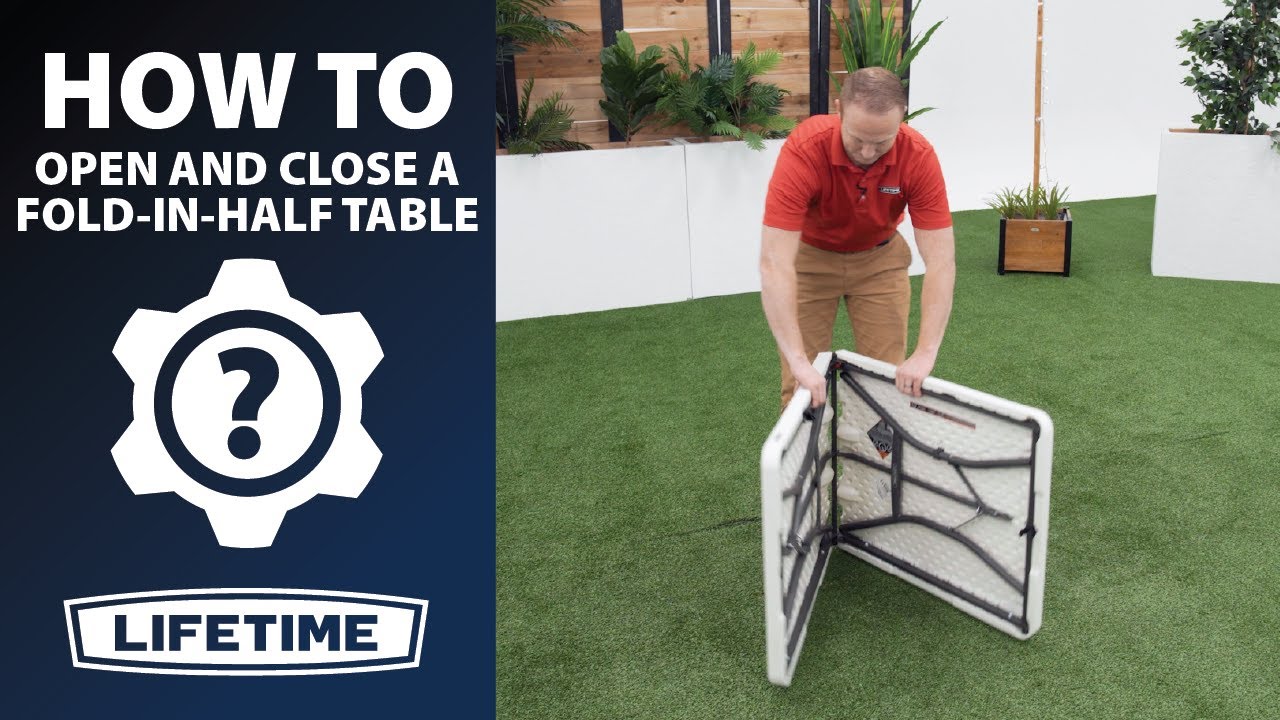
Closing a folding table should take less than a minute when done correctly. The key is identifying your specific locking mechanism, whether it is a manual red clip, auto-leg lock, or side levers. Always fold the legs first, one at a time, before attempting to collapse the table halves. Use the molded finger gaps to grip the table edge and keep your hands clear of the hinge path to prevent pinching.
By following these steps, you protect your investment, avoid injuries, and keep your table working smoothly for years. Whether it is a Lifetime, Cosco, or generic model, the process follows the same core principles: know your mechanism, use steady controlled movements, and verify the final lock before storage. Now you are ready to fold with confidence.