How to Fix Heat Damage on Wood Table
You set down a hot pan, a steaming cup, or a freshly baked dish, and suddenly there it is: a white, cloudy ring marring the surface of your beautiful wood table. It is a common household accident, but the good news is that heat damage on a wood table is often fixable without refinishing. Most of the time, that unsightly mark is not burned wood. It is moisture trapped beneath the finish, caused by heat softening the protective coating and allowing steam to seep in.
The key to success lies in identifying the type of damage and your table’s finish. White or cloudy rings are usually reversible with simple DIY techniques like gentle heat or oil-based treatments. But if the stain is dark brown or black, the wood itself may be scorched, meaning surface fixes will not work and sanding or professional refinishing becomes necessary. This guide walks you through proven, step-by-step solutions so you can confidently repair heat damage and protect your table for years to come.
Identify Heat Damage Type Before Treating
Before you grab tools or household items, determine what kind of damage you are dealing with. The treatment depends entirely on whether the problem is moisture trapped in the finish or actual wood charring.
White Cloudy Stains vs. Dark Scorch Marks
A white or cloudy ring means moisture has penetrated the finish layer. Heat softened the coating, whether lacquer, varnish, or shellac, allowing steam from a hot object to enter. As the finish cooled, it sealed microscopic water droplets inside, scattering light and creating a hazy appearance. The wood underneath is intact, making this type of damage highly fixable.
In contrast, a dark brown or black stain indicates scorching. Intense heat burned through the finish and charred the wood fibers themselves. This is structural damage, not just a surface issue. No home remedy can reverse it. If you see dark discoloration, stop and consider sanding or professional refinishing instead.
Test Your Table Finish for Compatibility
Your table’s finish dictates which repair methods are safe. A spot test in a hidden area prevents accidental damage.
- Shellac: Dissolves quickly with denatured alcohol. Highly vulnerable to heat.
- Lacquer: Softens with lacquer thinner. Moderate heat sensitivity.
- Polyurethane or Varnish: Resists alcohol and thinner. Most heat-resistant of all finishes.
- Oil or Wax Finish: Feels soft. Absolves linseed oil or dissolves with mineral spirits.
Knowing your finish helps you choose a method that will not melt, dull, or strip the surface.
Use Heat to Reverse Moisture Trapping
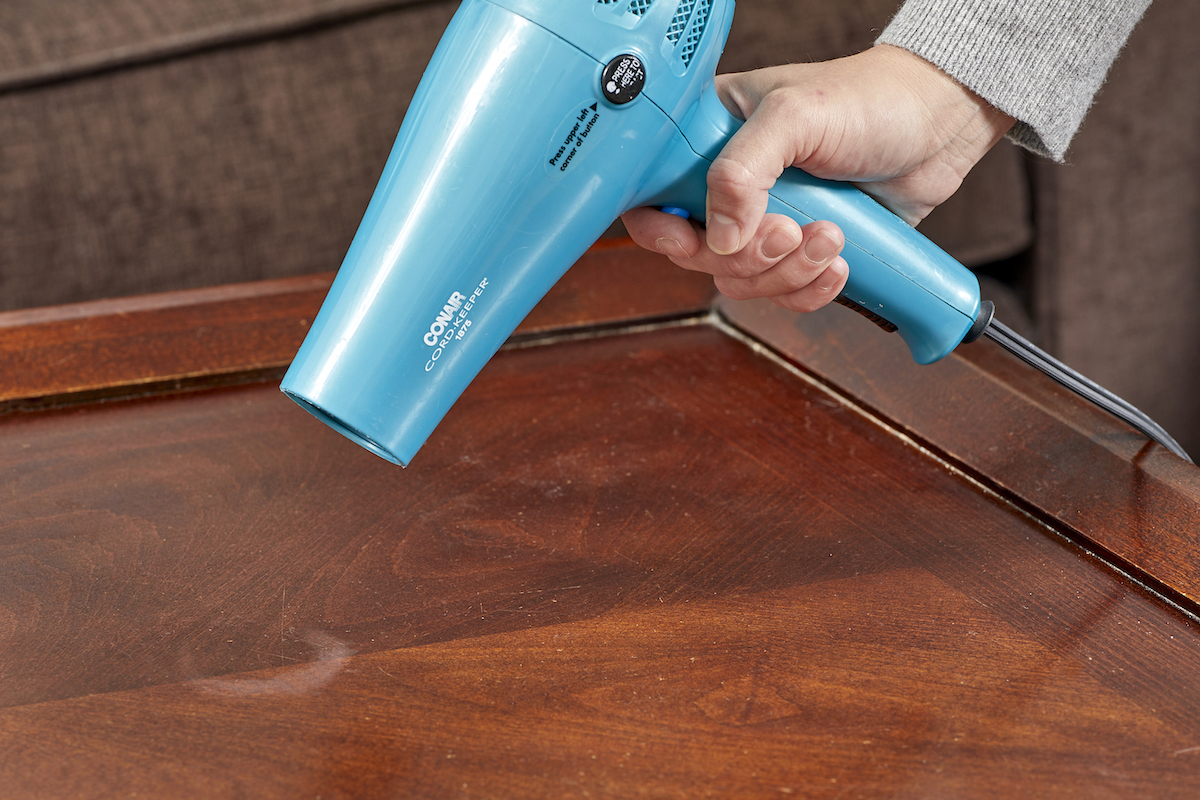
Gentle heat can re-soften the finish and allow trapped moisture to escape. This is often the fastest and most effective approach for white rings on modern finishes.
Apply Low Heat with a Hair Dryer
The hair dryer method is the safest first step for most tables. It works quickly and carries minimal risk when done correctly.
- Set the dryer to low heat. Never use high heat.
- Hold it 2 to 3 inches above the stain.
- Move constantly in a side-to-side motion.
- Continue for 5 to 10 minutes, checking every 30 seconds.
You will often see the cloudiness disappear as moisture evaporates. If the finish starts to feel soft or sticky, stop immediately. Overheating can cause permanent dulling.
Try the Dry Iron and Towel Technique
For stubborn stains on solid wood tables with durable finishes, a dry iron and cotton towel can deliver more focused heat.
- Use a dry iron with steam function turned off. Set to medium-high.
- Fold a clean cotton towel into 2 to 3 layers.
- Place it over the stain.
- Press the iron down for 15 to 30 seconds, then lift to check.
- Repeat in short bursts. Never leave the iron in place.
Never use this method on veneer. Heat can weaken the glue, causing bubbling or delamination. Also avoid if the finish softens during testing.
Combine Heat with Denatured Alcohol
For compatible finishes, adding denatured alcohol to heat speeds up moisture removal.
- Dampen a soft cloth with alcohol. It should be damp, not soaking.
- Apply low heat with a hair dryer over the stain.
- Gently wipe with the damp cloth while heating.
The alcohol evaporates quickly, pulling moisture out with it. Finish by wiping with a dry cloth and buffing lightly.
Apply Oil-Based Home Remedies
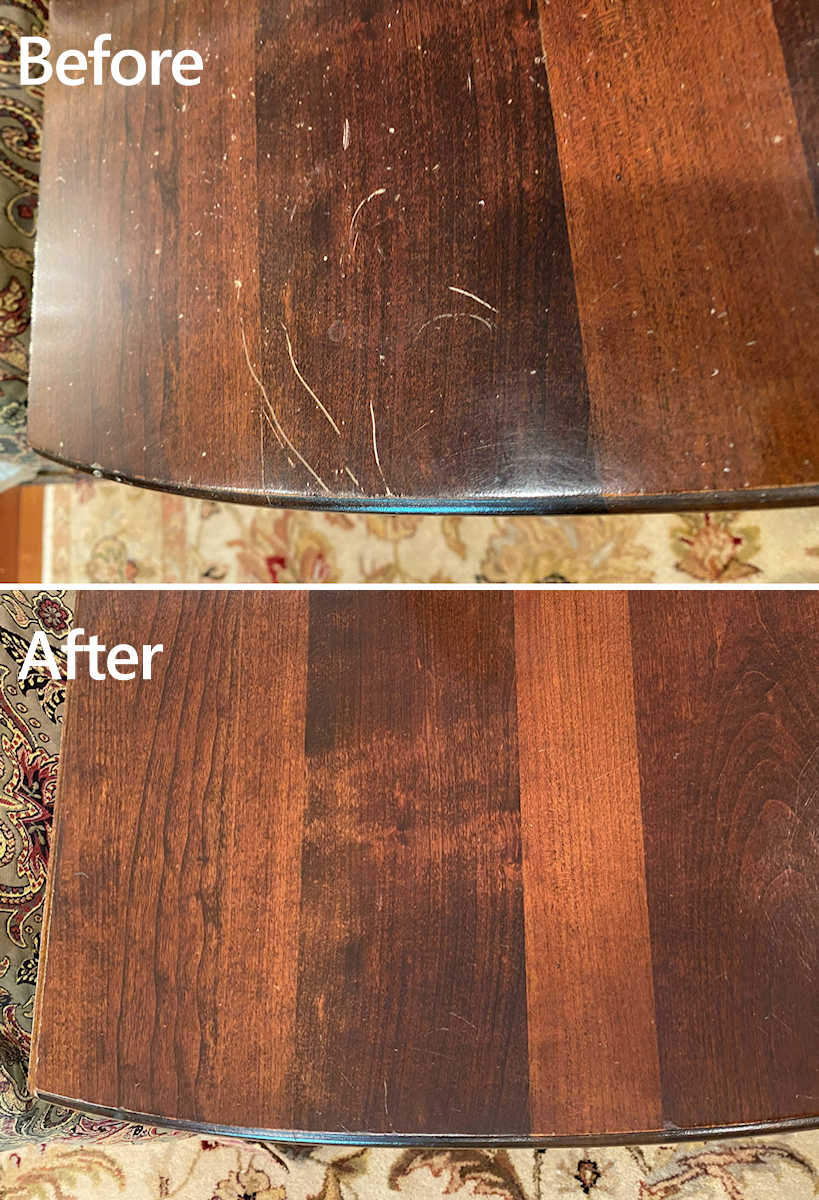
When heat is not an option, like on antiques or delicate finishes, oil-based treatments can displace trapped moisture without thermal stress.
Restore Clarity with Mayonnaise
The mayonnaise method is a trusted, low-risk solution for older or sensitive furniture. Natural oils penetrate the finish and push out moisture.
- Apply a thick layer of regular mayonnaise directly over the stain. Do not use low-fat.
- Cover with plastic wrap to prevent drying.
- Let sit for 2 to 12 hours, or overnight for tough marks.
- Wipe clean with a soft, damp cloth.
- Dry thoroughly and buff with a dry microfiber towel.
While safe, mayonnaise can leave an oily residue or slightly darken the wood if not cleaned well. Avoid using it on scratched or unfinished areas.
Use Olive Oil for Light Stains
Olive oil works similarly but is less potent than mayonnaise.
- Apply a few drops to a soft cloth.
- Rub gently over the stain in circular motions.
- Let sit for several hours or overnight.
- Wipe off excess and buff to a shine.
Best for light, recent marks. Like mayonnaise, it risks residue buildup over time.
Skip Petroleum Jelly
Despite popular claims, petroleum jelly shows minimal effectiveness in tests. It rarely removes cloudiness, even after overnight application. It can also attract dust and leave a greasy film. Skip it in favor of more reliable methods.
Try Mild Abrasive Pastes

When heat and oils fail, a gentle abrasive paste can buff away the top layer of cloudy finish. These methods physically remove the damaged coating without deep sanding.
Make a Baking Soda and Toothpaste Paste
This combination ranks among the most effective DIY solutions, removing up to 98 percent of white stains in overnight tests.
- Mix 2 parts baking soda with 1 part white non-gel toothpaste.
- Stir into a thick, creamy paste.
- Apply a layer about 1/8 inch thick over the stain.
- Let sit overnight, which is 12 to 15 hours.
- Wipe off with a damp cloth.
- Clean residue with a 50/50 vinegar-water solution.
- Dry completely and buff with furniture polish.
Ideal for tables with minor scratches or where heat is too risky. Avoid on high-gloss finishes if you want to preserve maximum shine.
Buff with Baking Soda and Water
For a lighter abrasive option:
- Mix 1 tablespoon baking soda with 1 teaspoon water.
- Dip a microfiber cloth into the paste.
- Rub gently with the grain for 10 to 15 minutes.
- Wipe clean and dry.
Removes about 90 percent of superficial clouding but may require repeat applications for deeper marks.
Use #0000 Steel Wool with Caution
Super fine steel wool can erase stubborn white rings when used properly.
- Apply a few drops of mineral spirits or furniture polish as a lubricant.
- Rub very lightly with the grain using minimal pressure.
- Wipe clean after 30 to 60 seconds.
- Buff with a soft cloth to restore luster.
Never use coarser grades. They will scratch the surface. Avoid on veneer or antiques unless you are experienced.
Avoid High-Risk DIY Methods
Some commonly suggested hacks do more harm than good. Steer clear of these to protect your table.
- Magic Erasers: These are melamine foam, essentially fine sandpaper. They can remove the finish unevenly, leaving a dull, flat spot that stands out. Even light pressure may abrade glossy surfaces beyond repair.
- Direct Water Application: Adding water to a heat stain only makes it worse. More moisture increases cloudiness and can cause blotching or warping, especially on unfinished or porous wood.
- Baking Soda Alone: Dry baking soda forms a hard crust when applied. Without a binding agent like toothpaste or oil, it does not adhere well and offers little cleaning power. It can also scratch if rubbed aggressively.
Handle Special Cases Carefully

Certain tables require extra caution due to construction or age. Using standard methods on these surfaces can lead to irreversible damage.
Protect Wood Veneer Surfaces
Veneer is a thin layer of real wood glued to a composite base. It is especially vulnerable to heat and abrasion.
- Heat risk: Irons or prolonged heat can melt the adhesive, causing bubbling.
- Abrasion risk: Steel wool or pastes can sand through the veneer.
- Best approach: Start with mayonnaise. If that fails, consult a professional. Avoid heat and abrasion entirely.
Preserve Antique Finishes
Older tables often have shellac or brittle lacquer finishes that degrade with age.
- Avoid heat and abrasives. They can crack or remove the finish.
- Mayonnaise is the safest option, as it requires no rubbing or thermal stress.
- Never use alcohol. It dissolves shellac on contact.
Address Dark Scorch Marks on Wood
If the stain is dark brown or black, the wood is burned. Surface treatments will not work.
- For minor scorching, try a matching gel stain applied with an artist’s brush. Feather the edges and seal with wipe-on polyurethane.
- For deep burns, sand down to bare wood and refinish the entire panel or table surface.
Prevent Future Heat Damage
Once your table is restored, protect it from repeat incidents with simple, proactive habits.
Use Trivets and Coasters
- Trivets are essential for hot pans, dishes, and skillets. Choose silicone or cork-bottomed styles that resist heat up to 440 degrees Fahrenheit or higher.
- Coasters prevent not only heat rings but also condensation from cold drinks.
- Keep them visible on the table or nearby. Out of sight often means out of use.
Apply Protective Finishes
- Furniture polish adds a temporary moisture barrier. Choose silicone-free options.
- Paste wax nourishes wood and improves water resistance, especially on oil-finished tables.
- High-quality factory finishes offer the best long-term protection.
Act Fast After Heat Exposure
If a hot item is placed on the table, remove it immediately and let the spot cool. Wait 24 hours before treating. This allows the finish to stabilize. Then diagnose the mark, test any method in a hidden area, and start gentle before moving to abrasives.
Frequently Asked Questions About Fixing Heat Damage on Wood Tables
Does heat damage on a wood table always mean the wood is burned?
No. Most heat damage appears as a white or cloudy ring, which means moisture is trapped in the finish layer. The wood underneath is intact and the damage is reversible. Dark brown or black marks indicate actual scorching that requires sanding or refinishing.
Can I use a steam iron to fix heat damage on my dining table?
Only if your table is solid wood with a durable finish like polyurethane. Never use steam on veneer, as heat can melt the glue and cause bubbling. Set the iron to dry, not steam, and always place a cotton towel between the iron and the table surface.
How long does it take to fix heat damage with the mayonnaise method?
The mayonnaise method requires 2 to 12 hours, depending on the severity of the stain. For tough marks, leave it overnight. This is the safest method for antiques and delicate finishes, but it requires patience.
What is the fastest way to remove a white heat ring from a wood table?
The hair dryer method offers the quickest fix. Hold a low-heat dryer 2 to 3 inches above the stain for 5 to 10 minutes. Most white rings disappear as the moisture evaporates. This works best on modern varnished finishes.
Can I fix heat damage on a wood table without sanding?
Yes. Most white heat stains are reversible without sanding. Try heat methods first, then move to oil-based treatments like mayonnaise, and finally mild abrasives like baking soda and toothpaste paste. Only dark scorch marks require sanding.
Is it safe to use Magic Erasers on wood furniture?
No. Magic Erasers are melamine foam that acts like fine sandpaper. They can remove the finish unevenly, leaving a dull spot that stands out. Avoid this method entirely on wood furniture.
Key Takeaways for Fixing Heat Damage on Your Wood Table
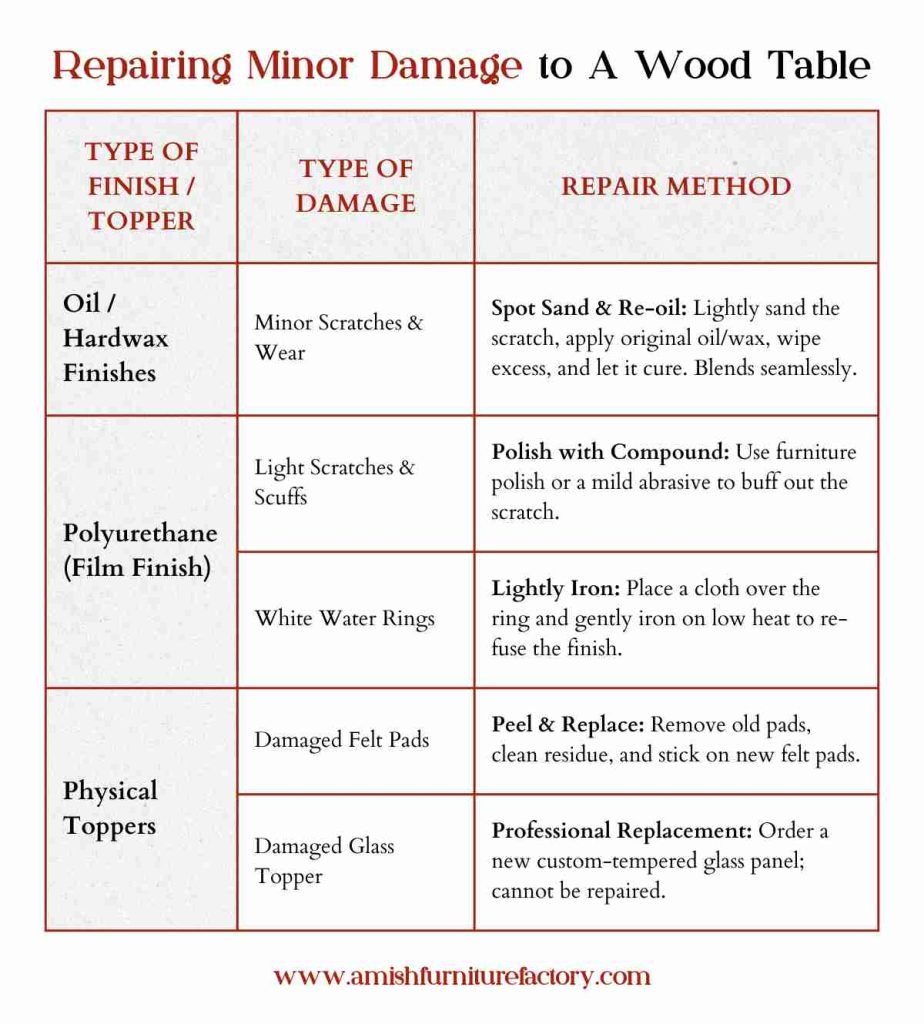
Most heat damage on a wood table is a white, cloudy stain caused by trapped moisture, not burned wood. With the right method, it is easily reversible. The hair dryer offers the quickest fix for modern finishes, taking just 5 to 10 minutes. For antiques or delicate surfaces, mayonnaise is the safest option, though it requires several hours of waiting time. For stubborn cases, the baking soda and toothpaste paste provides the highest success rate, removing up to 98 percent of white stains in overnight tests.
Avoid high-risk methods like Magic Erasers, direct water, or petroleum jelly. These either damage the finish or simply do not work. When dealing with veneer, always skip heat methods, and consult a professional if the stain is dark brown or black. With proper care and quick action, your wood table can stay beautiful for generations.