How High Should a Chandelier Hang Above a Table
Choosing the right height for your dining room chandelier isn’t just about aesthetics. It affects visibility, safety, and how well your space functions. Hang a chandelier too low, and you risk bumping your head or blocking sightlines across the table. Hang it too high, and the fixture loses its visual impact, leaving your table poorly lit and the room feeling disconnected. The golden rule for standard 8-foot ceilings is simple: the bottom of the chandelier should hang between 30 and 36 inches above the dining table surface. This range ensures clear sightlines, prevents collisions, and provides focused task lighting right where you need it. But your ceiling height, table size, chandelier design, and even your decor habits all influence the ideal placement. In this guide, you’ll learn the exact measurements, adjustment formulas, and pro tips to get it right every time.
The Standard 30-36 Inch Rule Explained

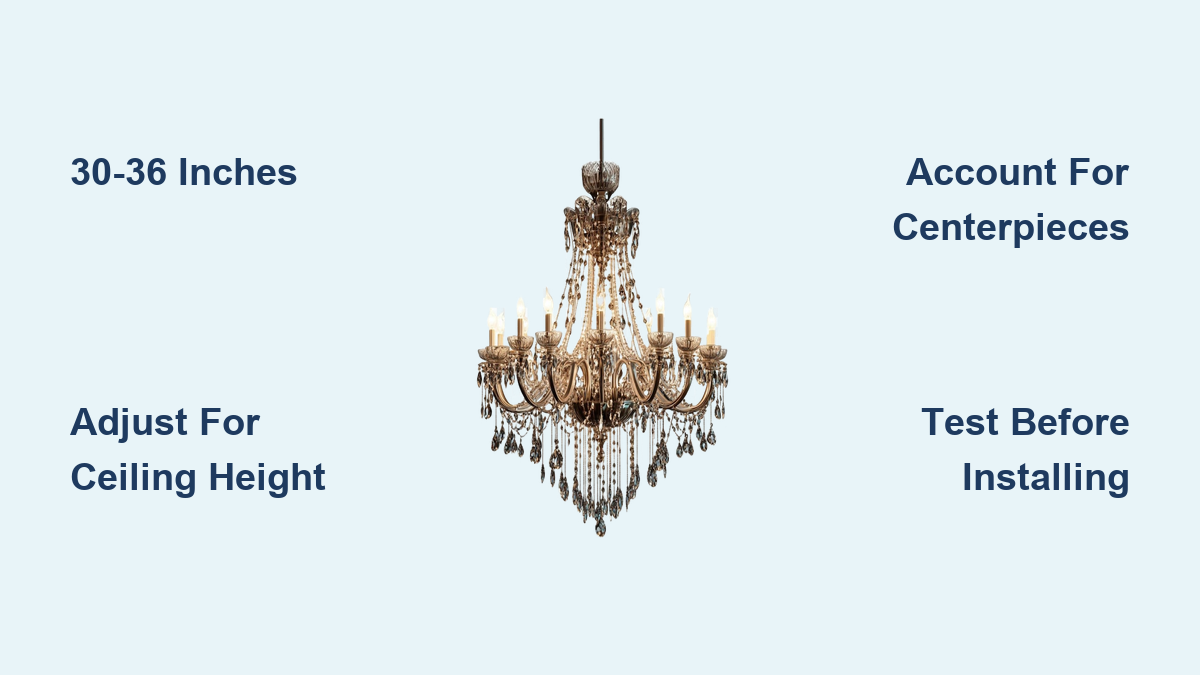
The 30 to 36 inch measurement is the foundation of proper chandelier placement. This distance is measured from the tabletop surface to the lowest point of the fixture, whether it’s a dangling crystal, an exposed bulb, or a decorative tip. For homes with standard 8-foot ceilings, this range delivers optimal visibility and lighting balance. At 30 inches, the chandelier feels intimate and casts warm, focused light across the table. At 36 inches, it opens up the space slightly while still maintaining a strong visual connection to the dining area. This standard applies regardless of table shape, whether round, rectangular, or square. Going below 30 inches risks obstruction and head bumps. Exceeding 36 inches in standard rooms weakens the fixture’s visual and functional connection to the table. The key is finding that sweet spot within this range that feels right for your specific space and needs.
When Ceiling Height Changes Everything
Most modern homes have ceilings higher than 8 feet. Nine, 10, or even 12-foot ceilings are common in new construction and renovated spaces. In these rooms, leaving the chandelier at the standard 36 inches would make it look lost and disconnected from the dining area. To maintain proper proportion, you need to adjust the hanging height upward. The rule is straightforward: add 3 inches of hanging height for every additional foot of ceiling height beyond 8 feet. For a 9-foot ceiling, raise the chandelier to 33 to 39 inches above the table. For 10-foot ceilings, aim for 36 to 42 inches. This formula keeps the fixture visually anchored to the dining area rather than floating aimlessly near the ceiling. Without this adjustment, the chandelier appears like a distant speck, failing to define the space or provide adequate task lighting. Always measure from the table up rather than relying on floor-to-ceiling ratios, because the table is your anchor point.
Ceiling Height Reference Chart

| Ceiling Height | Recommended Height Above Table |
|---|---|
| 8 Feet | 30 – 36 Inches |
| 9 Feet | 33 – 39 Inches |
| 10 Feet | 36 – 42 Inches |
| 11 Feet | 39 – 45 Inches |
| 12 Feet | 42 – 48 Inches |
Use this chart as your starting point, but always verify with a temporary test hang. Visual judgment is crucial, because what looks balanced on paper may feel off in person, especially in rooms with dramatic volume or unique architecture.
Adjust Height for Chandelier Style
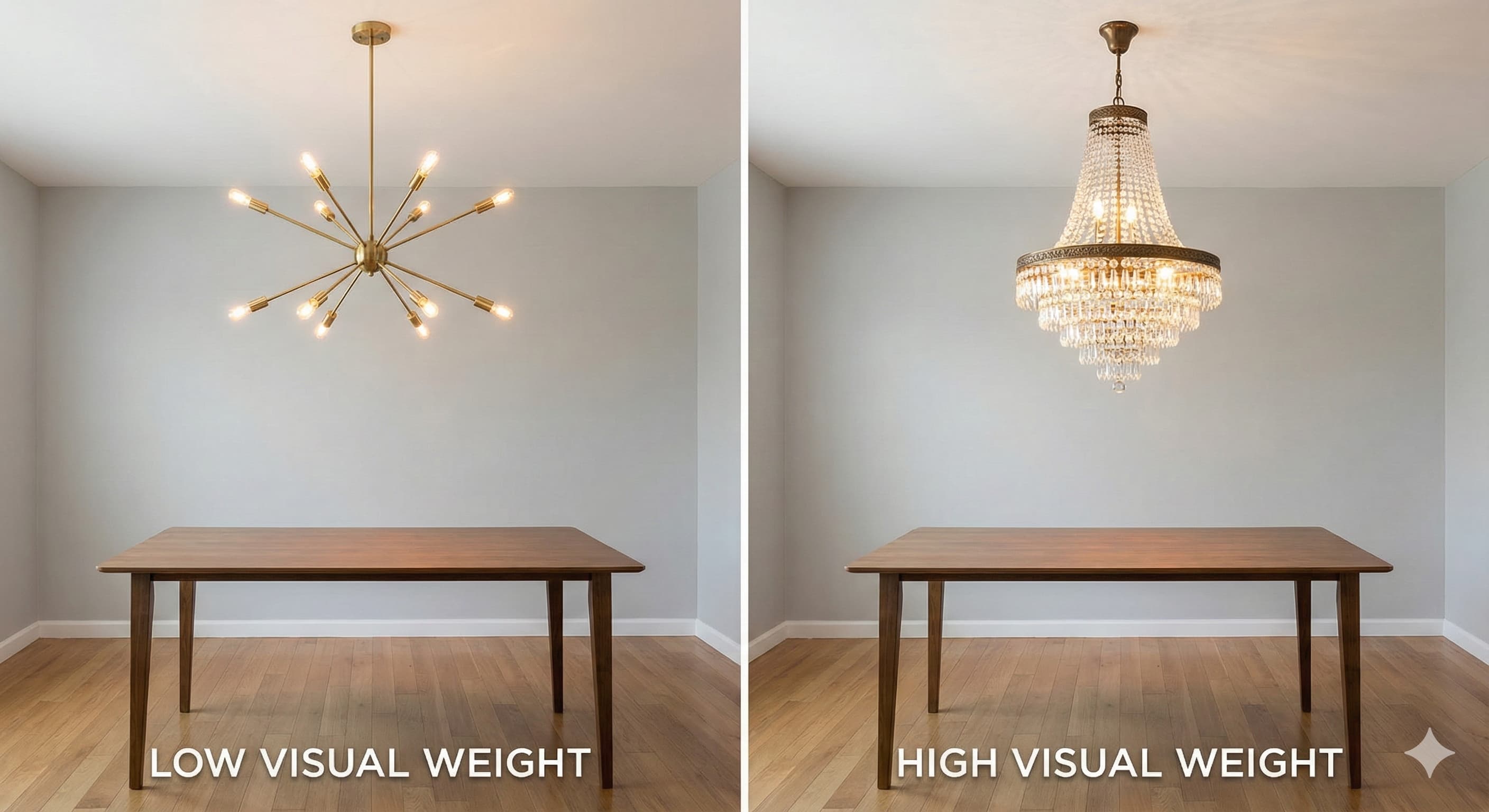
Not all chandeliers are created equal, and their design directly impacts how high they should hang. A sleek glass orb behaves differently than a multi-tiered crystal fixture. The visual weight, size, and shape of your chandelier should guide final height adjustments, even if it means deviating slightly from the standard formula.
Heavy and Ornamental Fixtures
Large, ornate, or multi-tiered chandeliers have significant visual mass. Even if they technically fit within the 30 to 36 inch range, they can feel oppressive when hung too low, making the space feel cramped. To prevent this, hang bulky fixtures 1 to 2 inches higher than the standard recommendation. This creates breathing room and allows the eye to appreciate the full design without it crowding the diners. For tiered models, always measure from the lowest hanging element, not the main body, to ensure safe clearance. Crystal and solid-metal chandeliers fall into this category because their density creates a visual heaviness that demands more vertical space.
Lightweight and Minimalist Designs
Minimalist, open-frame, or glass-based chandeliers feel airy and less intrusive. Because they don’t dominate the space visually, you can safely hang them at the lower end of the range, around 30 inches, for a cozier, more intimate atmosphere. These designs often benefit from being closer to the table, enhancing their role as a focal point without blocking views. If your fixture is narrow or elongated, consider whether a linear pendant might be a better fit, especially for long rectangular tables. Glass orb fixtures and sleek modern designs typically fall into this category and can hang lower without overwhelming the room.
Match Chandelier Size to Your Table

Height isn’t the only factor that matters. Proportion is equally important, because a chandelier that’s too big or too small throws off the entire balance of the room, no matter how perfectly it’s hung.
Finding the Right Diameter
The chandelier should span 50% to 67% of your table’s width. For a 42-inch wide table, choose a fixture between 21 and 28 inches in diameter. Another reliable rule of thumb: the chandelier should be 12 inches narrower than the table on each side. This ensures it doesn’t overhang or create a claustrophobic feel. If your chandelier is wider than the table, raise it slightly to reduce visual dominance. If it’s too small, hanging it higher won’t fix the scale problem. In that case, consider using multiple pendants or upgrading to a larger fixture. The diameter and height work together to create visual harmony.
Accommodating Table Centerpieces
Frequent floral arrangements, tall vases, or candelabra displays change the calculation significantly. If your table regularly hosts decor taller than 12 inches, increase the hanging height by 3 to 6 inches to avoid obstruction. Otherwise, the light gets blocked, and the risk of heat exposure to flammable materials increases. For homes with rotating decor or seasonal centerpieces, plan for your tallest typical arrangement. Dimmable bulbs can help compensate for slightly higher placement by boosting brightness when needed. This step is often overlooked but makes a major difference in both safety and functionality.
Optimize for Your Room Layout

Your dining space doesn’t exist in isolation. The surrounding architecture and how the room flows influence chandelier positioning, not just vertically but also in terms of visual impact.
Open Concept Spaces
In open floor plans where the dining area flows into a kitchen or living space, the chandelier acts as a visual anchor that defines the dining zone. To distinguish it from adjacent spaces, hang it slightly lower than the formula suggests, closer to 30 inches, even with higher ceilings. This draws the eye down and creates a sense of intimacy within the larger space. Ensure the fixture is centered over the table and visible from adjacent areas. From the living room couch or kitchen island, it should look balanced and intentional, not floating or disconnected. The chandelier becomes the anchor that tells people “this is the dining space” without walls or doors.
Small Rooms Versus Large Rooms
In a compact dining nook, a large chandelier can overwhelm the space. Even if it fits the height rule, consider raising it slightly to create a feeling of airiness. Conversely, in a large room, a small chandelier at standard height may disappear entirely. Ensure the fixture is large enough to match the room’s volume. Sometimes this requires a bold statement piece rather than a modest fixture. Large dining halls and great rooms need substantial fixtures that can hold their own against the architectural scale, while smaller spaces need fixtures that complement rather than compete with the room.
Ensuring Proper Light Output
A chandelier isn’t just decor. It’s the primary task lighting for your dining area. The height directly affects how well it illuminates the table and contributes to the room’s overall mood and functionality.
Target Lumens for Dining Spaces
For effective dining room lighting, the fixture or combination of fixtures should produce 3,000 to 4,000 lumens total. This provides bright enough light for reading menus or homework while still being warm and inviting for meals. If your chandelier has multiple bulbs, add up the lumen output of each to reach the total. LED bulbs are ideal because they offer high lumens with low heat and energy use. The right brightness paired with the correct height creates evenly distributed light across the entire table surface without harsh spots or dim edges.
Height Effects on Light Quality
Hang the chandelier too high, and the light spreads too thin, leaving the table dim and reducing the intimate feel. Hang it too low, and you get intense glare, especially if bulbs are exposed. The ideal height creates even illumination across the entire surface with minimal shadows. To test this, sit at the table with the lights on. If the bulbs are visible and uncomfortably bright, raise the fixture or switch to frosted or covered bulbs. The goal is light that makes food look appetizing and faces visible without being harsh or uncomfortable.
Why Dimming Matters
Dimmable lighting is essential for dining rooms. It lets you adjust brightness for different times of day and occasions, from bright light for homework to soft ambient glow for romantic dinners. Even if the chandelier is perfectly hung, a dimmer gives you ultimate control over the ambiance. Install a wall-mounted dimmer switch or use smart bulbs for maximum flexibility. This single addition transforms your dining space from a one-dimensional room to a versatile area that adapts to any occasion.
Installing Your Chandelier Correctly
Getting the height perfect starts with proper installation. Cutting corners can lead to unsafe setups or the need for costly rework.
Check Ceiling Box Weight Capacity
Standard ceiling electrical boxes support up to 50 pounds. Most chandeliers fall within this limit, but larger crystal or metal-heavy models may exceed it. If your fixture is heavier, install a reinforced box or a fan brace that attaches directly to ceiling joists. Never hang a heavy chandelier on a standard box, because it can pull loose and fall, creating a serious safety hazard. Check the weight of your fixture before purchase and verify your ceiling box can handle it.
The Temporary Test Hang Method
Before drilling or wiring, do a temporary test hang. Use a sturdy rope, chain, or removable swag hook to suspend the chandelier at your target height. Sit at the table, walk around the room, and observe how it looks from different angles. Check for head clearance when standing, view obstruction across the table, light coverage on the surface, and visual balance in the space. Adjust up or down by 1 to 2 inches as needed. This simple step takes 10 minutes and prevents costly mistakes that would require reinstalling.
Centering When the Box Isn’t Aligned
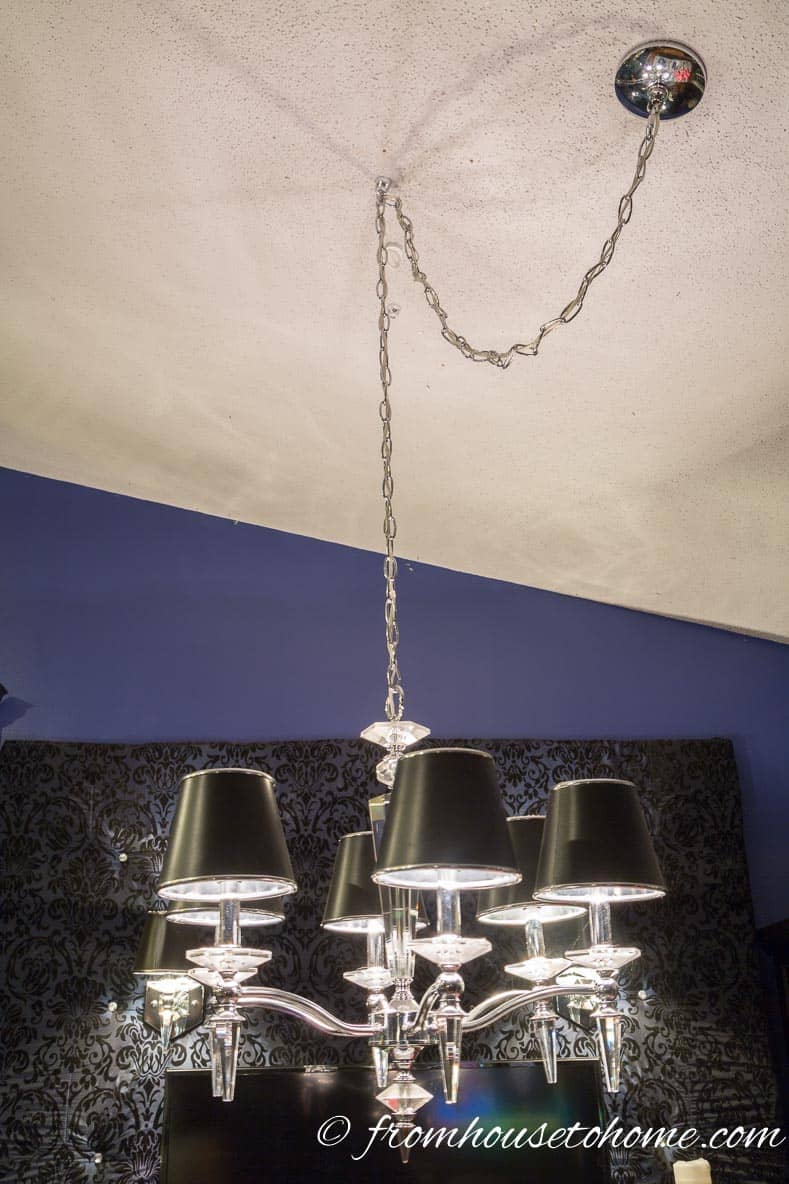
What if your ceiling electrical box isn’t centered over the table? Don’t rewire the ceiling. Instead, use a decorative swag hook or ceiling medallion with an offset chain to shift the fixture laterally. This keeps the wiring safe and code-compliant while visually centering the chandelier over the table. Choose a hook that matches your fixture’s finish for a seamless look. This solution works beautifully and avoids expensive electrical work.
Common Mistakes to Avoid
Even with the right measurements, errors happen. Here are the most frequent pitfalls and how to sidestep them.
Ignoring Table Decor
Failing to account for tall centerpieces is one of the most common errors. A chandelier that looks perfect on an empty table becomes a hazard when candles or flowers are added. Always plan for your tallest decor. This applies to holiday centerpieces, everyday flower arrangements, and any decorative pieces you regularly use.
Hanging Too High in High Ceilings
Some homeowners leave the chandelier at 36 inches even with 12-foot ceilings. The result is a tiny, distant light that does nothing for the table. Use the 3 inches per foot adjustment rule to keep it grounded and functional. The math is simple but transformative for the final result.
Skipping the Sightline Test
Measuring is essential, but sitting at the table is irreplaceable. If you can’t see the person across from you, the chandelier is too low. This simple test prevents one of the most common complaints about chandelier placement.
Choosing the Wrong Scale
A massive chandelier over a small bistro table overwhelms the room. A tiny pendant over a large dining table gets lost. Match fixture size to both table and room dimensions. This is where the 50% to 67% width rule becomes critical.
Permanent Installation Without Testing
Drilling holes before verifying the height with a trial run often leads to regret. The temporary hang takes minutes and saves hours of rework. Never skip this step, no matter how confident you are in your measurements.
Frequently Asked Questions About Chandelier Height
What is the standard height for a chandelier above a dining table?
For standard 8-foot ceilings, the bottom of the chandelier should hang between 30 and 36 inches above the dining table surface. This range provides optimal visibility, prevents head bumps, and creates proper task lighting for the table area.
How do I calculate chandelier height for high ceilings?
Add 3 inches of hanging height for every additional foot of ceiling height above 8 feet. For example, a 10-foot ceiling would require 36 to 42 inches above the table, which is 6 inches higher than the standard range.
Does chandelier size affect how high it should hang?
Yes. Heavy, ornate, or tiered chandeliers should be hung 1 to 2 inches higher than standard to prevent the space from feeling cramped. Lightweight, minimalist fixtures can hang at the lower end of the range for a cozier feel.
Should I account for table centerpieces when choosing chandelier height?
Absolutely. If your table regularly features tall centerpieces, vases, or candles, increase the hanging height by 3 to 6 inches to prevent light obstruction and reduce fire hazards from heat exposure.
How do I center a chandelier if my ceiling box isn’t over the table?
Use a decorative swag hook or ceiling medallion with an offset chain to shift the fixture laterally. This visually centers the chandelier over the table without requiring rewiring, keeping the installation safe and code-compliant.
Key Takeaways for Perfect Chandelier Placement
Getting chandelier height right comes down to starting with the 30 to 36 inch standard, then adjusting for your specific situation. Add 3 inches for every foot of ceiling height above 8 feet. Account for chandelier weight and style, with heavy fixtures going higher and lightweight designs potentially going lower. Match the fixture diameter to half or two-thirds of your table width, and plan for any tall centerpieces you regularly use. Always do a temporary test hang before committing, and use a dimmer for maximum flexibility. When done right, your chandelier becomes the heart of your dining experience, providing beautiful light, defining the space, and creating the perfect ambiance for every occasion. Take your time with the measurement process, test the placement visually, and enjoy a perfectly lit dining room for years to come.