How to Choose a Dining Room Table
Choosing the right dining room table isn’t just about style. It is about creating a functional, long-lasting centerpiece that fits your space, lifestyle, and daily routines. Whether you are feeding a family of four, hosting weekend dinner parties, or working from home at the table between meals, the right choice can transform how you use your home. This guide walks you through every critical factor, from measuring your room to selecting the ideal shape, material, and construction, so you can make a confident, informed decision on how to choose a dining room table.
Define Your Dining Needs First
Before browsing furniture stores or scrolling online, clarify how you will actually use the table. Your lifestyle should drive the decision, not trends or aesthetics alone.
Assess Daily Use and Household Size
Think beyond meals. Is the table a homework station, remote office, or crafting zone? If yes, prioritize durability and surface space. Rectangular or square tables offer more real estate. Families need child-safe edges and scratch-resistant materials. Couples or solo diners can opt for compact round or square designs that foster intimacy without wasting space.
Match Table to Entertaining Habits
Do you host often? If so, expandable tables with leaves let you switch from a four-seater to an eight-seater in minutes. For frequent entertaining, rectangular or oval tables accommodate more guests comfortably. If your gatherings are rare, a smaller fixed table with extra chairs stored nearby may suffice.
Consider Open-Plan vs. Dedicated Spaces
In open-concept homes, the dining table often anchors the kitchen-living area. A round or oval design softens sightlines and improves flow. In dedicated dining rooms, you can go bolder with larger rectangles, formal woods, or statement marble tops.
Measure Your Space Accurately
Even the most beautiful table fails if it does not fit. Proper measurements ensure comfort, safety, and ease of movement around your dining area.
Allow 36 Inches of Clearance
Leave at least 36 inches between the table edge and walls, furniture, or doorways. This space allows chairs to be pulled out and people to walk behind seated guests without squeezing. In tight spaces, use this formula: Max table length equals room length minus 72 inches.
Plan for Chair Movement
When chairs are pulled out, they need 24 to 30 inches of depth. Measure this in full extension, especially near traffic paths. If doors align across a wall, keep that path clear. Do not block it with a table.
Account for Table Extension
If choosing an extendable table, always measure for its fully expanded length. Ensure the extended version still leaves 36 inches of clearance on all sides.
Choose the Right Table Shape
:max_bytes(150000):strip_icc()/Dining-table-shapes-1391525-V1-2922f1384f28456892b5901f75afcddb.gif)
Shape affects function, flow, and feel. Match it to your room layout and social style for the best experience.
Rectangular Tables: Best for Most Homes
Rectangular tables work well in long rooms, large families, formal dining areas, and open-plan spaces. They seat six or more comfortably, fit against walls in narrow spaces, and offer room for centerpieces and serving dishes. The downside is that longer tables make conversation across the ends difficult. Use armless chairs on the sides with armed host chairs only at the heads.
Round Tables: Perfect for Intimacy and Small Spaces
Round tables suit square rooms, breakfast nooks, couples, and families of four to six. They encourage face-to-face conversation, have no sharp corners for safety with kids, and take up less floor space than rectangles. However, they are harder to fit in corners and offer less surface area for serving dishes. Over 60 inches in diameter, guests may struggle to hear across the table.
Best size guide for round tables:
• Four people: 35 to 44 inches diameter
• Six people: 45 to 54 inches diameter
• Eight plus people: 60 inches or larger diameter
Square Tables: Balanced and Symmetrical
Square tables work best in square rooms for four-person households and cozy entertaining. They create equal distance between all diners and visual harmony in symmetrical spaces. The drawbacks include difficulty expanding beyond four to six seats and less flexibility in rectangular rooms. Pair with armless chairs and leave 36 inches of clearance on all sides.
Oval Tables: The Best of Both Worlds
Oval tables combine the capacity of a rectangle with the intimacy of a round. They have no corners for easier traffic flow, soften long rooms without blocking sightlines, and ensure everyone has a clear view of each other. The cons include requiring more space than round tables and having fewer style options than rectangles.
Pick a Durable, Lifestyle-Appropriate Material
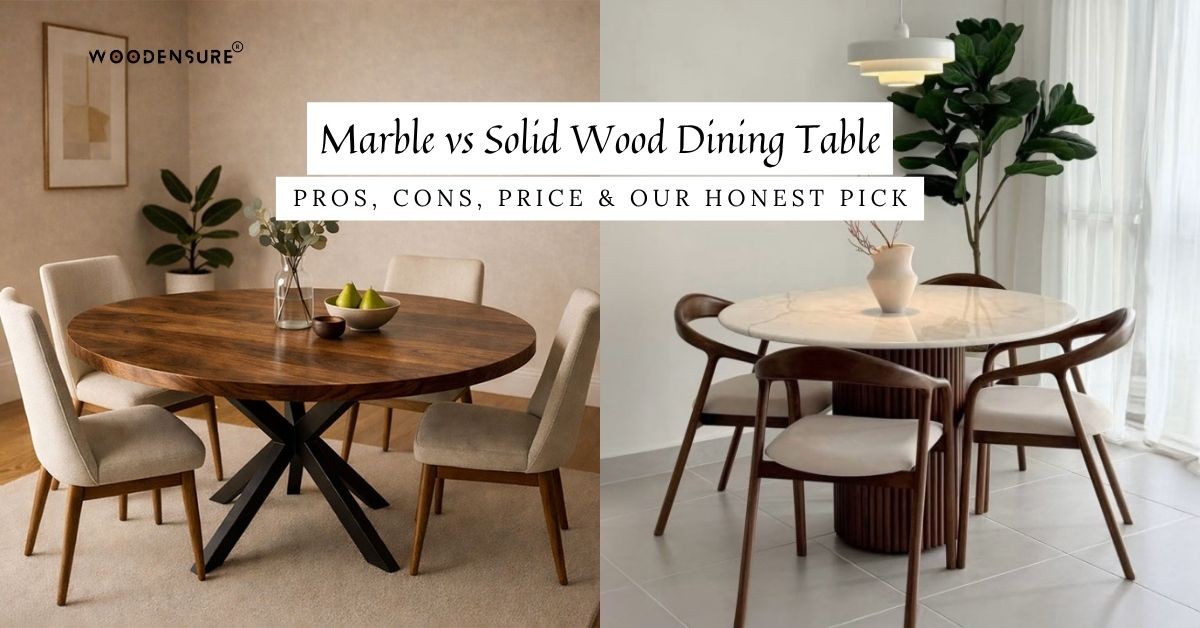
The tabletop material impacts maintenance, longevity, and daily usability. Choose based on how you actually live.
Solid Wood: Timeless Warmth and Resilience
Solid wood works best for traditional homes, families, and those who love natural grain. Types include oak, walnut, ash, and onyx, each with unique grain and tone. The pros include warm organic feel, ability to sand and refinish if scratched, and long lifespan with care. The cons include susceptibility to water rings and stains, requiring coasters and prompt spill cleanup. Real wood veneer is not low quality. It is stable, sustainable, and matches solid wood in appearance.
Ceramic: Nearly Indestructible
Ceramic works best for families, entertainers, and high-traffic homes. It resists scratches, stains, and heat, and wipes clean easily. The cons include heavy weight making it harder to move and potential chipping if impacted at the edge. Ideal finishes include Malabar, Fog, and Storm for a matte, refined, modern look.
Marble and Stone: Elegant but High-Maintenance
Marble and stone suit formal dining rooms, adult households, and minimalist designs. Types include marble (porous), granite (durable), and quartz (non-porous). The pros include luxurious timeless look and heat resistance. The cons include marble etching with acidic spills, requiring sealing, and feeling cold to the touch. Use trivets and coasters. Wipe spills immediately.
Glass: Light and Airy
Glass works best for small spaces, modern interiors, and rooms with limited light. It makes rooms feel larger and allows light to pass through. The cons include showing fingerprints and smudges easily. Must be tempered glass for safety. Not ideal for homes with young kids or pets.
Metal: Strong and Stylish
Metal suits modern designs and large tables. It is often used for bases with steel or aluminum but can be tabletops for industrial looks. The pros include durability, stability, and sleeker legs providing more legroom. The cons include potential denting or scratching and cold surface temperature. Best paired with glass or stone tops for contrast.
Laminate: Budget-Friendly and Practical
Laminate works best for renters, small budgets, and temporary setups. It is affordable, mimics wood, stone, or concrete, and cleans easily. The cons include inability to refinish if damaged and potential peeling or bubbling over time.
Evaluate Build Quality and Craftsmanship
:max_bytes(150000):strip_icc()/Anatomy20of20mortise20copy-b7690c6112e349178f755dc6cea9b952.jpg)
A well-built table lasts decades. Look for these signs of quality before purchasing.
Test for Stability and Weight
Lift the table slightly. A heavier table usually means solid construction. Sit and wiggle it. There should be no wobbling or creaking. The base should feel balanced and grounded.
Check the Joinery
Look under the table for mortise and tenon joints, which are interlocking wood pieces that resist loosening. Look for corner blocking at reinforced joints and solid wood frames that are more durable than particleboard or MDF. Avoid tables held together mostly with screws or glue.
Inspect the Finish
A quality finish is smooth, even, and free of cracks. Multi-step or hand-applied finishes protect against spills and scratches while enhancing grain. Veneer should blend seamlessly with solid wood.
Match Chairs to Your Table
The right chairs complete the look and ensure comfort for daily use.
Coordinate Height and Legroom
Standard table height of 28 to 32 inches pairs with 18-inch seat height. Counter-height tables at 36 inches require 24-inch stools. Leave 8 to 12 inches between seat and table underside. Chairs should not feel cramped or too low.
Choose Armless for Round and Square Tables
Armchairs take up more space and will not fit well around curves. Save them for the heads of rectangular tables.
Mix Materials for Visual Interest
Do not feel locked into a matching set. Try walnut table with steel or cane chairs. Try glass oval table with colorful Eames chairs. Try marble pedestal with lucite or velvet chairs. Contrast adds personality without clashing.
Consider Extendable and Flexible Options
If your space or guest list varies, flexibility is key to getting the most value.
Types of Extendable Tables
Drop-leaf tables fold down sides for compact use. Butterfly leaf tables have a hidden leaf stored under the table. Self-storing leaf tables pull out and expand without removing parts. Transformable tables change from round to oval or square to rectangle. Always measure for the full extended size before buying.
Best Uses for Extendable Tables
Extendable tables work well in small apartments needing daily compactness, homes that entertain seasonally, and multi-use rooms combining dining and office functions.
Protect Your Investment with Care
Even the best table needs maintenance to last for generations.
Use Protective Accessories
Table pads provide custom fit to prevent scratches and heat damage. Coasters and trivets are essential for wood, stone, and laminate surfaces. Placemats reduce wear on high-use areas.
Clean According to Material
Use a damp cloth on wood and avoid soaking. Use mild soap and water on ceramic. Use glass cleaner on glass and avoid abrasive pads. Use pH-neutral cleaner on stone and reseal marble as needed. Never let spills sit, especially on porous surfaces.
Resurface When Needed
Wooden tops can be sanded and refinished multiple times, extending life far beyond laminate or damaged glass. This makes wood a smart long-term investment.
Final Checklist: How to Choose a Dining Room Table
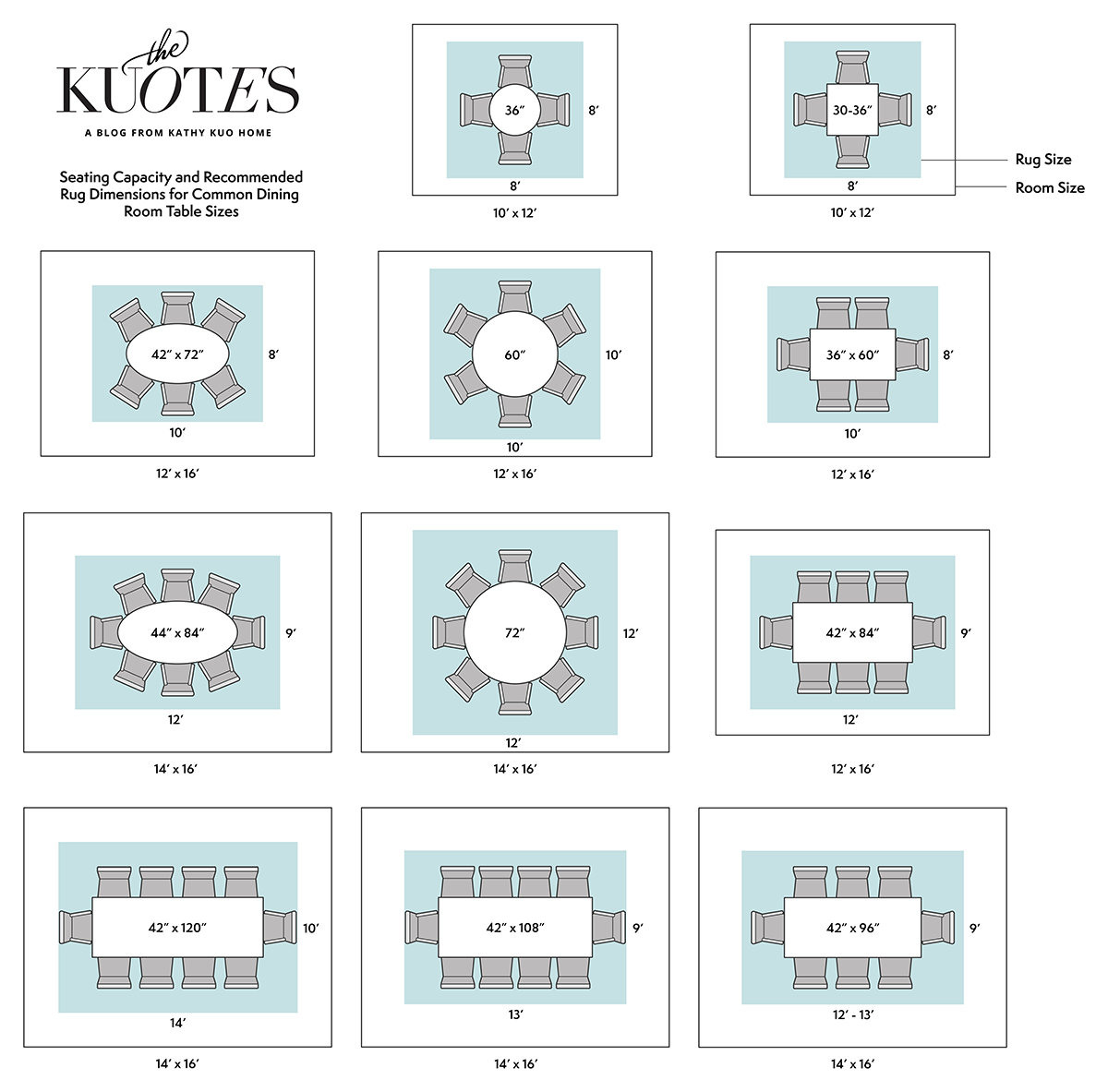
Before making your final decision, verify each of these items:
• Measure your room with 36-inch clearance on all sides
• Define your lifestyle needs, whether family-focused, entertainer-focused, or remote worker-focused
• Pick the right shape for your space, rectangle for space and round for intimacy
• Choose a durable material suited to your lifestyle, ceramic for kids, wood for warmth, glass for light
• Check construction quality, stable base, solid joints, good finish
• Ensure chair compatibility with correct height and armless options for round tables
• Plan for flexibility with extendable options if guest count varies
• Protect the surface with pads, coasters, and fast spill cleanup
Frequently Asked Questions About Choosing a Dining Room Table
What size dining table do I need for my family?
For a family of four, a table at least 36 to 48 inches long works well. Allow 24 inches of space per person for comfortable dining. For families with children, consider round or oval tables to eliminate sharp corners and choose scratch-resistant materials like ceramic.
How do I measure my dining room for a new table?
Measure the room length and width. Subtract 72 inches from each dimension to account for 36 inches of clearance on each side. For the fully extended size of an extendable table, measure with leaves in place. Ensure 24 to 30 inches behind pulled-out chairs for traffic flow.
What is the best table shape for a small dining room?
Round tables work best in small spaces because they take up less floor area and create an intimate feel. Square tables also work in square rooms. Avoid large rectangular tables that overwhelm tight spaces and make navigation difficult.
Which dining table material is most durable?
Ceramic ranks as the most durable option, resisting scratches, stains, and heat with minimal maintenance. Solid wood offers durability with the ability to refinish if damaged. Marble and granite are durable but require more maintenance. Glass is easy to clean but can show fingerprints and is not ideal for households with young children.
Should dining chairs match the table exactly?
No, mixing materials creates visual interest and personality. Pair a classic wood table with modern metal or cane chairs. Combine a marble top with contemporary lucite chairs. The key is complementary styles rather than an exact match.
How much should I spend on a dining room table?
Dining tables are long-term investments. Budget options in laminate work for temporary needs or first apartments. Mid-range options in quality veneer or solid wood offer balance. Premium options in solid wood, marble, or custom designs cost more but offer longevity and timeless appeal. Consider how long you plan to keep the table and choose quality accordingly.
Key Takeaways for Choosing Your Perfect Dining Room Table
Your dining table should be more than furniture. It should support how you live, whether you are feeding kids, working remotely, or hosting friends. Focus on three core factors to make the right choice. First, measure accurately. Account for 36 inches of clearance around all sides and plan for chair movement. Second, match your lifestyle. Choose ceramic for busy families, wood for traditional warmth and refinishing potential, glass for small spaces, and stone for elegant adult households. Third, verify quality. Look for solid joinery, stable bases, and quality finishes that protect your investment.
The right table makes daily life easier and more beautiful. Take time to evaluate your space, needs, and priorities before purchasing. A well-chosen dining table becomes the heart of your home, bringing family and friends together for years to come.