How to Use a Fletching Table in Minecraft
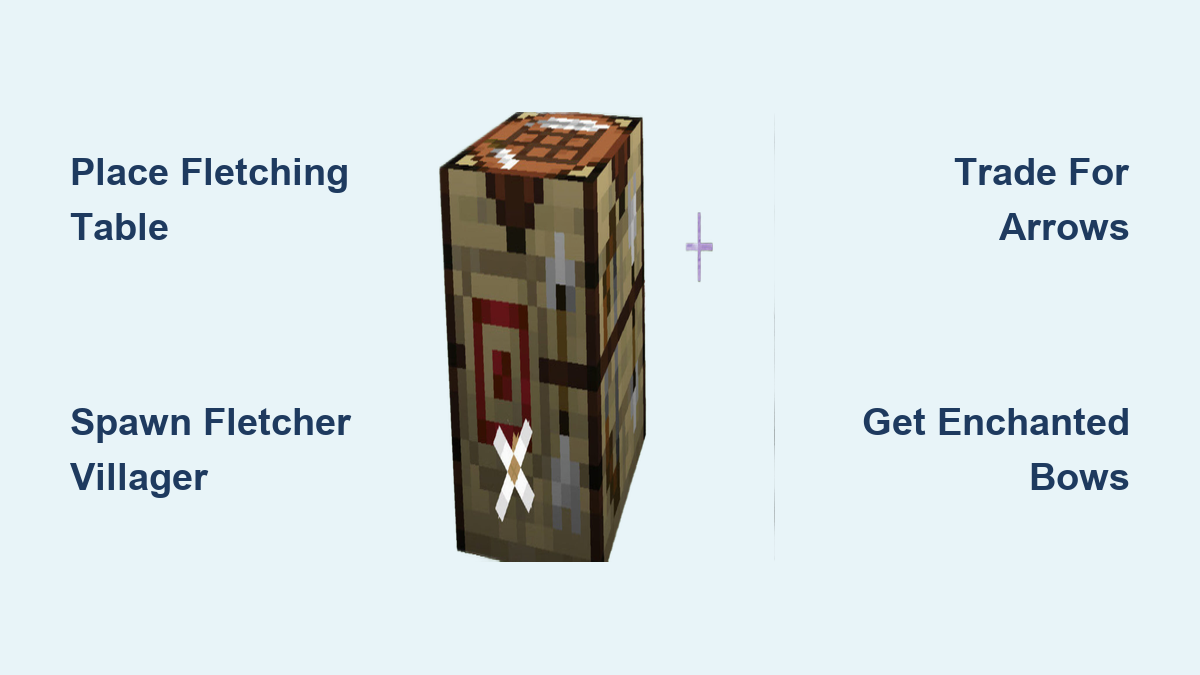
You’ve crafted a fletching table, walked up to it, and tried to right-click, expecting an arrow-crafting interface. Nothing happens. Frustration sets in as you wonder what this mysterious block actually does. Here’s the truth: the fletching table isn’t a crafting station for players at all. It’s a job site block that transforms villagers into Fletchers, unlocking powerful trades for bows, arrows, and enchanted gear. This guide walks you through exactly how to use a fletching table in Minecraft, from crafting to trading.
This article covers everything you need to know about the fletching table, including the crafting recipe, how to spawn a Fletcher villager, the best trades to exploit, and troubleshooting tips for common problems.
What Does a Fletching Table Do in Minecraft
The fletching table serves one primary purpose: assigning the Fletcher profession to an unemployed villager. Once a villager claims the block, they become a Fletcher and open their trading interface to you. This is the only way to interact with the fletching table as a player. You cannot craft arrows, enchant weapons, or repair gear directly at this block. All of those actions happen through the Fletcher villager’s trades or at other stations like the crafting table, anvil, and brewing stand.
The key distinction is that the fletching table functions as a villager job site, not a player tool. Understanding this separates fact from the many myths floating around about direct crafting or enchanting at the block itself.
Crafting a Fletching Table
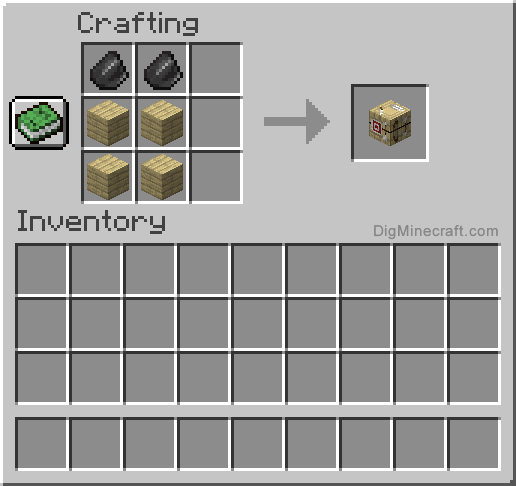
Before you can use a fletching table, you need to craft one or find one in the world. Here’s how to do it correctly.
Required Materials
You need exactly four wooden planks of any type and two flint. Common incorrect guides claim the recipe uses sticks, but this is wrong. The only valid recipe requires planks and flint.
Crafting Grid Arrangement
Open your 3×3 crafting table and place the materials as follows. Place a wooden plank in the top-left slot, flint in the top-center slot, and another wooden plank in the top-right slot. Fill all three slots of the middle row with wooden planks. Leave the bottom row empty. This yields one fletching table.
Finding a Fletching Table Naturally
Instead of crafting, you can explore villages in plains, savanna, taiga, or other village biomes. Fletcher houses often contain a fletching table already placed. Break it with an axe to collect it. This method saves your flint for arrows or flint and steel.
Spawning a Fletcher Villager
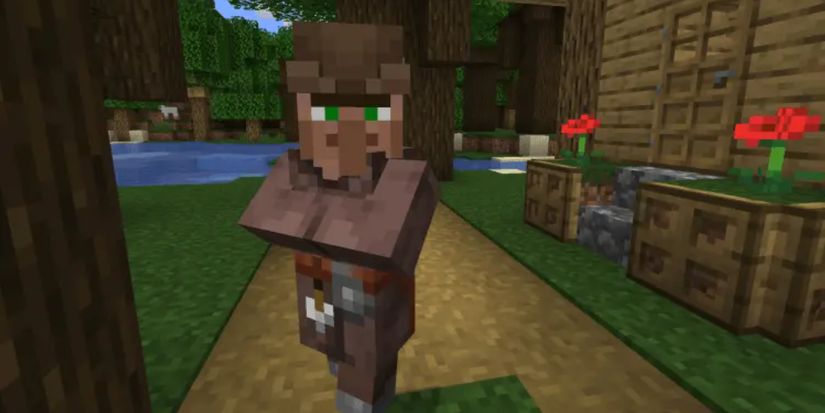
The fletching table does nothing on its own. It requires an unemployed villager to claim it and transform into a Fletcher.
Placing the Fletching Table
Place the fletching table in an accessible location. The block must be within range of unemployed villagers to work. The table emits a job signal detectable within a ten-block radius. Make sure the area is well-lit and free of obstructions that might block the villager’s path.
Finding or Creating an Unemployed Villager
Unemployed villagers appear naturally in villages without job site blocks. You can also create one by curing a zombie villager or removing a villager’s current job block using a pickaxe. If no unemployed villager is nearby, move one using a boat, minecart, or lead. Place them within range of the fletching table and wait. Within seconds, they’ll pathfind to the block and claim it.
Confirming the Profession Change
When the villager claims the table, their skin changes to a Fletcher’s outfit, typically green with quivers and arrows. A particle effect confirms the profession change. If no change occurs, check that the table isn’t already claimed, the villager isn’t a Nitwit (they cannot take jobs), and there’s no bed conflict or path obstruction blocking them.
Accessing Fletcher Villager Trades
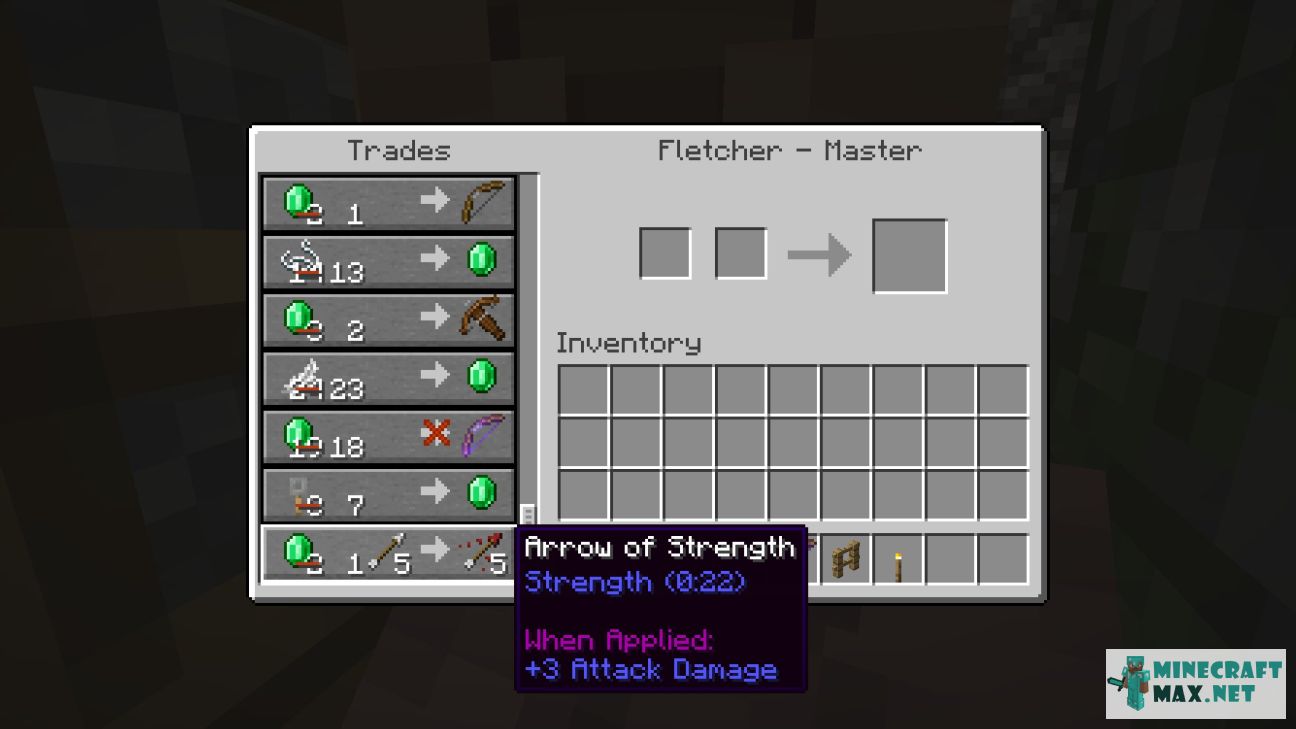
Once a villager becomes a Fletcher, their trading menu unlocks. The available offers depend on their experience level, which increases as you complete more trades.
Novice Tier Trades
At level one, the Fletcher offers basic trades. They buy sticks, feathers, string, and tripwire hooks from you in exchange for emeralds. They sell standard arrows and bows. These trades are ideal for early-game resource conversion. Farm chickens for feathers and craft sticks from logs to generate emeralds quickly.
Apprentice Through Expert Tiers
As the Fletcher levels up, they unlock better deals. You’ll gain access to crossbows, more arrows per trade, and tipped arrows with various potion effects. These include Poison, Slowness, Harming, Healing, and Weakness. No brewing stand needed—just trade emeralds.
Master Tier Trades
At level five, the Fletcher sells enchanted bows and crossbows with powerful enchantments like Power IV, Punch II, and Flame. These high-tier trades save you from spending enchantment levels and books. The enchantments are fixed, meaning once you unlock a trade, every purchase gives the exact same combination.
Buying Arrows and Tipped Arrows
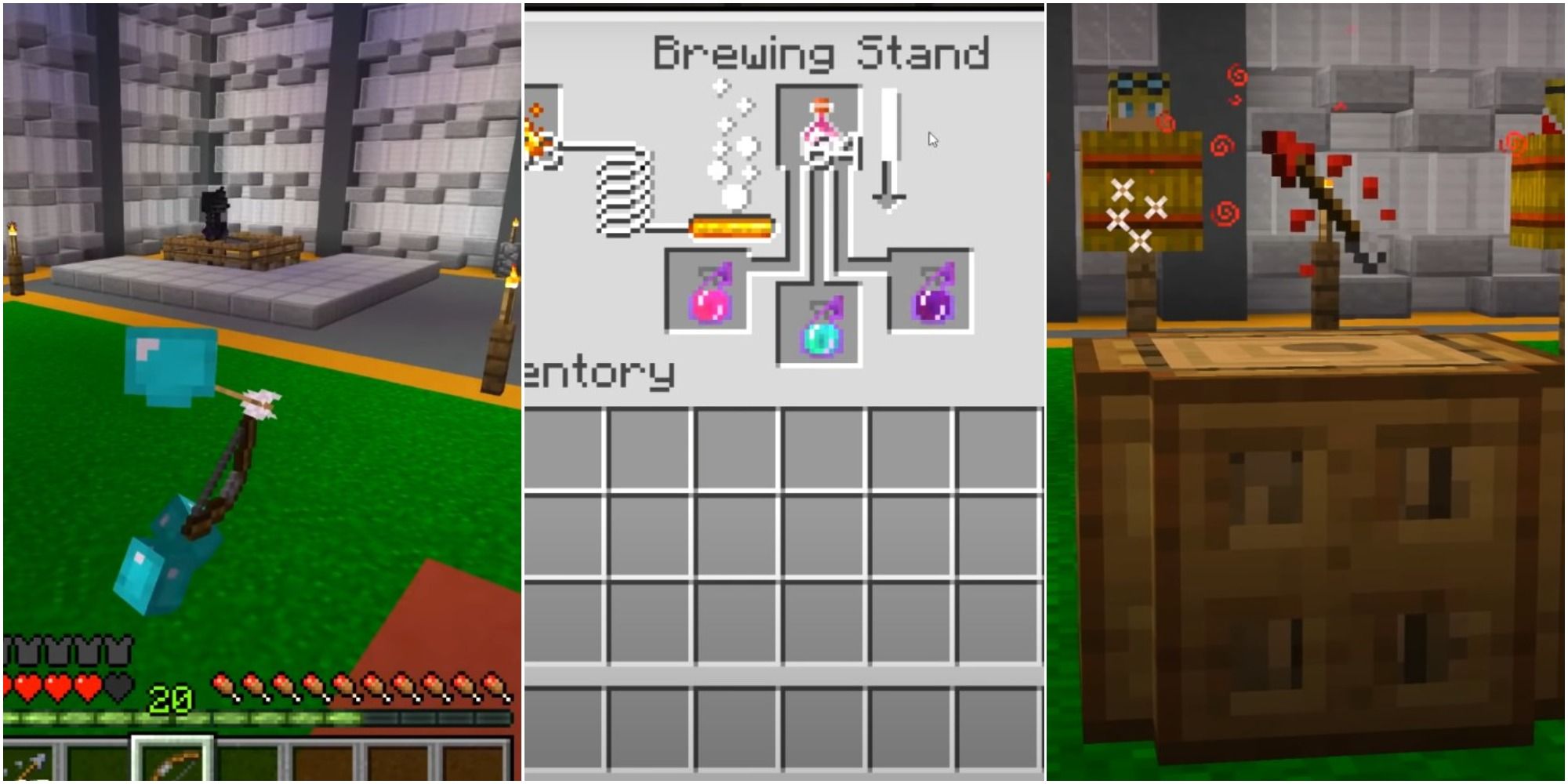
The Fletcher is your one-stop shop for ranged combat ammunition.
Standard and Tipped Arrows
Standard arrows are cheap and renewable. But the real advantage is tipped arrows. You can buy Poison and Weakness arrows for boss fights, Slowness to control mob movement, Harming and Healing for PvP tactics, and Spectral Arrows to track invisible players or mobs. Skip the brewing stand entirely—just trade emeralds.
The Flint Trade
One of the most valuable trades is exchanging ten emeralds for ten flint. If you’re short on flint for arrows or tools and have bad gravel drop rates, this trade is a lifesaver.
Getting Enchanted Bows Without Enchanting
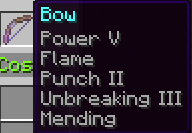
Want a Power IV Punch II bow without touching the Enchanting Table? The Fletcher may offer it directly at master tier.
Why Trades Are Better Than Enchanting
Unlike the Enchanting Table, trades don’t randomize. Once you see the enchantment, it stays. This is perfect for players who want specific enchantments without dealing with RNG. The enchantments correspond to levels five through nineteen on an enchanting table.
The Mending Limitation
Fletchers do not sell Mending-enchanted bows or crossbows. To get Mending, you must enchant a book at the Enchanting Table, combine it with your weapon at an Anvil, or find it in loot chests from woodland mansions or strongholds.
Troubleshooting Common Fletching Table Issues
Even with correct setup, things can go wrong. Here’s how to fix the most frequent problems.
Villager Won’t Claim the Table
Check these common causes. No unemployed villager nearby means you need to bring one using a boat. Block obstruction means clear any blocks, fences, or doors blocking the path. The table is already claimed means each table supports only one villager. The villager is a Nitwit means they cannot take jobs—trade with a regular unemployed villager instead.
Trades Aren’t Restocking
If the Fletcher stops selling items, ensure they can reach the fletching table. Wait until the next in-game day because they restock during work hours. Avoid isolating them because villagers need beds and social interaction to stay happy.
Fletcher Disappears or Loses Job
If the fletching table is destroyed, the villager becomes unemployed. They may adopt a new job if another job site block is nearby. To preserve trades, never break the table until after trading. Use iron bars or glass to protect the setup. In trading halls, pair each villager with a bed and job site block in a secure cell.
Building an Emerald Farm with a Fletcher
Fletchers are among the best villagers for emerald generation because the materials they buy are abundant and renewable.
Setting Up Renewable Input Sources
To maximize profit, automate the materials the Fletcher buys. Build a chicken farm with water chutes and killing floors for feathers. Use a tree farm with dispensers or manual collection for sticks. Set up a spider spawner farm or passive mob grinder for string.
Trade Loop Strategy
A simple loop works like this. Kill spiders to get string, trade twelve string to the Fletcher for one emerald, and repeat. This loop scales fast. With automation, you can generate hundreds of emeralds per hour.
High-Value Exchange Strategy
Later in the game, reverse the loop. Trade emeralds to the Fletcher for flint, use flint to craft arrows or make flint and steel, then trade arrows back to the Fletcher for more emeralds if needed.
Comparing Job Site Blocks

Not all job site blocks work the same. Here’s how the fletching table stacks up against similar blocks.
Smithing Table
The smithing table assigns Toolsmith, Weaponsmith, and Armorer professions. It offers diamond tools, enchanted armor, and coal trades. Its value is high for endgame gear but useless for direct player interaction.
Cartography Table
The cartography table assigns the Cartographer profession. It offers explorer maps, banners, and paper trades. Its value is medium for exploration and decoration. Players can use it to copy maps or repair banners.
Fletching Table
The fletching table assigns only the Fletcher profession. It offers bows, arrows, tipped arrows, and enchanted ranged weapons. Its value is high for combat, PvP, and early emerald farming. It has no direct player use beyond villager assignment.
Frequently Asked Questions About Fletching Tables in Minecraft
Can you craft arrows at a fletching table?
No. The fletching table cannot be right-clicked by players and has no crafting interface. Arrows are crafted at a standard crafting table using flint, sticks, and feathers. The fletching table only assigns the Fletcher profession to villagers.
Why can’t I open the fletching table interface?
This is because the fletching table has no player-accessible interface. It functions only as a job site block for villagers. To trade, you must right-click the Fletcher villager, not the block itself.
What can a Fletcher villager sell?
A Fletcher sells standard arrows, tipped arrows with all fifteen potion effects, spectral arrows, bows, crossbows, and enchanted versions of both weapons. They also offer a trade to exchange emeralds for flint.
How do I get a Fletcher villager?
Place a fletching table within ten blocks of an unemployed villager. The villager will automatically claim it and transform into a Fletcher. If no unemployed villager exists, create one by curing a zombie villager or breaking a villager’s current job block.
Can Fletchers sell Mending bows?
No. Fletchers do not sell Mending-enchanted bows or crossbows. To get Mending, use an Enchanting Table to enchant a book, then combine it with your weapon at an Anvil, or find a Mending item in loot chests.
Do Fletcher trades reset?
Yes, but with a caveat. Fletchers restock their trades daily when they can access their job site block during work hours. However, breaking the fletching table after trading locks the current offers permanently, preventing reset.
Key Takeaways for Using a Fletching Table
The fletching table is simple but powerful when used correctly. Remember that it functions only as a villager job site block, not a crafting or enchanting station for players. Place it within range of an unemployed villager to spawn a Fletcher, then exploit their trades for arrows, tipped arrows, and enchanted bows. Use the Fletcher’s cheap input trades to build an efficient emerald farm, and lock in high-value enchanted weapon trades before moving to the next villager. Combine your Fletcher with other job site blocks in a trading hall to create a one-stop shop for all your Minecraft needs.