How to Choose a Coffee Table: Quick Guide
You’re ready to elevate your living room, but one question lingers: how to choose a coffee table that balances form and function? More than just a surface for your morning coffee or TV remote, the right coffee table anchors your space, guides traffic flow, and reflects your personal style. Yet, with endless shapes, materials, and sizes, the decision can feel overwhelming. The key lies not in chasing trends, but in aligning the table’s dimensions, material, and design with your room layout, lifestyle, and furniture. Whether you have kids, entertain often, or live in a compact apartment, this guide breaks down exactly what to consider, from precise height rules to durable materials, so you can pick a coffee table that feels both intentional and effortless.
Match Height to Your Sofa

Your coffee table should feel like a natural extension of your seating, not a mismatched afterthought. Getting the height right ensures comfort and visual harmony in your living space.
Ideal Height Range for Comfort
Aim for a table between 16 and 20 inches high, with most standard models falling between 17 and 19 inches. The golden rule? The table should be level with or 1 to 2 inches lower than your sofa’s seat cushion. This allows easy reach for drinks, books, or snacks without straining.
If the table is more than 3 inches below or 1 inch above the seat, it disrupts both comfort and design. A too-high table forces awkward arm positioning, while a too-low one makes items feel buried and out of reach.
Adjust for Design Intent
While the standard rule applies to most setups, exceptions exist based on how you use the space.
Slightly higher tables work well in multi-functional spaces, doubling as a casual dining surface when no dining table is nearby. Low-profile tables under 16 inches create a relaxed, lounge-like vibe, perfect for modern lofts or rooms with floor seating.
Always measure your sofa seat first. Use a tape measure from floor to cushion top, then find a table within that range. This small step prevents costly mistakes and ensures lasting comfort.
Size for Balance, Not Guesswork

Choosing the right size is not about filling space, it is about proportion. A well-scaled table enhances the room, while a poorly sized one throws off the entire balance.
Follow the Two-Thirds Rule
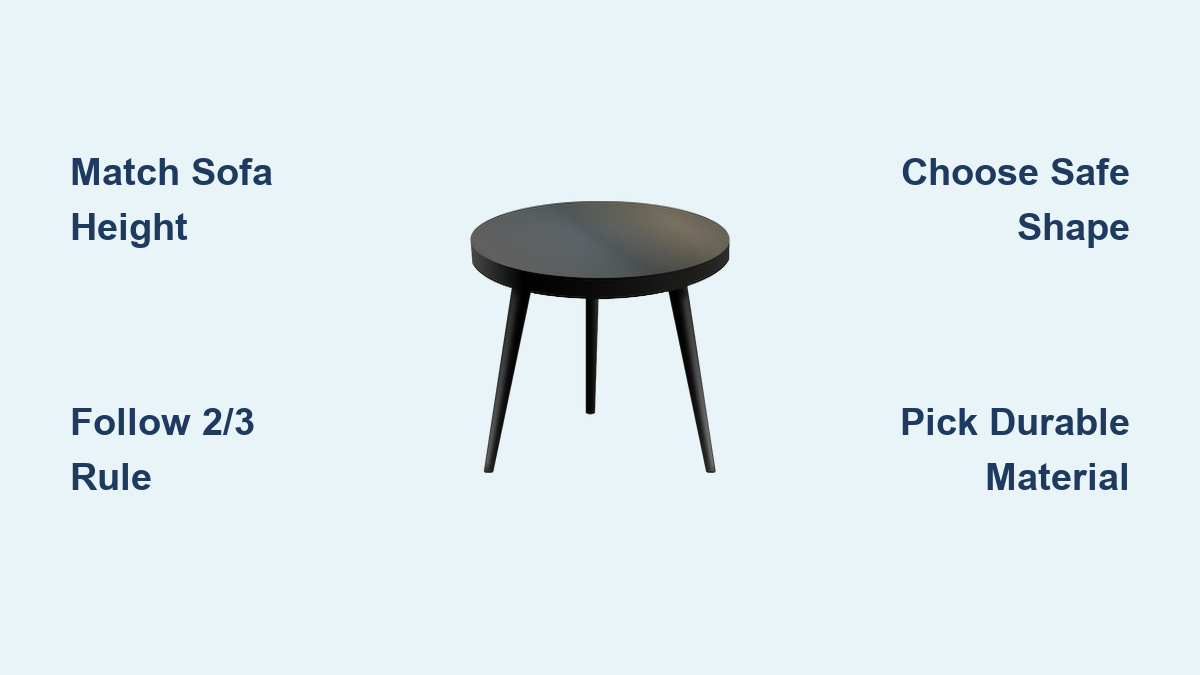
The ideal coffee table should be about two-thirds the length of your sofa. This creates visual harmony and prevents the table from looking like an oversized end table or a tiny stool lost in space.
For example, if your sofa is 96 inches long, aim for a table around 64 inches. For a 72-inch sofa, a 48-inch table fits best. This rule applies whether you have a straight sofa, sectional, or U-shaped configuration, ensuring the table complements rather than competes with your seating.
Calculate Width and Clearance
To determine ideal width, measure the distance between your sofa and the opposite furniture, like a TV stand, then subtract 42 inches. This leaves 21 inches of clearance on each side, allowing space for feet, movement, and airflow.
Avoid tables that extend beyond the sofa’s arms unless intentional. Oversized tables block pathways and make conversation areas feel cramped.
Position for Flow and Function
Even the perfect table fails if placed incorrectly. Strategic positioning ensures comfort, accessibility, and smooth traffic flow throughout your living area.
Maintain Proper Sofa Distance
Leave 12 to 18 inches between the front edge of your sofa and the coffee table. This range allows easy reach while preserving legroom.
Less than 12 inches feels cramped and limits foot movement. More than 18 inches makes reaching items difficult and breaks the visual connection between furniture. One design sweet spot is 14 inches, offering enough walking space while keeping items within arm’s reach. Test this by sitting on your sofa and stretching forward: your fingertips should lightly touch the table’s edge.
Ensure Circulation Space
Allow 24 to 30 inches of clearance between the coffee table and other large furniture. This gap lets people walk comfortably behind the table during gatherings or while cleaning.
In tight spaces, consider a smaller round or oval table, which takes up less visual and physical space. Prioritize legroom by leaving at least 18 inches around all sides for natural movement.
Choose Shape Based on Layout
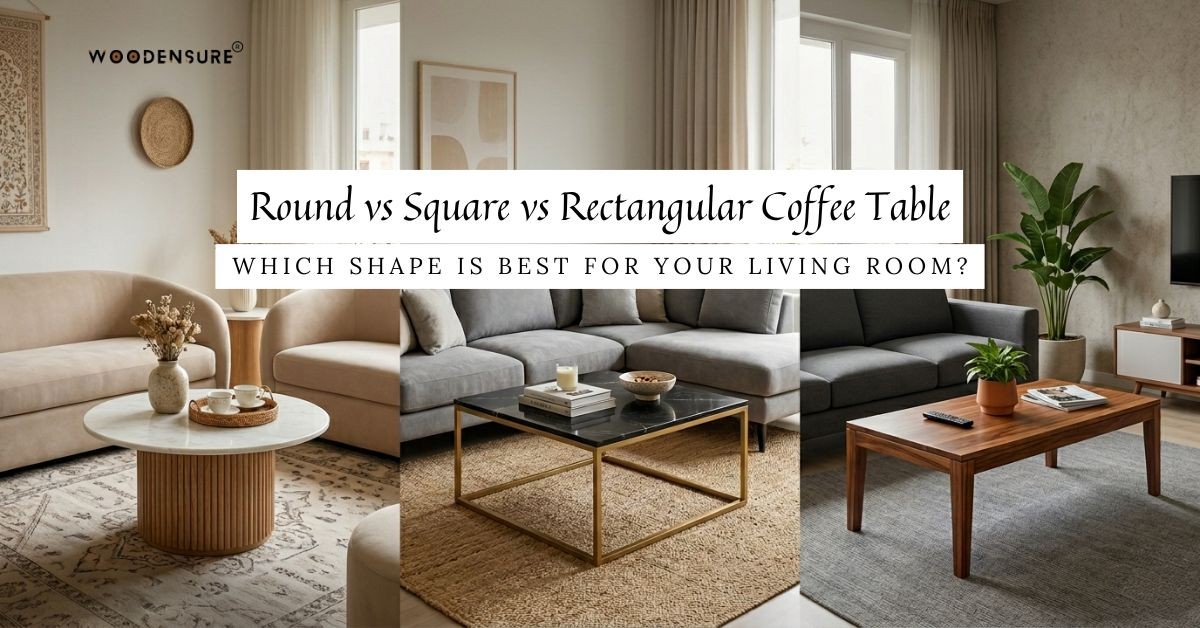
The shape of your coffee table should respond to your room’s geometry, furniture arrangement, and lifestyle, not just aesthetics.
Rectangular Tables: Classic and Anchoring
Best for long, narrow rooms or straight sofas, rectangular tables provide structure and maximize surface area. They align naturally with the lines of most sofas, creating visual rhythm.
Ideal for traditional, mid-century modern, or farmhouse styles, they work well centered in front of a sofa or paired with a corner sectional. Avoid sharp corners in high-traffic areas or homes with children. Opt for rounded edges or position the table so corners do not protrude into walkways.
Square Tables: Balanced and Grounded
Perfect for symmetrical layouts, square tables create a sense of stability. They fit neatly in the “L” of a sectional or center a conversation group with facing chairs.
Their equal proportions make them visually pleasing from all angles. Use in modern, rustic, or traditional rooms depending on material. Wood brings warmth, metal adds edge.
Round Tables: Soft and Social
Round tables soften angular furniture and encourage conversation by drawing people inward. They are ideal for sectionals, small spaces, and homes with kids, as no sharp corners means safer play areas.
They also improve traffic flow, allowing people to move around them easily during gatherings. In compact rooms, a round table prevents the feeling of being boxed in. Pair with curved sofas or use to break up rigid rectangular furniture for a more organic feel.
Oval Tables: Flexible and Fluid
Oval tables combine the length of a rectangle with the safety of a round table. They fit well in narrow rooms where a round table might be too wide but a rectangle feels too boxy.
Great for corner sofas or rooms where people need to walk around the ends. The smooth curves add elegance without sacrificing function.
Irregular Shapes: Statement-Making
Sculptural or organic forms, like a live-edge slab, asymmetric stone, or freeform design, act as art pieces. Use them to add visual interest in rooms with simple furniture.
Best as a focal point in minimalist or boho spaces. Avoid in cluttered rooms, where they can feel chaotic.
Match Shape to Sofa Type
Your sofa dictates the best table shape. Here is how to pair them effectively.
Sectional Sofas
Go for square, round, or oval tables to fit the “L” shape. A round table softens the corner, a square one grounds the space. A rectangular table can work if sized correctly. Ensure it spans the corner without blocking footpaths.
U-Shaped Sofas
Use a large rectangular table or a set of nesting tables to fill the extended seating area. A round top can balance angular lines. Modular tables offer flexibility. Pull them apart for cleaning or gatherings.
Corner Sofas
Choose rectangular, oval, or square tables that optimize space without crowding the corner. Avoid oversized pieces that block entry points.
Straight Sofas
Rectangular is the classic choice. For a softer look, try round or oval to break up linear rigidity.
Pick Durable, Style-Smart Materials

Material affects durability, maintenance, and the room’s overall vibe. Choose based on use, not just looks.
Solid Wood: Warm and Timeless
Wood adds natural warmth, texture, and longevity. It is durable, eco-friendly, and develops a beautiful patina over time.
Popular types include walnut with rich, dark grain ideal for mid-century modern, ash that is light and versatile and ages gracefully, and reclaimed wood offering rustic charm as a sustainable choice.
Low maintenance. Minor scratches blend in or can be buffed. Best for traditional, farmhouse, and warm modern styles.
Glass: Airy and Open
Glass tables make small rooms feel larger by letting light pass through and showcasing rugs beneath.
Use tempered glass for safety. It is less likely to shatter. Avoid in homes with kids or pets due to fingerprint visibility, smudges, and breakage risk.
Best in formal living rooms or open-concept spaces with light use. Pairs well with metal bases for a sleek, modern look.
Marble and Stone: Luxe and Statement-Making
Marble, travertine, or granite bring luxury, elegance, and unique veining. Each piece is one-of-a-kind, perfect as a focal point.
Durable but porous. Seal marble annually to prevent stains. Travertine has a natural, earthy texture.
Ideal for Italian, Mediterranean, or high-end modern interiors. Avoid in high-traffic family rooms unless sealed and maintained.
Metal: Sleek and Modern
Metal frames in brass, black steel, or brushed nickel add sophistication and contrast. Often paired with wood or glass tops.
Highly durable and easy to clean. Matte black or industrial finishes suit urban lofts. Brass adds warmth.
Best for industrial, minimalist, or contemporary spaces.
Upholstered Ottomans: Soft and Functional
An ottoman doubles as a footrest, extra seat, or play surface. Many feature hidden storage. Lift the top to stash blankets, toys, or games.
Cover in leather or performance fabric for easy cleaning. Top with a tray for drinks.
Perfect for families, small spaces, or casual lounges. Adds softness to modern rooms.
Mixed Materials: Dynamic and Custom
Combine materials for visual depth and style fusion. Wood top with metal legs, glass top on a sculptural brass base, or marble inlay on a wooden frame.
This approach bridges different aesthetics. A rustic wood table with sleek metal legs softens industrial edges.
Lucite or Acrylic: Invisible and Lightweight
Nearly invisible, these materials reduce visual clutter, ideal for small spaces. Creates a “floating” effect.
Lighter than glass and less prone to shattering. Still shows dust and smudges.
Use when you want surface function without bulk.
Prioritize Functionality and Storage
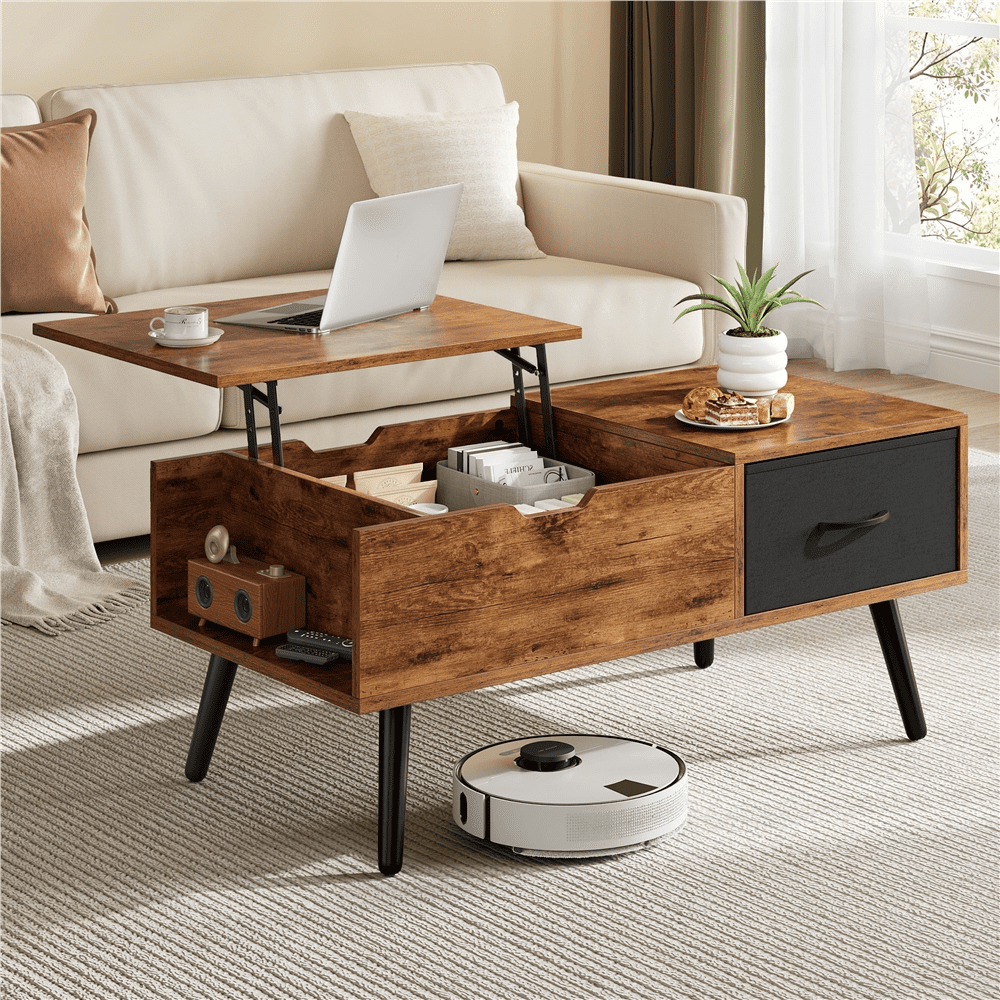
Your lifestyle should dictate features. A coffee table can do more than hold a drink. It can store, adapt, and multitask.
Built-In Storage Solutions
Maximize utility with drawers to hide remotes, coasters, and chargers, open shelves to display books, baskets, or decor, lift-top mechanisms to raise the surface for dining or laptop work with hidden storage underneath, and ottoman interiors for large cavities storing toys, throws, or games.
Test drawer glides and lift mechanisms in-store. Ensure smooth operation and weight capacity.
Nesting and Modular Tables
Nesting tables consist of 2 to 3 smaller tables that tuck under a larger one. Pull them out when hosting. Tuck away for daily use.
Great for small spaces or multipurpose rooms. Mix materials, like one wood and one marble, for visual interest.
Modular sets allow flexible arrangements, perfect for entertaining.
Mobility Features
Some tables include casters or wheels, making them easy to move for cleaning or reconfiguring the room.
Look for lockable wheels to prevent sliding during use. Ideal for homes with frequent layout changes.
Design for Your Lifestyle

One size does not fit all. Tailor your choice to who lives in the space.
Homes with Kids
Safety and durability are non-negotiable. Avoid glass tops and sharp corners. Choose round or oval shapes instead. Opt for sturdy wood, stone, or upholstered ottomans. Use tables with easy-access storage for toys. Top ottomans with trays for spill-proof surfaces.
A low, soft ottoman doubles as a safe play zone.
Small Spaces
Minimize visual weight. Use glass, lucite, or light-colored wood. Stick to the 2/3 rule. No oversized tables. Choose round or oval to improve flow. Consider lower tables under 16 inches to make ceilings feel higher.
Nesting tables offer flexibility without permanent bulk.
Frequent Entertainers
Maximize surface and flow. Choose larger rectangular or round tables. Add nesting tables for extra drink space. Lift-top tables double as dining surfaces. Round shapes allow easier movement during gatherings.
Ensure 30 inches of clearance behind the table for guest traffic.
Align With Your Decor Style
Your coffee table should either harmonize with or intentionally contrast your existing decor.
Mid-Century Modern
Look for tapered legs, warm wood tones like walnut, geometric bases, and marble accents or organic shapes. Balances retro charm with clean lines.
Farmhouse
Features chunky silhouettes, distressed or weathered wood, turned legs, and natural textures. Pairs with neutral textiles, woven baskets, and greenery.
Modern Minimalist
Prioritizes simple forms, matte black metal, concrete, or light wood, and no clutter. Cool and sculptural or warm and organic, but always restrained.
Boho Chic
Embraces rattan, wicker, or woven fibers, natural, irregular shapes, and handcrafted feel. Adds laid-back elegance and texture.
Industrial
Uses reclaimed wood, exposed metal frames, and raw, unfinished finishes. Adds edge and contrast to softer furnishings.
Traditional
Classic elements include rectangular shape, four legs, dark, rich wood, and subtle detailing. Timeless and formal.
Balance With Other Furniture
A coffee table should not stand alone. It should relate to the rest of the room.
Match or Contrast Material
Create cohesion by matching wood tones or metal finishes with side tables or media console. Or create interest by contrasting materials, like a lacquered black table in a room with natural wood pieces.
Balance Leg Styles
If your sofa has thin, high legs, choose a table with a solid base or chunky legs to ground the space. If your sofa sits low or has no visible legs, pick a table with slender, elevated legs to avoid heaviness.
This visual counterbalance keeps the room feeling light and intentional.
Use Color Strategically
In neutral rooms, a boldly colored table in navy, emerald, or terracotta becomes a statement. In busy spaces, go neutral or natural to avoid clutter.
Know Where and How to Buy
Your purchase method affects quality, cost, and satisfaction.
In-Store vs. Online
In-store pros include touching materials, testing stability, and seeing color accuracy. Immediate availability or quick delivery are also benefits. In-store cons are limited selection and higher prices due to overhead.
Online pros include vast variety, precise filters by size, style, and material, and access to reviews and photos from real users. Online cons are that color and texture may differ in person, plus shipping costs and assembly required.
Price Ranges to Expect
Budget under $150 options include particle board, thin glass, or veneer. Good for short-term use. Mid-range $150 to $400 offers solid wood, tempered glass, and basic storage. Best value for durability. High-end $2,000 plus includes solid marble, custom designs, and designer brands.
Factors driving cost include material quality, brand, craftsmanship, and features like lift-tops or hidden storage.
Factor in Extra Costs
Shipping is high for heavy stone or solid wood tables. Assembly is required for many online tables. Protection includes sealants for stone and felt pads to protect floors.
Test Before You Commit
Whether in-store or at home, evaluate with these checks.
Stability Test
Push down on each corner and edge. No wobbling, especially critical for glass or metal tables.
Surface Durability
Run your fingernail lightly across wood or glass. Check for scratch resistance. Wipe glass to see how easily smudges show.
Edge Safety
Slide your hand along all edges. Sharp corners are not ideal for kids or active homes.
Storage Functionality
Open drawers. Do they glide smoothly? Test lift-tops. Do they stay in place? Check weight capacity if using for dining.
Visual Weight Assessment
Step back. Does the table feel too heavy or too light next to your sofa? Does it block movement or enhance flow?
Final Thoughts on Choosing Your Coffee Table
Choosing the right coffee table comes down to three things: fit, function, and style. Measure your sofa and space first. Prioritize durability if you have kids or entertain often. Let the shape respond to your layout, and pick a material that matches your lifestyle. Whether you go for a sleek marble centerpiece or a cozy storage ottoman, the best table feels like it was always meant to be there.
Frequently Asked Questions About Choosing a Coffee Table
What is the ideal height for a coffee table?
The ideal height is between 16 and 20 inches, with most standard tables falling between 17 and 19 inches. The table should be level with or 1 to 2 inches lower than your sofa’s seat cushion for optimal comfort.
How do I calculate the right size coffee table?
Follow the two-thirds rule. The table length should be approximately two-thirds of your sofa’s length. For example, a 72-inch sofa pairs best with a 48-inch table.
What is the proper distance between a sofa and coffee table?
Maintain 12 to 18 inches of space between the front of your sofa and the coffee table. The sweet spot is 14 inches, allowing easy reach while preserving legroom.
Which coffee table shape is best for small spaces?
Round or oval tables work best in small spaces. They improve traffic flow, eliminate sharp corners, and make the room feel less cramped.
What is the best material for a family room coffee table?
Solid wood, stone, or upholstered ottomans are best for families with children. These materials are durable, easy to clean, and safe compared to glass tops with sharp edges.