How to Use an Enchanting Table
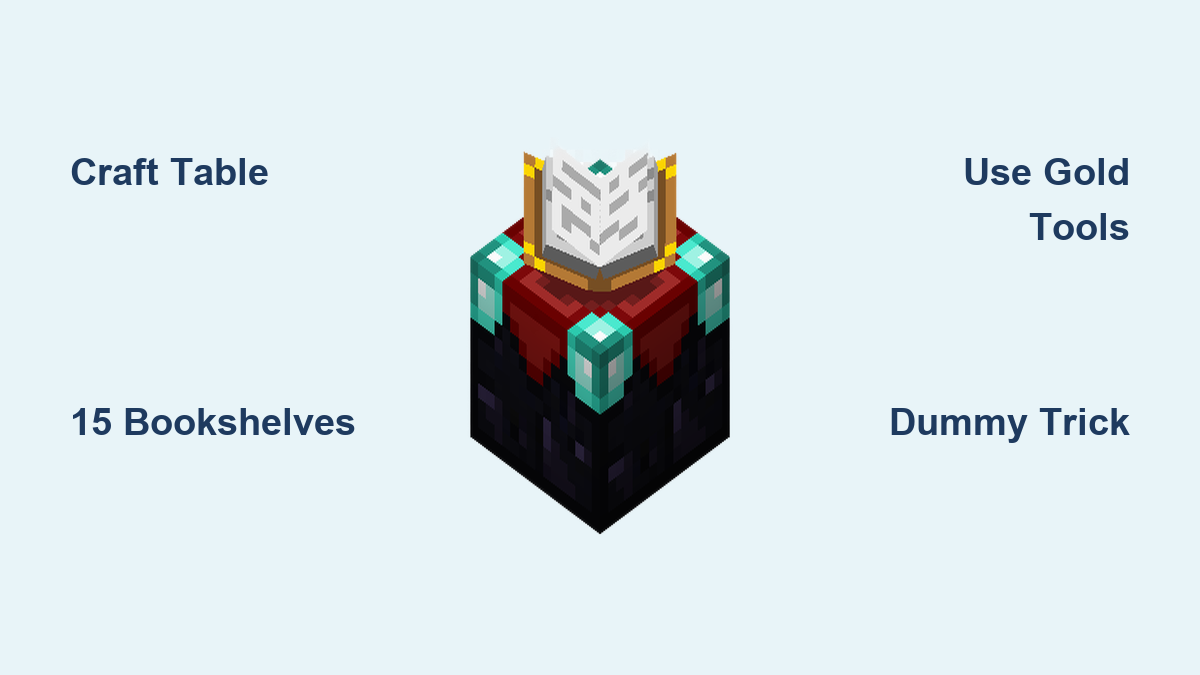
You’ve crafted your first diamond pickaxe, survived your first night, and now you’re ready to take on the Nether. But before you dive into lava-filled fortresses, there’s one crucial step: enchanting. The enchanting table is your gateway to turning basic gear into legendary equipment, like Unbreaking III on a pickaxe or Sharpness V on a sword. Knowing how to use an enchanting table isn’t just useful in Minecraft, it’s essential for surviving the game’s toughest challenges.
Using an enchanting table combines strategy, resources, and a bit of luck. You’ll need experience levels, lapis lazuli, and ideally a fully optimized setup with 15 bookshelves to unlock the strongest enchantments. This guide walks you through every step, from crafting the table and building a max-level setup, to mastering enchantment odds and avoiding common pitfalls.
Craft Your Enchanting Table
Gather Required Materials
To craft an enchanting table, you need three key components. First, collect four obsidian blocks by pouring water over lava source blocks, then mine them with a diamond or netherite pickaxe. Second, gather two diamonds from caves around Y-level -58 to -16, typically near lava lakes. Third, craft one book using three paper from sugar cane and one leather from cows.
The materials required are:
• 4 Obsidian blocks
• 2 Diamonds
• 1 Book (3 paper + 1 leather)
Place the Table Correctly
Open your 3×3 crafting grid and arrange the obsidian in the bottom row and corners, diamonds in the middle column, and the book in the top center slot. Once crafted, place the table on the ground with at least one block of air on all sides. This space is critical for adding bookshelves later. When active, the table emits floating particles that hint at the magic within.
Build the Perfect Bookshelf Setup
Add 15 Bookshelves for Maximum Power
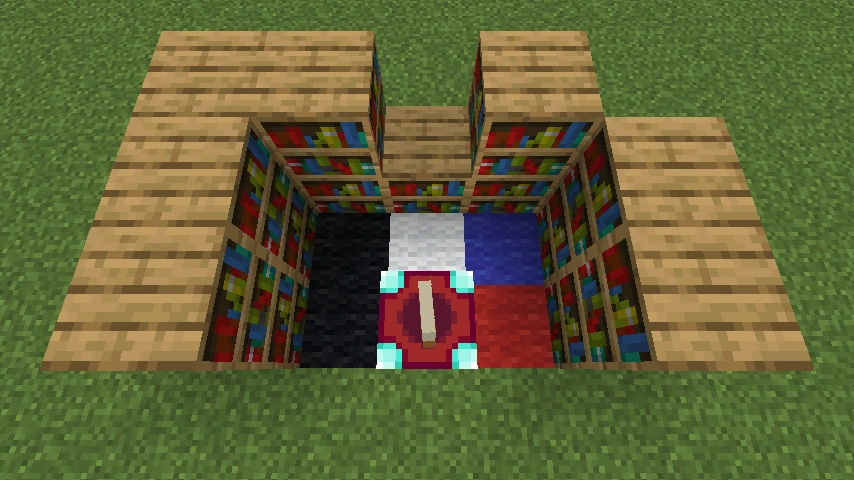
The enchanting table’s power scales directly with nearby bookshelves. To unlock the highest-tier enchantments like Sharpness V or Efficiency V, you need exactly 15 bookshelves placed one block away from the table in a 5×5 ring.
Each bookshelf adds +2 to the maximum enchantment level:
• 15 shelves = Level 30 (maximum)
• 14 shelves = Level 28
• 13 shelves = Level 26
Remove just one shelf and your odds for top-tier enchantments drop significantly.
Avoid Obstructions That Break the Link
Even a single block in the one-block gap will break the connection and reduce effectiveness. Common mistakes include placing torches on the floor between table and shelf, using carpets or snow layers, or putting fences or flowers in the gap. The game checks for line of sight, so if any block occupies the space, that shelf doesn’t count. Use ladders or glow lichen on walls behind shelves for lighting without interference.
Craft Bookshelves Efficiently
Each bookshelf requires six paper and three wood planks. Since paper comes from sugar cane, plan ahead by setting up a simple farm. Craft books first using three paper and one leather each, then place three books vertically in the center column of the crafting grid with planks filling the remaining slots.
Navigate the Enchanting Interface
Insert Items and Lapis Lazuli
Right-click the enchanting table to open the interface. You’ll see a slot for your item on the left and a slot for lapis lazuli on the right. Place your tool, weapon, or book in the left slot, then add lapis lazuli to the right. The number of lapis you use affects the tier of enchantments offered. Using more lapis increases the chance of multiple or higher-level enchantments.
Read the Enchantment Options
The enchantment names appear in the Standard Galactic Alphabet, a cryptic script that can’t be decoded in-game. However, certain patterns help you guess what you’re getting. Look for “blast” combined with “protect” for Blast Protection, “stale” for Unbreaking, or “luck” for Looting. Use external guides or memorize common prefixes to recognize likely outcomes.
Apply or Reroll Your Enchantment
Each option shows the enchantment names in code, the lapis cost, and the XP cost ranging from 1 to 30 levels. Click your desired option to apply it. The enchantment is random, so you might get one or multiple effects. Once you click, the XP and lapis are gone, even if you don’t like the result.
If the options are bad, close the interface and reopen it. But there’s a smarter way: use the dummy enchantment trick. Take a cheap item like a wooden pickaxe and enchant it using the lowest-cost option. This resets the random seed, letting you refresh the options for your actual gear without spending 30 levels.
Use Gold Tools for Better Enchantments
Why Gold Has the Best Enchantability
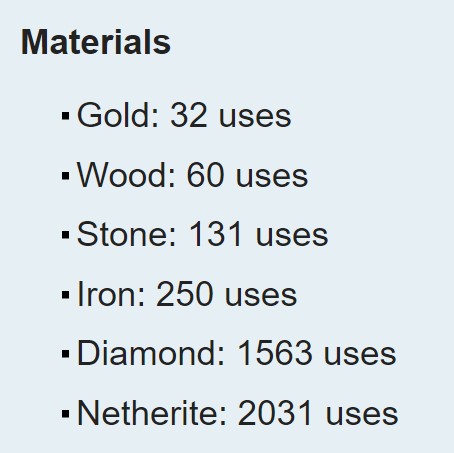
Not all materials enchant the same way. Each has an enchantability value, a hidden stat that affects how good the rolls are. Gold has the highest enchantability at 22 for tools and 25 for armor, making it statistically the best for rolling powerful enchantments. Diamond has an enchantability of only 10, meaning gold tools get better enchantments more often.
The enchantability rankings for tools are:
• Gold: 22 (Best)
• Wood: 15
• Iron: 14
• Diamond: 10
• Stone: 5 (Worst)
Upgrade Gold to Netherite
Here’s the pro strategy for god-tier gear. First, craft a golden pickaxe or sword. Second, enchant it at the table using the dummy trick to reroll until you get the perfect combo. Third, use an anvil to combine it with a netherite upgrade template and netherite ingot. The result is a netherite tool with max enchantments that would be impossible to get otherwise. This method is the only reliable way to get rare combos like Fortune III plus Efficiency V on netherite gear.
Understand What Can Be Enchanted
Items You Can Enchant at the Table
The enchanting table works on tools like pickaxes, shovels, hoes, and axes. It also works on weapons including swords, bows, crossbows, and tridents. Armor pieces such as helmets, chestplates, leggings, and boots can be enchanted, along with fishing rods and books to make enchanted books.
You can get Efficiency, Fortune, Silk Touch, Power, Looting, Depth Strider, and many more directly at the table.
Items You Cannot Enchant at the Table
Some items cannot be enchanted via the table. This includes elytra, shields, shears, flint and steel, mob heads, and carved pumpkins. Certain enchantments are also excluded from the table, including Mending, Frost Walker, Soul Speed, Curse of Vanishing, and Curse of Binding. These must be obtained from loot chests, fishing, trading with librarian villagers, or raids, then applied using an anvil.
Mending cannot be obtained from the enchanting table under any circumstances. If someone claims otherwise, they’re mistaken.
Combine Enchantments with the Anvil
Merge Enchantments Safely
The anvil is your next step after enchanting. Craft it with three iron blocks and four iron ingots, totaling 31 iron ingots. Use the anvil to combine two enchanted items, upgrade an enchanted book onto a tool, or repair enchanted items using raw materials to restore 25% durability per item added.
Avoid the Too Expensive Trap
Every time you use an item in the anvil, it gains a work penalty. After several uses, the XP cost skyrockets until you see “Too Expensive.” To avoid this, rename items early, which costs only 1 XP but resets the penalty counter. Combine books first before applying them to the tool, and enchant gold first before upgrading to netherite. This keeps costs low and lets you build god-tier gear without hitting the cap.
Remove Bad Enchantments with a Grindstone
Disenchant and Recover XP
Got a cursed item or a bad roll? Use the grindstone to remove all enchantments. Craft it with two wood planks, two sticks, and one stone slab. Place the enchanted item in the grindstone to return a portion of the XP used to enchant it, along with a clean, unenchanted item.
Handle Curses Properly
Curses including Curse of Binding and Curse of Vanishing cannot be removed by the grindstone. These items are permanently locked. For non-enchanted or cursed gear, you can combine two identical damaged items to repair them, but this removes all enchantments. For enchanted items, always use the anvil to preserve enchantments during repairs.
Fix Common Enchanting Problems

Enchantment Level Too Low
If you’re not seeing high-level options, check your bookshelf count first. You need exactly 15 for level 30. Then verify the distance, as all must be exactly one block away. Finally, check for obstructions like torches, carpets, or snow in the gap. Even a single block can disable multiple shelves.
Cannot Get Silk Touch or Fortune
These enchantments are rare and often require lower-level rolls. Try reducing bookshelves to 5 or 8 to increase your odds. Alternatively, use the dummy trick repeatedly with a book until you get the enchantment, then apply it to your tool via anvil.
Anvil Costs Too Much
Work penalty builds fast on heavily used items. Fix this by renaming items before combining, using enchanted books instead of double-enchanted tools, and upgrading gold to netherite instead of repairing repeatedly.
Frequently Asked Questions About Enchanting Tables
Can You Get Mending from an Enchanting Table?
No, Mending cannot be obtained from the enchanting table. It must be found in dungeon chests, fished up, purchased from librarian villagers, or obtained from raid rewards, then applied using an anvil.
How Many Bookshelves Do You Need for Level 30 Enchantments?
You need exactly 15 bookshelves placed one block away from the enchanting table to achieve the maximum enchantment level of 30. Each bookshelf adds +2 to the maximum level.
Why Is Gold Better for Enchanting?
Gold has the highest enchantability value at 22 for tools and 25 for armor. This means gold items have a statistically higher chance of receiving multiple high-level enchantments in a single roll compared to diamond or netherite items.
What Is the Dummy Enchantment Trick?
The dummy enchantment trick involves enchanting a cheap item like a wooden pickaxe or book using the lowest-cost option. This resets the random seed without spending your valuable XP, allowing you to refresh the enchantment options for your actual gear.
Can You Enchant Tools at the Table?
Yes, you can enchant tools including pickaxes, shovels, hoes, and axes directly at the enchanting table. You can get Efficiency, Fortune, Silk Touch, Unbreaking, and more.
What Items Cannot Be Enchanted at the Table?
Items like elytra, shields, shears, flint and steel, and mob heads cannot be enchanted at the table. Enchantments like Mending, Frost Walker, Soul Speed, and curses also cannot be obtained from the table.
Key Takeaways for Mastering Enchanting

The enchanting table is more than a menu, it’s a complete system that rewards strategy and preparation. Use gold for rolling enchantments since it has the best enchantability, build 15 bookshelves for maximum level 30 options, and use the anvil to combine and upgrade your gear. The dummy enchantment trick lets you reroll bad options without wasting XP, making it the most important skill for getting rare enchantments like Silk Touch or Fortune III.
Stockpile enchanted books instead of enchanting tools directly. This lets you wait for the perfect combination before committing to a final item. In Minecraft 1.21 and later, lower-tier enchantments cost significantly less XP, so don’t feel forced to always aim for the level 30 slot. With the right approach, you’ll have Mending, Unbreaking, and Fortune III on every tool without ever hitting “Too Expensive.”