How Big Should a Chandelier Be Over a Dining Table
Choosing the right chandelier size for your dining table isn’t just about style. It’s about balance, function, and creating the right atmosphere. A well-sized fixture draws the eye upward, enhances the room’s elegance, and ensures every guest is comfortably lit. But get it wrong, and your chandelier can overwhelm the space or leave the table in shadows. The key is matching the chandelier’s dimensions to your table and room using simple, proven guidelines. In this guide, you’ll learn exactly how to calculate the ideal size, hang it at the perfect height, and avoid common mistakes so your dining area feels both inviting and intentional.
Match Chandelier to Table Width

The most reliable way to determine chandelier size starts with your dining table. The fixture should complement the table’s proportions without spilling over or looking lost.
Use the 50–75% Width Rule
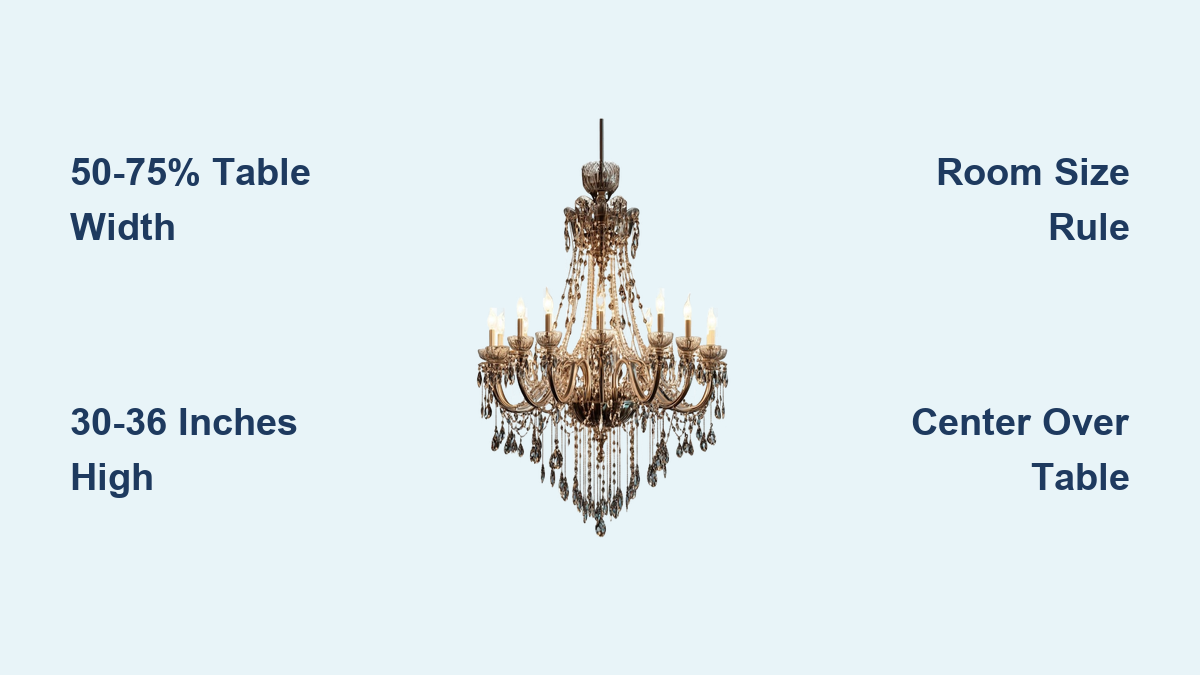
A chandelier’s diameter or width should be between 50% and 75% of your table’s width. This keeps the light focused over the table while maintaining visual harmony.
For a 48-inch wide table:
• Minimum: 48 × 0.5 = 24 inches
• Maximum: 48 × 0.75 = 36 inches
• Ideal size: 24″ to 36″ diameter
For a narrower 36-inch table:
• Minimum: 36 × 0.5 = 18 inches
• Maximum: 36 × 0.75 = 27 inches
• Ideal size: 18″ to 27″ diameter
Sticking within this range ensures the chandelier enhances the table rather than competing with it.
Adjust for Round Tables
Round tables need a bit more clearance. The chandelier should be 12 to 18 inches smaller than the table’s diameter to avoid encroaching on seating space.
Example: A 60-inch round table needs a chandelier between 42″ and 48″ in diameter. This keeps the fixture centered and proportional while allowing room for place settings and centerpieces.
Handle Long Rectangular Tables
For tables over 72 inches long, a single chandelier may not provide even lighting. Instead, consider linear or multi-fixture layouts.
• Use a long bar-style chandelier that spans at least half the table’s length
• Or install two smaller pendants centered over the table, spaced 24 to 30 inches apart
• Ensure all fixtures are at the same height and aligned with the table’s centerline
Size Based on Room Dimensions
If you’re selecting furniture and lighting together, use the room’s size to guide your choice.
Apply the Room Sum Rule
Add the room’s length and width in feet. This sum equals the ideal chandelier diameter in inches.
• 10 ft × 14 ft dining room: 10 + 14 = 24-inch chandelier
• 12 ft × 16 ft dining room: 12 + 16 = 28-inch chandelier
This method ensures the fixture fits the room’s scale even before the table is chosen.
Balance Visual Weight
Two chandeliers of the same size can look very different based on design.
• Ornate crystal or tiered fixtures appear larger due to their complexity. Opt for a slightly smaller size
• Minimalist drum or ring chandeliers may need to be closer to the 75% rule to feel substantial
• When in doubt, go for moderate visual weight to avoid overpowering the space
Hang at the Right Height

Even a perfectly sized chandelier fails if hung at the wrong height. The goal is clear sightlines and optimal illumination.
Position 30–36 Inches Above Table
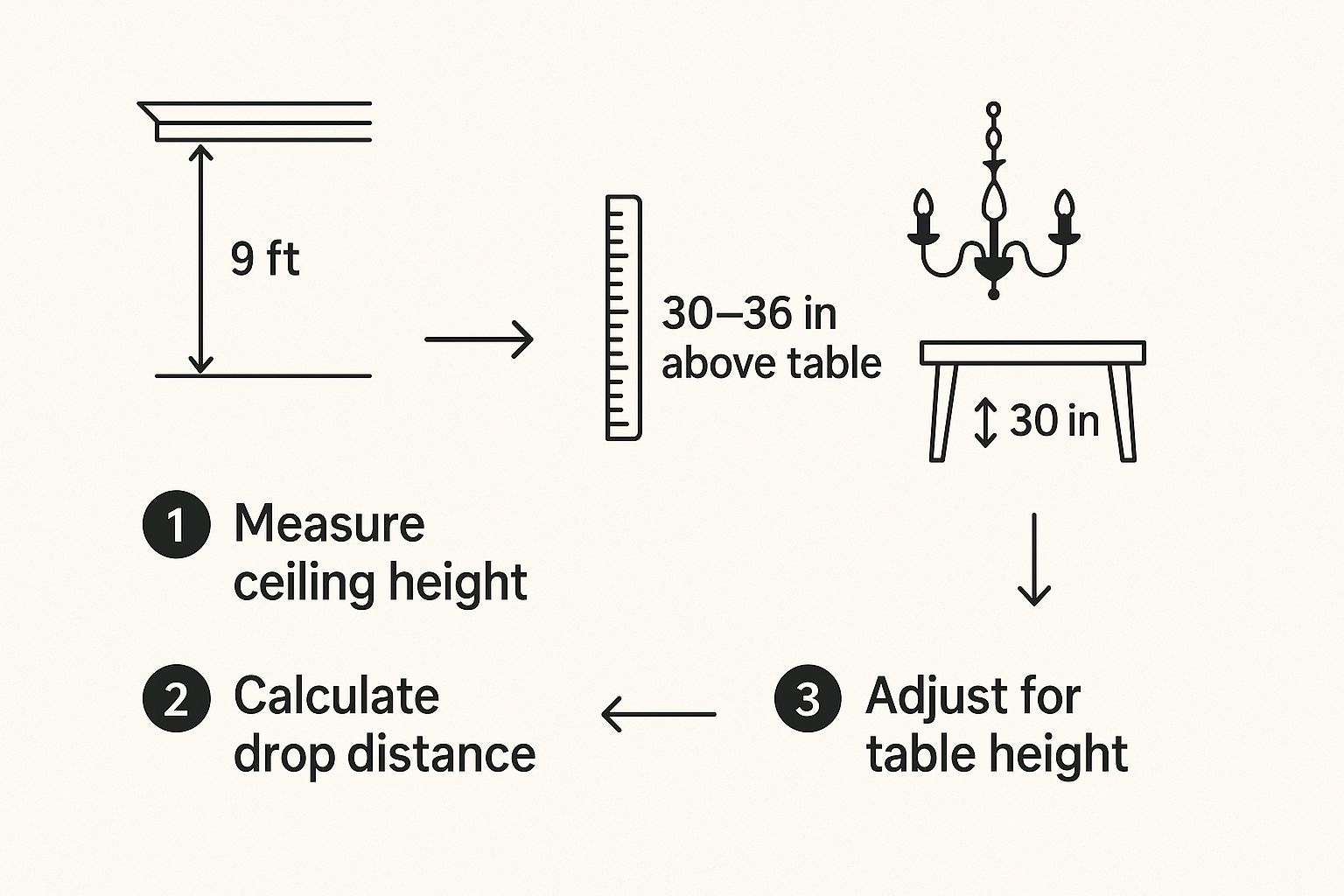
The bottom of the chandelier should hang 30 to 36 inches above the table surface.
• 30–32 inches works best for standard 8-foot ceilings
• 34–36 inches is ideal for 9-foot or higher ceilings to maintain proportion
• Hanging too low blocks views. Hanging too high reduces impact and light coverage
Adjust for Ceiling Height
For every foot above 8 feet, add 3 inches to the hanging length.
• 9-foot ceiling: hang 33–39 inches above the table
• 10-foot ceiling: hang 36–42 inches above
This keeps the fixture visually connected to the table, not floating near the ceiling.
Ensure Floor Clearance
In open areas or under stairwells, maintain at least 7 feet (84 inches) from the floor to the fixture’s lowest point.
• In high-traffic zones or vaulted spaces, aim for 8 feet to prevent head bumps and allow free movement
Choose the Right Fixture Height
The chandelier’s vertical size matters too, especially under high ceilings.
Follow the 3-Inch Per Foot Rule
For every foot of ceiling height, the chandelier should be about 3 inches tall.
• 8-foot ceiling: 24-inch tall fixture
• 10-foot ceiling: 30-inch tall fixture
This ratio keeps the fixture in scale with the room. For minimalist designs, you can go slightly taller. For compact spaces, shorter is safer.
Provide Enough Light Output

Size isn’t just physical. Your chandelier must produce enough light to set the mood and illuminate meals.
Aim for 30–40 Lumens Per Square Foot
Calculate total light needed by multiplying room area by 30 (minimum) and 40 (ideal).
• 150 sq ft dining room: 150 × 30 = 4,500 lumens (minimum)
• 150 sq ft dining room: 150 × 40 = 6,000 lumens (maximum)
A fixture like the Obsidian chandelier (5,040 lumens) fits perfectly in this range.
Use Warm Light and Dimmers
• Choose bulbs with a 2700K–3000K color temperature for a warm, inviting glow
• Install a dimmer switch to adjust brightness for different occasions
• Use shaded or diffused fixtures (frosted glass, fabric shades) to prevent glare and soften light
Pick a Style That Fits
The chandelier’s design affects how big it appears and how it shapes the room’s feel.
Match Style to Ceiling Height
• High or vaulted ceilings: tiered, crystal, or vertical chandeliers add drama and fill space
• Low ceilings: drum, ring, or flush-mount designs keep the profile compact and safe
Consider Design Impact
• Crystal chandeliers: elegant and light-reflective, ideal for formal dining rooms
• Candle-style: rustic charm, great for farmhouse or traditional spaces
• Modern minimalist: clean lines, subtle presence, perfect for contemporary homes
• Lantern or shaded fixtures: soft, ambient light with seasonal shade-swapping options
Center It Perfectly
Placement is as important as size.
Center Over the Table
Always center the chandelier over the dining table, not the room. Use a tape measure from all four corners to confirm alignment.
• Miscentering creates uneven lighting and visual imbalance
• Use a laser level or chalk line for precision during installation
Use Multiple Fixtures for Long Tables
For tables longer than 7 feet:
• Install two matching pendants in a linear row
• Space them 24–30 inches apart
• Keep them at the same height and centered over the table
This approach ensures even lighting and maintains symmetry.
Avoid Common Mistakes

Even with the right numbers, missteps can ruin the effect.
Fixing an Oversized Fixture
Too big: overpowers the room, blocks views, creates glare.
Solution: Downsize or choose a more open, airy design to reduce visual weight.
Fixing an Undersized Fixture
Too small: gets lost in the space, fails to light the table.
Solution: Go larger, or use multiple fixtures to fill the visual gap.
Correcting Height Errors
Too low: distracting and hazardous.
Too high: looks disconnected and weak.
Fix: Adjust chain or rod length. Most chandeliers allow post-installation tweaks.
Final Tips for Long-Term Success
A chandelier is a long-term design investment. Plan for ease of use and maintenance.
Prioritize Easy Maintenance
• Crystal and ornate fixtures need regular dusting to preserve sparkle
• Shaded chandeliers let you swap shades seasonally. Deep tones for winter, light creams for spring
• Choose easy-to-replace bulbs and accessible mounting hardware
Think About Room Evolution
• In open-concept homes, use chandeliers to define zones. Dining under the fixture, seating nearby
• If remodeling, plan lighting first, then select table size accordingly
When in Doubt, Test It
• Cut a paper circle in your intended chandelier size
• Tape it to the ceiling where the fixture will go
• View it from different angles and seating heights to check proportion
Frequently Asked Questions About Chandelier Sizing Over Dining Tables
What is the formula for calculating chandelier size over a dining table?
Multiply your table’s width by 0.50 to get the minimum diameter, and by 0.75 to get the maximum. For example, a 48-inch wide table needs a chandelier between 24 and 36 inches in diameter.
How high should a chandelier hang above a dining table?
The bottom of the chandelier should hang 30 to 36 inches above the table surface. Hang closer to 30 inches for standard 8-foot ceilings, and closer to 36 inches for 9-foot or higher ceilings.
Can I use the room dimensions to determine chandelier size?
Yes. Add the room’s length and width in feet, then convert that sum to inches. A 10-foot by 14-foot room needs roughly a 24-inch chandelier. This works well when furniture hasn’t been chosen yet.
What if my dining table is longer than 72 inches?
For tables over 72 inches, a single chandelier often can’t light the entire surface evenly. Use a long linear chandelier that spans at least half the table length, or install two smaller pendants spaced 24 to 30 inches apart.
How do I adjust chandelier size for a round dining table?
For round tables, the chandelier should be 12 to 18 inches smaller than the table’s diameter. A 60-inch round table needs a chandelier between 42 and 48 inches wide to maintain proper proportions and clearance.
Does chandelier style affect how big it looks?
Yes. Ornate crystal or tiered fixtures appear larger than their actual dimensions due to their complexity. Minimalist designs may need to be larger to make the same visual impact. Consider the fixture’s visual weight when sizing.
Key Takeaways for Choosing the Right Chandelier Size
The ideal chandelier size over a dining table follows a simple formula: the fixture diameter should be 50% to 75% of your table’s width. This ensures the light covers the table while maintaining visual balance. For round tables, subtract 12 to 18 inches from the diameter rather than using the percentage range.
Hanging height matters just as much as width. Keep the bottom of the chandelier 30 to 36 inches above the table, adjusting 3 inches higher for every foot of ceiling height above 8 feet. Don’t forget floor clearance of at least 7 feet in walk-through areas.
Room dimensions provide a secondary check. Add your room’s length and width in feet to get the ideal chandelier diameter in inches. This works when you’re designing the space before selecting furniture.
Finally, consider visual weight. Crystal and ornate fixtures appear larger than minimalist designs of the same size. When in doubt, test with a paper template before committing. A well-sized chandelier transforms your dining space into a warm, functional gathering spot.