Pool Table Sizes: Standard Lengths Explained
You’re planning a game room and wondering exactly how long is a pool table that will fit your space. The answer matters more than you might think. Pool tables range from 6-foot compact models to massive 9-foot tournament giants, and choosing the wrong length means cramped shots and years of regret. Getting the measurements right the first time saves money, protects your walls, and ensures enjoyable play for everyone.
This guide covers every standard pool table length, explains the 2-to-1 ratio rule that defines regulation tables, and shows you exactly how to match your table to your room. You’ll learn minimum room requirements, the truth about short cues, and which size works best for your skill level and space.
Standard Pool Table Lengths Explained
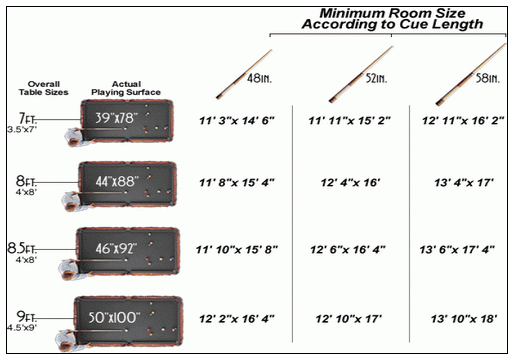
Pool tables come in defined size categories, each with specific playing dimensions. Understanding these lengths helps you choose a table that matches your room and skill level.
6-Foot Tables: The Smallest Option
The 6-foot pool table measures 72 inches long with a playing surface of 36 inches by 72 inches. This size works best for extremely tight spaces, children’s play areas, or beginners who want a pool table in a small apartment. The limited playing area restricts long shots and skill development, making it less ideal for serious practice.
7-Foot Tables: The Bar Box Standard
A 7-foot pool table is 78 inches long with a playing area of 39 inches by 78 inches. This size dominates bars, pubs, and casual league play across North America. Players must adapt to tighter ball clusters and faster gameplay due to the reduced surface area. These tables fit in rooms as small as 16 feet by 13 feet with a standard 58-inch cue.
8-Foot Tables: The Home Favorite
The 8-foot pool table measures 88 inches long with a playing surface of 44 inches by 88 inches. This size dominates home installations because it balances space requirements with authentic gameplay. Families and amateur players benefit most from this dimension, which allows proper shot development without requiring a massive room. Minimum room size is 17 feet by 13 feet.
9-Foot Tables: Tournament Standard
A 9-foot pool table is 100 inches long with a playing area of 50 inches by 100 inches. This is the exclusive size used in professional tournaments and televised matches. The larger surface allows balls to spread out, demanding greater precision and strategic planning. Room requirements start at 18 feet by 14 feet, making this size impractical for most residential settings.
10-Foot and 12-Foot Tables
Ten-foot tables extend one foot beyond tournament size and are rarely used for standard pool. Twelve-foot tables belong to snooker, not pool. A snooker table measures 140 inches long and requires a room of approximately 16.5 feet by 22.5 feet.
The 2-to-1 Ratio Rule Explained

Every regulation pool table follows a geometric principle that affects gameplay fairness and consistency. Understanding this ratio helps you identify quality tables and avoid substandard options.
Why Length Must Equal Twice the Width
The 2-to-1 ratio means the playing length is exactly twice the playing width. This mathematical relationship ensures consistent ball angles, predictable shot distances, and fair gameplay across different table sizes. An 8-foot table measures 44 inches wide by 88 inches long, and 88 divided by 44 equals exactly 2.
This ratio applies only to the playing area measured between cushion noses. The overall table dimensions include rails and frame, adding 10 to 16 inches to each direction.
Regulation vs. Standard Tables
Regulation tables meet strict standards including the 2-to-1 ratio, one-inch slate thickness, and proper rail construction. These tables are used in official tournaments. Standard tables typically fall within the 7 to 9-foot range but may not meet all regulation specifications. Always verify the ratio before purchasing.
Playing Area vs. Overall Dimensions

Many buyers confuse the playing surface with the total footprint, leading to costly measurement mistakes. Knowing the difference prevents wall collisions and installation problems.
The Critical Distinction
The playing area, also called bed size, measures from cushion nose to cushion nose. This is the surface where balls actually roll. The overall dimensions include the rails, frame, and decorative elements surrounding the playing area.
| Table Size | Playing Area | Approximate Overall Size |
|---|---|---|
| 7-Foot | 78″ × 39″ | 94″ × 55″ |
| 8-Foot | 88″ × 44″ | 104″ × 60″ |
| 9-Foot | 100″ × 50″ | 116″ × 66″ |
Always use overall dimensions when measuring your room to ensure proper clearance.
Room Size Requirements for Each Table Length

The most common mistake when buying a pool table is choosing a size that fits the room but not the player. Cue clearance determines whether you can actually take full swings.
Minimum Room Dimensions with Standard Cues
A standard cue measures 58 inches. You need this length plus about 6 inches of backswing clearance on every side of the table. This requirement often surprises buyers who measure their room and find their chosen table won’t work.
| Table Size | Minimum Room Width | Minimum Room Length |
|---|---|---|
| 7-Foot | 16 feet | 13 feet |
| 8-Foot | 17 feet | 13 feet |
| 9-Foot | 18 feet | 14 feet |
A 9-foot table simply won’t fit in a 15-foot by 15-foot room, even if the floor space seems adequate.
The Short Cue Trade-Off
Using a shorter cue reduces required room size but creates gameplay problems. A 48-inch cue shaves 10 to 12 inches from each side but forces an unnatural stance and reduces shot power. Many players regret this compromise after extended use.
Test a short cue in a bar or friend’s home before committing to a table that requires one. If it feels awkward, choose a smaller table instead.
Choosing Between 7-Foot and 8-Foot Tables

Most buyers choose between these two sizes. Each offers distinct advantages depending on your room and goals.
When a 7-Foot Table Makes Sense
A 7-foot table fits in smaller rooms starting at 16 feet by 13 feet. These tables cost less and provide authentic bar-style gameplay. The tight surface teaches quick decision-making and shot selection in confined spaces. This size works well for casual players, rented spaces, or rooms where space is the primary constraint.
Why 8-Foot Dominates Home Installations
The 8-foot table is the most popular residential choice for good reason. It accommodates families with varying skill levels and provides room for proper stance and full swings. The 44-inch by 88-inch playing area allows long shots and complex patterns while fitting in rooms as small as 17 feet by 13 feet. This size offers the best balance of space, cost, and authentic gameplay.
Is a 9-Foot Table Right for You
Nine-foot tables demand precision, power, and significant space. Understanding these requirements prevents expensive mistakes.
What the Extra Length Demands
The additional 12 inches over an 8-foot table fundamentally changes gameplay. Balls spread further apart, reducing accidental clusters and rewarding accuracy. Players must master long-distance shots and develop stronger position play. The larger surface area also means more walking around the table during games.
Room and Skill Requirements
A 9-foot table requires a minimum room of 18 feet by 14 feet with a standard 58-inch cue. This requirement eliminates most residential settings. Even with a 52-inch mid-size cue, you need at least 16.5 feet by 12.5 feet, which still represents a large dedicated space.
Choose a 9-foot table only if you play in leagues, plan to compete professionally, or have a room specifically designed for tournament-style pool.
The 8-Foot Oversize Option
The 8-foot oversize table bridges the gap between standard home play and tournament competition. This option deserves consideration from serious home players.
What Makes an 8-Plus Different
An oversize 8-foot table features a playing area of 46 inches by 92 inches. This adds 2 inches of width and 4 inches of length compared to a standard 8-foot table. The result is longer shots and more challenging gameplay without the full room requirements of a 9-foot table.
This size needs approximately 17.5 feet by 13.5 feet with a standard cue, fitting in many rooms that cannot accommodate a true 9-foot table.
How to Measure Your Room Correctly
Accurate room measurement prevents the frustration of a table that won’t fit. Follow this step-by-step process before shopping.
The Measurement Formula
First, measure your floor space from wall to wall in both dimensions. Subtract any obstacles including doors, pillars, furniture, and wall protrusions. Add the length of your intended cue plus 6 inches for backswing on each side of the table. Finally, add 12 inches for safety and walking space.
The formula looks like this: Minimum Room Width equals Table Width plus two times Cue Length plus 12 inches. Minimum Room Length equals Table Length plus two times Cue Length plus 12 inches.
Pre-Purchase Simulation Method
Before buying, cut cardboard or plywood to match your desired table’s playing dimensions. Place this template in your room and attempt several shots using your actual cue. Check door swings, walking paths, and player positioning. This test reveals problems that measurements alone might miss.
Frequently Asked Questions About Pool Table Lengths
What is the most common pool table length for homes?
The 8-foot table at 88 inches long is the most common residential choice. This size balances playable surface with room-friendly dimensions, making it suitable for most home game rooms.
Can a pool table fit in a 12-foot by 12-foot room?
A 12-foot by 12-foot room cannot accommodate any standard pool table with proper cue clearance. Even a 7-foot table requires a minimum of 16 feet by 13 feet with a standard cue. Consider a 6-foot table or a room with more length.
Do all pool tables follow the 2-to-1 ratio?
Regulation pool tables must follow the 2-to-1 ratio where length equals twice the width. Non-regulation tables may deviate from this standard, which affects gameplay consistency. Always verify the ratio before purchasing.
How much space does a 9-foot table actually need?
A 9-foot table needs a minimum of 18 feet by 14 feet when using a standard 58-inch cue. This measurement includes the table footprint plus full cue swing clearance on all sides.
Is it worth buying a 9-foot table for home use?
A 9-foot table is worth buying only if you have a room at least 18 feet by 14 feet and plan to play competitively. Most homes cannot accommodate this size properly, and using a shorter cue significantly impacts gameplay quality.
Key Takeaways for Choosing Your Pool Table Length
Pool table length directly impacts gameplay quality, room fit, and long-term satisfaction. A 7-foot table at 78 inches long works for tight spaces and casual play. An 8-foot table at 88 inches serves most homes best with its balanced dimensions. A 9-foot table at 100 inches requires dedicated large rooms and serious player commitment.
Always prioritize cue clearance over floor space. Measure your room using overall table dimensions, not playing area. Test short cues before committing to a table that requires them. A quality table lasts for generations when properly chosen and maintained. Measure twice, buy once, and enjoy decades of smooth play.