How to Choose a Ping Pong Table
Choosing the right ping pong table isn’t about picking the cheapest model or the flashiest design. It’s about matching the table to your environment, skill level, and space. A $2,000 tournament-grade table will warp in a damp garage, while a budget fold-up will frustrate serious players. The key is understanding what actually matters: surface thickness, material durability, frame stability, and how you plan to store it. This guide walks you through every factor that determines whether your table delivers years of enjoyable play or becomes an expensive mistake.
This guide covers everything from environmental suitability and surface thickness to brand comparisons and pricing tiers. By the end, you’ll know exactly which table fits your needs and budget.
Match Environment First: Indoor vs. Outdoor Tables
Your playing environment determines almost every other choice. Get this wrong, and even the most expensive table can fail prematurely.
Pick Outdoor Tables for Damp or Variable Spaces
If your table will live in a garage, covered patio, or any space exposed to humidity or temperature swings, an outdoor-rated table is essential. Indoor tables use MDF or chipboard, which swells and warps when exposed to moisture. Even condensation in a cool garage can ruin the surface over time.
Outdoor tables use melamine, high-pressure laminate (HPL), or plastic-aluminum composites. These materials resist water, UV rays, and temperature extremes. Brands like Cornilleau and KETTLER engineer outdoor models to last a decade or more in all weather conditions.
Outdoor tables work perfectly indoors. If you’re unsure about climate control, go outdoor-rated for peace of mind and longer lifespan.
Recognize Weather-Resistant Features
High-end outdoor tables include specific features designed for real-world conditions:
- Anti-glare coatings (Cornilleau’s Mattop reduces glare by 10 times)
- Galvanized or powder-coated steel frames to prevent rust
- Oversized, rugged wheels for grass, gravel, or uneven surfaces
- Sealed seams to block water infiltration
These features aren’t just marketing. They’re essential for longevity in outdoor or semi-protected environments.
Prioritize Surface Thickness for Better Play Quality

The thickness of the playing surface directly affects bounce consistency, spin response, and overall feel. This is the most significant indicator of table quality.
Avoid Thin Tables for Regular Play
Tables under 16mm use thin chipboard with poor rebound. The ball response feels “dead” and inconsistent, unsuitable for anything beyond occasional play. These are common in budget sets but degrade quickly. Avoid them if you plan to play more than a few times per month.
Stick to 16mm or thicker for any serious use.
Choose 16mm to 19mm for Families and Beginners
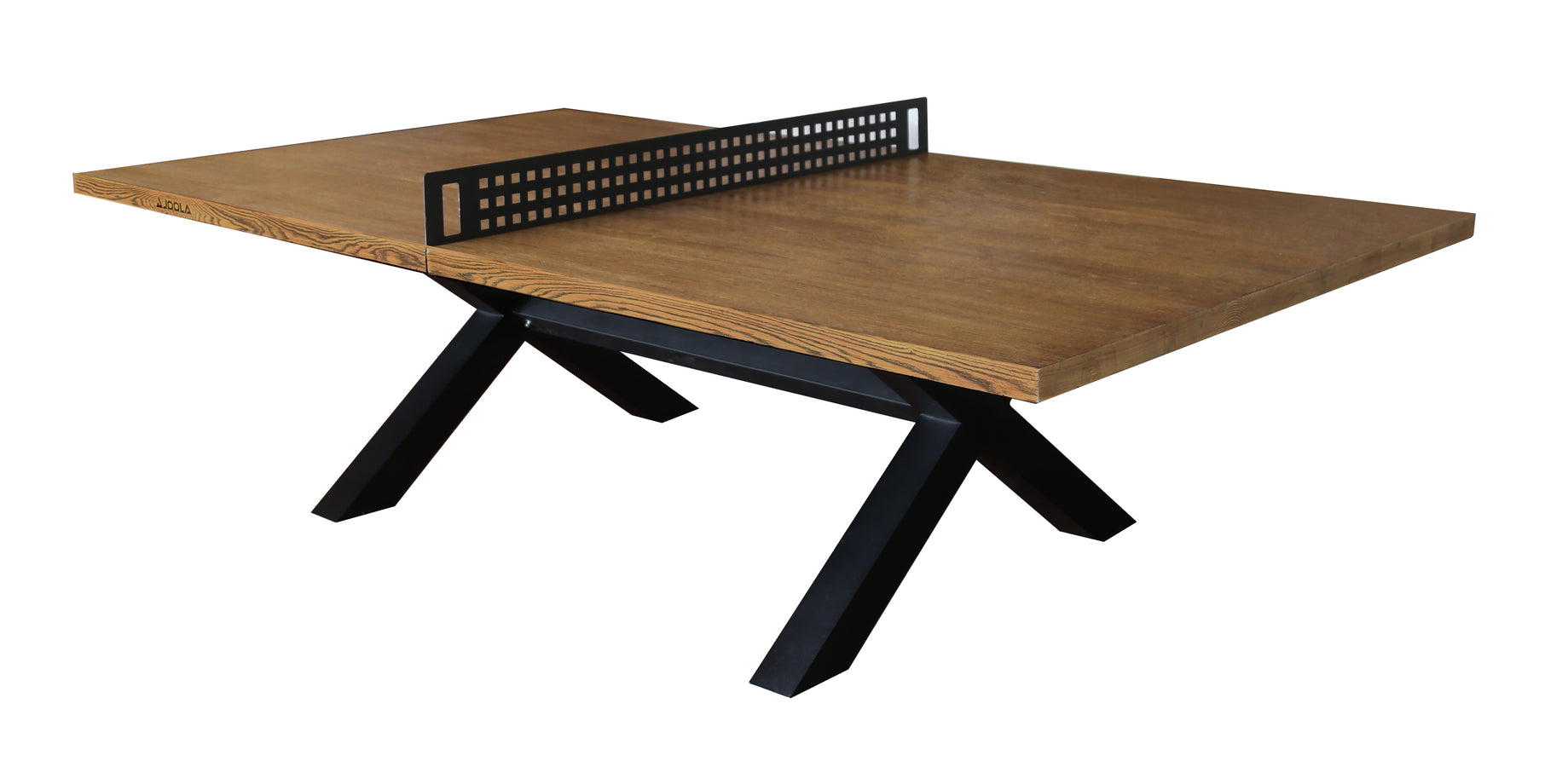
This range delivers reliable bounce at a reasonable price. It’s ideal for casual home play, kids learning the game, and social recreation. Models like the JOOLA Berkshire or Cornilleau Sport 400 offer solid performance in this category without breaking the bank.
Upgrade to 22mm to 25mm for Serious Play
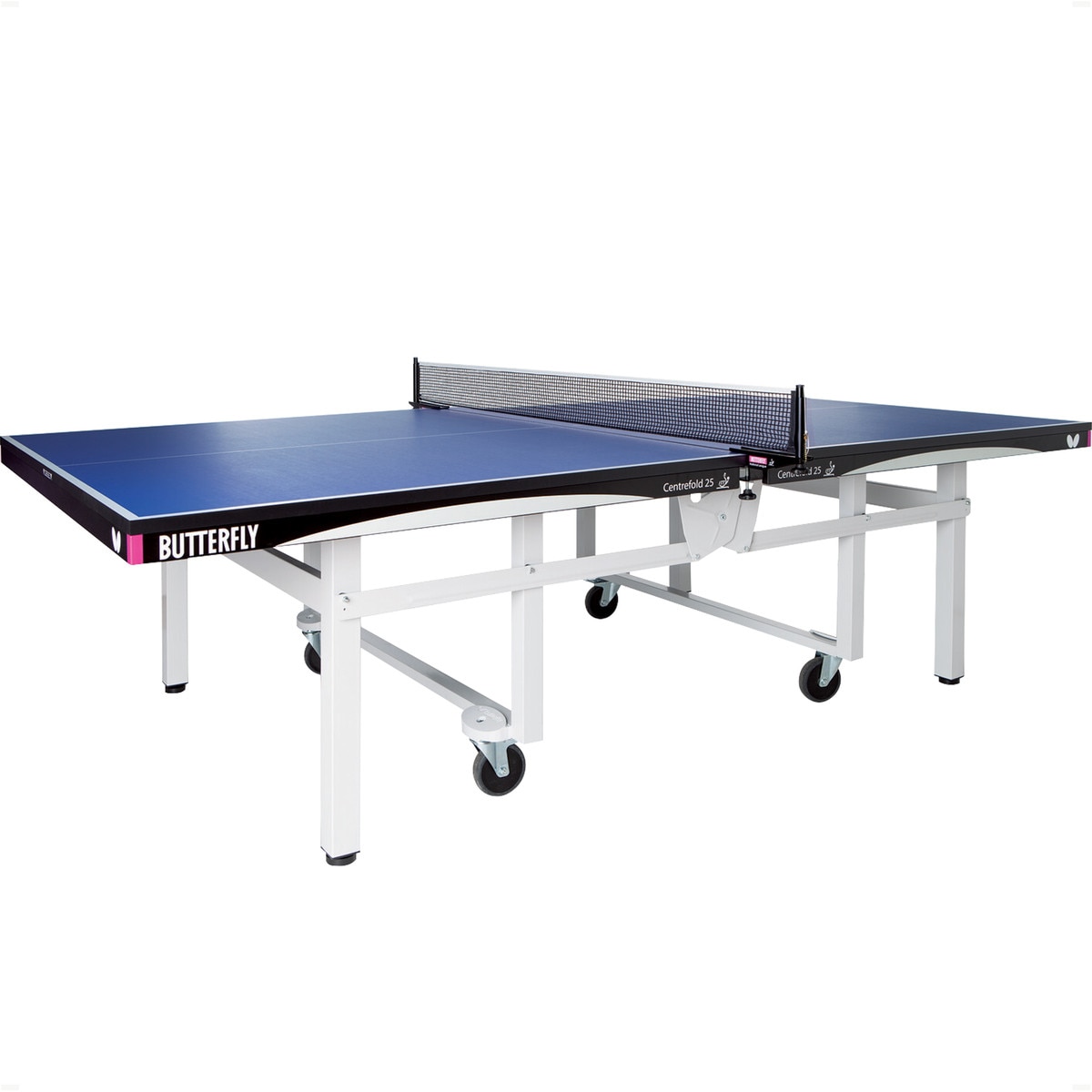
For intermediate to advanced players, thickness matters significantly:
- 22mm: Premium home tables like the JOOLA Tour 25mm or Butterfly Easifold DX offer tournament-like consistency
- 25mm: The gold standard used in official competitions. Provides maximum stability, spin accuracy, and rebound control
Butterfly Centrefold 25 and JOOLA World Cup are 25mm indoor tables trusted by professionals. If you train seriously, this is the minimum thickness you should consider.
Understand Surface Materials and Performance
Indoor tables use MDF or plywood, where thicker means better bounce. Outdoor tables use HPL or melamine, which are typically thinner (4mm to 9mm effective playing layer) but backed by rigid substrates. High-end outdoor models like the Cornilleau 700X mimic 22mm indoor performance despite thinner surfaces.
Don’t assume outdoor means worse play. Top outdoor tables rival indoor models in bounce quality.
Verify Certification and Safety Standards
Certifications confirm a table meets official performance and safety benchmarks. Look for these before buying.
Look for FFTT Certification
The French Table Tennis Federation tests tables for rebound consistency, surface flatness, and stability under impact. Cornilleau is the only brand with FFTT approval across all models. Their competition line meets professional-level standards.
Check for EN 14468 Compliance
This European safety standard covers locking mechanisms that must prevent accidental collapse, wheel safety including brakes and secure axles, and stability in both playing and storage positions. Premium tables exceed this requirement, with some using 16 locking points instead of the standard 8.
Evaluate Frame and Stability Features
A wobbly table ruins the game. Frame quality ensures durability and maintains a flat playing surface during aggressive rallies.
Choose Heavy-Gauge Steel or Reinforced Aluminum
Low-cost tables use thin metal that flexes during play. Top models use thick steel tubing (1.5mm or thicker), cross-braced leg supports, and reinforced center bars. This prevents vibration and keeps the surface level during intense rallies.
Check for Adjustable Feet
This feature is essential for outdoor use or uneven floors. Dial-adjustable feet, found on models like the Cornilleau 700X, let you level the table without lifting. It’s critical on sloped patios, lawns, or garage floors.
Confirm Anti-Slip Feet
Rubber pads protect flooring and prevent sliding. Indoor tables need non-marking feet, while outdoor models require deeper treads for grip on wet surfaces.
Select the Right Carriage System for Your Space
How you store and move the table defines your daily experience. Choose based on your available space and access.
Use Split Carriage for Tight Spaces
Split-carriage tables fold into two independent halves that roll on separate bases. This system fits through standard 32-inch doorways and stores in narrow closets or hallways. It’s easier to handle for one person.
Top models include Cornilleau Sport 400M and JOOLA Tour Split.
Choose Single Carriage for Quick Setup
Single-carriage tables fold in half but stay connected, rolling as one unit. They open and close faster and often include integrated net posts. The tradeoff is a wider storage footprint (up to 60 inches), which may not fit through narrow halls.
This design works best in dedicated game rooms with open access.
Consider Stationary Tables for Permanent Installations
For parks, schools, or outdoor areas, stationary tables are built to last. They feature bolt-down anchors to prevent theft, metal nets that resist vandalism, and reinforced frames that handle constant public use.
Examples include the Cornilleau 600X Institutional and KETTLER Eden Outdoor Stationary.
Match the Table to Your Skill Level
Your playing ability determines the performance tier you need. Don’t overpay for features you won’t use.
Beginners Should Focus on Durability
New players hit the table frequently and lack paddle control. Prioritize 16mm to 19mm thickness for basic consistency, outdoor-rated surfaces to survive bumps and spills, and features like corner protectors and ball storage.
Avoid flimsy indoor models that won’t last. Recommended models include JOOLA Berkshire and Cornilleau Sport 400.
Intermediate Players Need Consistent Bounce
At this level, you notice dead spots and uneven rebound. Invest in 22mm surfaces, stable frames with cross bracing, and adjustable net systems. Indoor tables are ideal if you have climate-controlled space.
Top picks include Butterfly Easifold DX 22 and JOOLA Tour 25mm.
Advanced Players Require Tournament Specs
Serious training demands 25mm thickness, FFTT-certified surfaces, and minimal vibration with maximum spin response. Stick to indoor-only models, as outdoor coatings can subtly alter ball behavior.
Pro standards include Butterfly Centrefold 25 and JOOLA World Cup.
Compare Top Brands by Use Case
Each brand excels in different areas. Match your priorities to the right manufacturer.
JOOLA: Best All-Around Value
JOOLA offers a wide range with strong US support and a good balance of price and quality. Best for families, offices, and home game rooms. Top models include Tour 25mm (indoor) and Cross Court (outdoor).
RS Barcelona: Best Design-Focused Table
RS Barcelona tables feature sleek, modern aesthetics that double as furniture. Best for luxury homes and design-forward spaces. The You and Me Outdoor is their flagship model.
Note that style comes at a premium price, and these tables aren’t optimized for pro-level play.
Butterfly: Best for Serious Players
Butterfly delivers unmatched bounce and pro-level precision trusted in tournaments. Best for clubs, coaches, and competitive players. The Centrefold 25 is their benchmark model.
KETTLER: Best for Outdoor Durability
KETTLER tables feature weatherproof engineering, strong warranties, and vandal-resistant construction. Best for backyards, community centers, and schools. The Axos Outdoor is their top model.
Cornilleau: Best for Safety and Longevity
Cornilleau offers 10-year warranties, anti-glare finishes, and 16-point locking systems. Best for families, outdoor use, and safety-conscious buyers. The 700X Outdoor is their flagship.
Plan Your Space Before Buying
Even the best table won’t work if your room is too small. Measure twice, buy once.
Know the Required Dimensions
The standard table size is 9 feet by 5 feet by 2.5 feet high. Minimum play space requires 2 meters (6.5 feet) behind each end and 1 meter (3 feet) on the sides. Ideal play space provides 4 meters (13 feet) behind and 1.5 to 2 meters (5 to 6 feet) on sides.
Measure doorways before purchasing, especially for single-carriage models that may not fit through narrow halls.
Consider Your Flooring
Wood or laminate floors are ideal for smooth movement and durability. Carpet is acceptable but slows wheels, especially thick pile. Tile or concrete is hard on knees and can be slippery when wet.
Use protective mats under indoor tables on hardwood to prevent scratches.
Balance Price, Warranty, and Long-Term Value
Spending more upfront often saves money over time. Here’s how to evaluate value.
Price vs. Performance Guide
At the $200 to $400 range, expect 12mm to 15mm thickness suitable for occasional play and kids.
At $400 to $800, get 16mm to 19mm thickness ideal for families and casual use.
At $800 to $1,500, expect 22mm to 25mm thickness for serious players and clubs.
At $1,500 and above, get 25mm thickness plus design features for pro training and luxury spaces.
Use Warranty as a Trust Signal
Indoor tables typically come with 1 to 3 year warranties due to material sensitivity. Outdoor tables often include 5 to 10 year warranties, with Cornilleau offering a standard 10-year guarantee. Top brands offer spare parts for 10 to 20 years, extending the table’s functional life indefinitely.
A long warranty reflects confidence in durability.
Frequently Asked Questions About Choosing a Ping Pong Table
What thickness ping pong table should I buy?
For casual family play, a 16mm to 19mm table provides good value. For serious players or club use, choose 22mm to 25mm for tournament-quality bounce. Avoid tables under 16mm as the ball response is inconsistent.
Can I use an indoor ping pong table outdoors?
No. Indoor tables use MDF or chipboard that warps and delaminates when exposed to moisture, humidity, or temperature swings. Always choose an outdoor-rated table for garage, patio, or uncovered spaces.
How much space do I need around a ping pong table?
Minimum clearance is 2 meters (6.5 feet) behind each end and 1 meter (3 feet) on each side. Ideal space is 4 meters (13 feet) behind and 1.5 to 2 meters (5 to 6 feet) on sides for full defensive play.
What is the best ping pong table for home use?
The best table depends on your situation. For families, the JOOLA Berkshire or Cornilleau Sport 400 offer excellent value. For serious players, the Butterfly Centrefold 25 or JOOLA World Cup deliver tournament-grade performance.
Are expensive ping pong tables worth it?
Yes, if you play regularly or competitively. Higher prices correlate with thicker surfaces (22mm to 25mm), better frame stability, and longer warranties. A quality table lasts 10 to 20 years, making the investment worthwhile.
Do I need a professional to assemble a ping pong table?
Most tables come with clear instructions and assemble in 1 to 2 hours with two people. Professional assembly is recommended for high-end models like the Butterfly Centrefold to ensure proper leveling and setup.
Key Takeaways for Choosing Your Ping Pong Table
The best ping pong table isn’t the most expensive option. It’s the one that fits your environment, skill level, and space. Prioritize surface thickness, material quality, and frame stability over flashy features. Outdoor-rated tables work indoors and survive fluctuating conditions, making them the safer choice for uncertain environments. Match your table to your skill level to avoid overpaying or underperforming. With the right choice, your table will deliver years of reliable play, whether you’re serving for fun or training for competition.