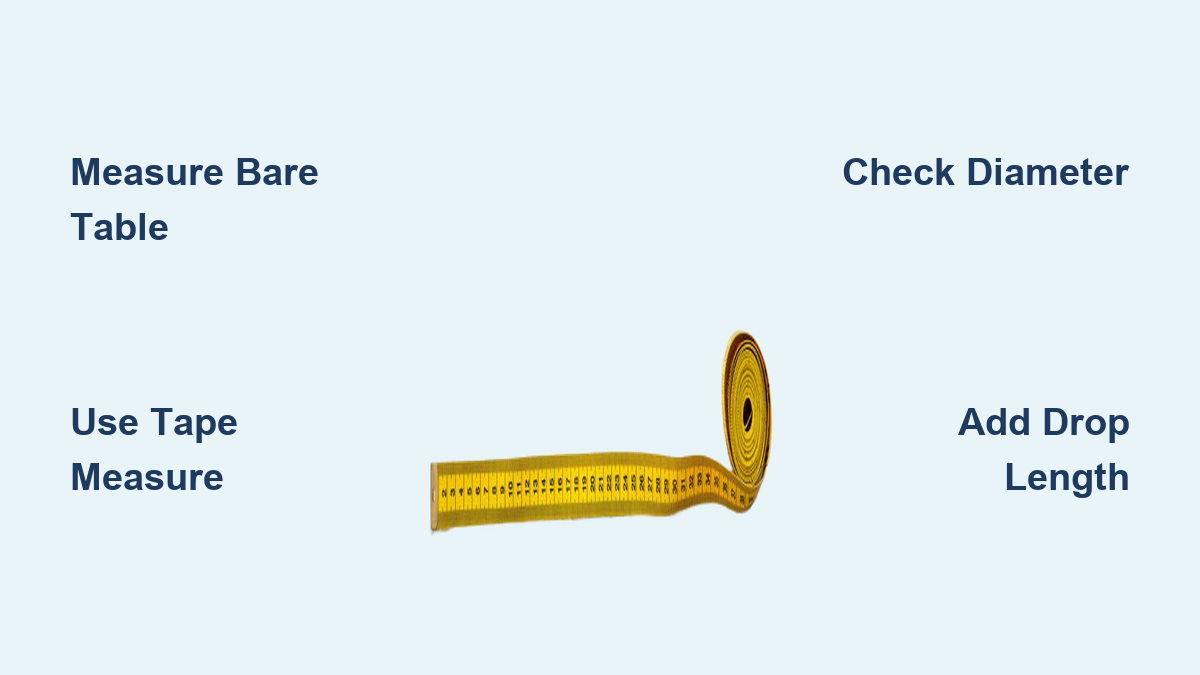
How to Measure a Table Correctly
You’ve found the perfect tablecloth online or need to replace a dining table, but will it fit? The key lies in one simple skill: knowing how to measure a table correctly. A small measuring mistake can lead to ill-fitting linens, cramped dining rooms, or outdoor covers that trap moisture. This guide walks you through every step, from tools and terminology to shape-specific techniques and linen calculations, so you never guess again.
Gather the Right Measuring Tools
Before taking any measurement, equip yourself with the right tools to ensure precision and avoid repeated attempts.
Essential Tools for Accuracy
Use a flexible tape measure at least 10 feet long to cover standard table sizes without breaking the span. A stiff ruler will not work for large surfaces. Always record measurements immediately using a notebook or digital app. Memory fails, especially when comparing multiple pieces. For spatial planning, painter’s tape helps outline the table’s footprint on the floor, letting you visualize space usage before purchase. If measuring outdoors or with tablecloths involved, tablecloth clips prevent wind from shifting fabric during verification.
Pro Tip: Never measure over existing linens, pads, or runners. These add bulk and inflate dimensions, leading to incorrect orders.
Know Key Table Dimensions and Terms
Understanding standard terms ensures clear communication when buying furniture or accessories.
Define Length, Width, and Height
Length is the longest side of a rectangular or oblong table. For example, a 6-foot banquet table has a 72-inch length. Width is the shorter side, measured perpendicular to the length. While many tables are 30 inches wide, some are narrower at 24 inches. Always measure, never assume. Height is the vertical distance from the floor to the tabletop surface. Standard dining tables range from 28 to 30 inches, counter-height tables are 34 to 36 inches, and cocktail tables stand 42 to 48 inches tall.
What Is Diameter and Depth
For round tables, use diameter. This is the distance across the center from edge to edge. Always verify the widest point, as tables may not be perfectly circular. Depth is often used interchangeably with width but technically refers to the side-to-side span at the center. When measuring for protective covers, include the leg base if it extends beyond the tabletop.
Warning: Never confuse diameter with circumference. Circumference is the distance around the edge, useful only for skirting, not sizing.
Measure Rectangular, Square, and Oblong Tables
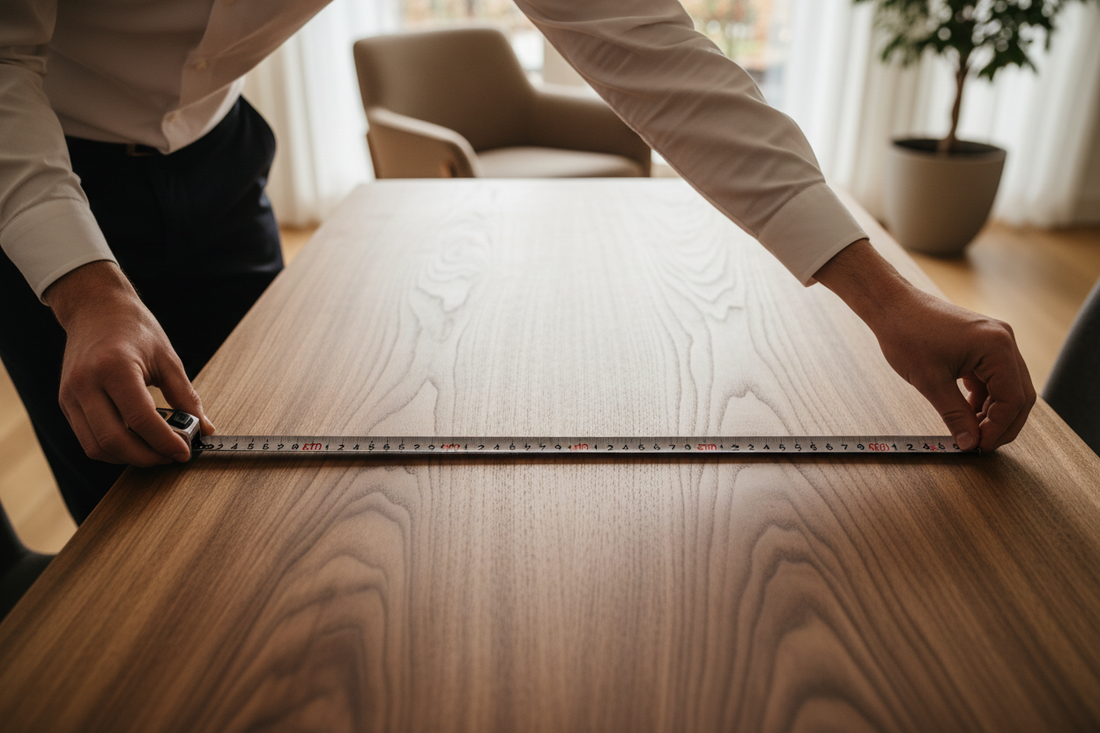
These are the most common dining and banquet table shapes. Follow these steps for exact dimensions.
Step-by-Step Measurement Process
Clear the surface of all cloths, centerpieces, and pads before measuring. Place the tape across the two shorter sides to measure the width. Start at the tabletop or leg base, whichever is wider. Measure the length between the two longer sides. Record dimensions as length by width, for example, 72 inches by 42 inches. Double-check that the tape is taut and straight, especially on long spans.
Avoid Common Mistakes
Many assume all rectangular tables are 30 inches wide. But banquet tables can be 24 inches, and farmhouse tables may exceed 40 inches. Always measure explicitly. Also, do not measure only the center. Some tables taper or flare at the ends.
Visual Cue: If the tape sags in the middle, re-measure with support or use a second person to hold it level.
Measure Round and Circular Tables Correctly
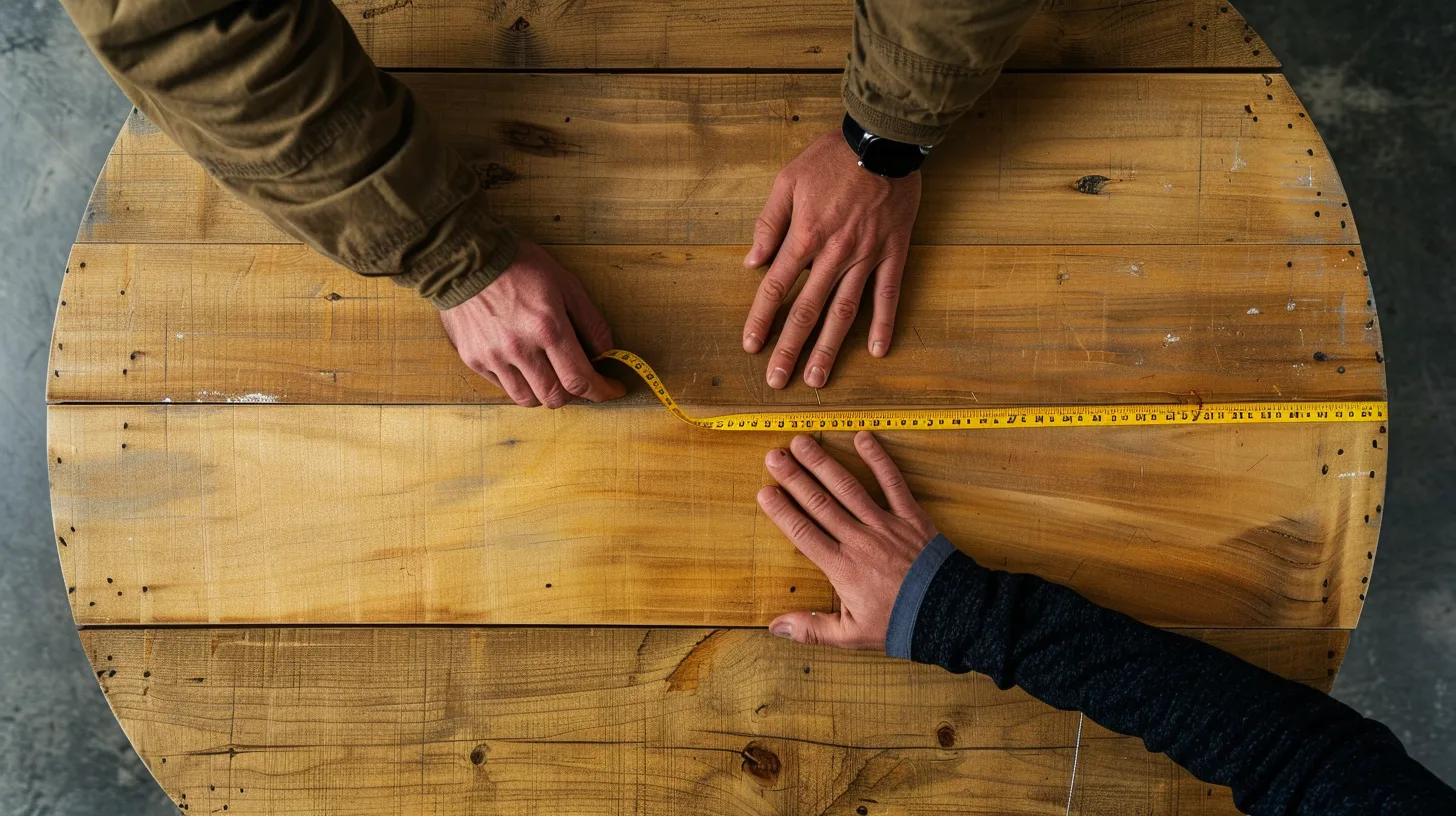
Round tables require a different approach since they lack length and width.
How to Find the True Diameter
Locate the center of the table visually. Place one end of the tape on the edge and stretch it across the center to the opposite edge. Rotate the tape slightly to confirm you have captured the maximum distance. Record as diameter, for example, 60 inches diameter.
Expert Note: Even slight warping or manufacturing variance can make a round table slightly oval. Rotating the tape ensures you get the widest possible measurement.
Measure Oval Tables for Proper Fit
Oval tables combine elements of both rectangular and round shapes.
Capture Maximum Span
Measure the length from end to end at the longest possible point. Measure the width across the center, perpendicular to the length. Use oblong tablecloth formulas when calculating linen size.
Fact: Oval tables often seat more people than rounds of similar length due to their elongated shape.
Calculate Tablecloth Size with Drop Length

Knowing the table size is not enough. You need to calculate fabric overhang, known as drop.
What Is a Tablecloth Drop
The drop is how far the cloth hangs down from the table edge. It is added to both sides of each dimension. The formula is table dimension plus drop times two.
Choose the Right Drop for Your Setting
| Use Case | Recommended Drop | Why It Matters |
|---|---|---|
| Casual Dining | 4 to 6 inches | Hovers above legs, neat but functional |
| Formal Events | Floor-length | Elegant drape, ideal for weddings |
| Buffet Tables | Just below seat level | Prevents guest interference |
| Children’s Tables | 1 to 2 inches | Reduces spills and pulling |
| Protective Covers | 1 to 2 inches shorter than height | Allows airflow, prevents moisture |
Calculate a Rectangular Tablecloth
For a 42-inch by 62-inch table with a 12-inch drop, add 24 inches to each dimension. Width becomes 66 inches. Length becomes 86 inches. Order a 66-inch by 86-inch tablecloth.
Calculate a Round Tablecloth
For a 66-inch diameter table with a 12-inch drop, add 24 inches to the diameter. Order a 90-inch round tablecloth.
Critical Error to Avoid: Adding drop to only one side results in a lopsided hang. Always multiply by two.
Size Table Runners and Skirting Properly
Runners add style without full coverage. Skirting provides a formal finish.
Determine Runner Width and Length
Width equals table width divided by three. For example, a 48-inch wide table needs a 16-inch wide runner. Length equals table length plus drop times two. For example, a 60-inch long table with a 10-inch drop needs an 80-inch long runner.
Design Tip: For round tables, runners become decorative bands. Use the same formula based on diameter.
Measure for Skirting
Skirting wraps the table perimeter. Measure the table top perimeter by adding all sides. Determine height from top edge to desired hem. Order fabric that matches total length and height.
Measure for Protective and Outdoor Covers

Outdoor furniture covers must fit snugly but allow ventilation.
Include Chairs in Your Measurement
Push chairs fully into the table. Measure from the top of one chair to the top of the opposite chair. This gives the full footprint for a single-piece cover.
Why It Matters: Ignoring chair width leads to covers that are too small or require multiple pieces.
Select the Correct Cover Height
Measure from floor to top of table or top of chair back. Choose a cover 1 to 2 inches shorter than the total height to prevent ground contact. This gap promotes air circulation, reducing mold and mildew.
Pro Tip: Always round up dimensions. If your table is 47.5 inches, order a 48-inch cover.
Plan Space Using Functional Footprint
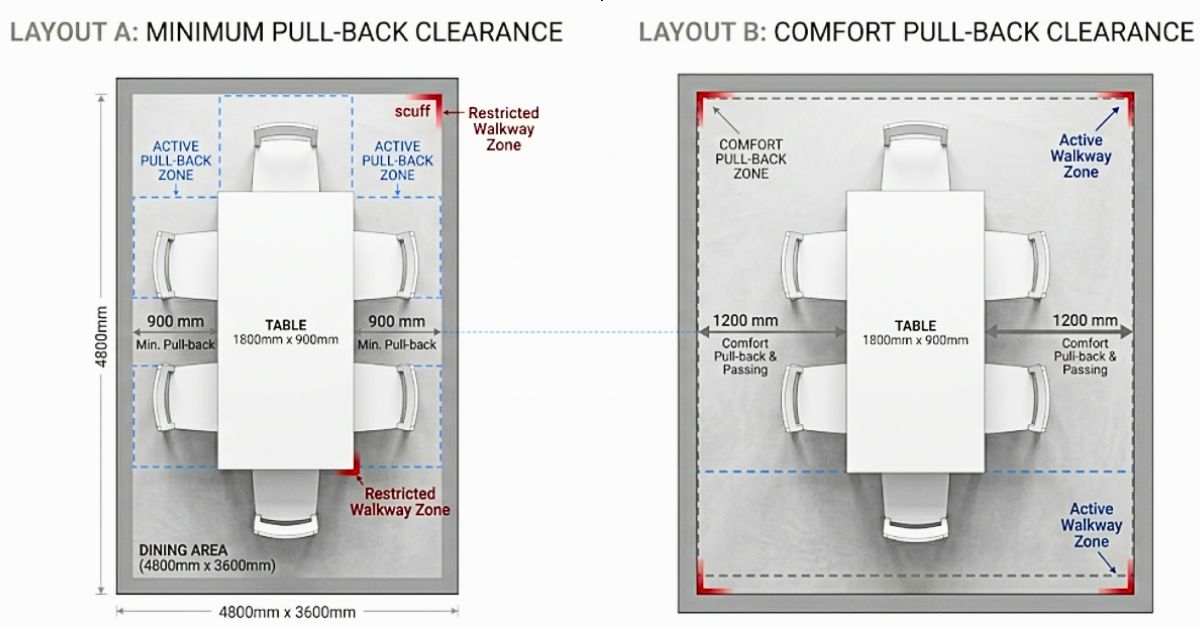
A table’s physical size is not the whole story. People need room to move.
Use the Tape Method for Layout Testing
Mark the table outline on the floor with painter’s tape. Place tape where chairs will be pulled out. Add extra space behind chairs for standing up or pushing back. Measure the total enclosed area. This is your functional footprint.
Real-World Example: A 60-inch round table needs at least a 10-foot diameter room to allow 36 inches of clearance on all sides.
Maintain Proper Clearance
Maintain a minimum walkway of 36 inches from table edge, with chairs pulled out, to walls or furniture. For rectangular rooms, subtract 6 feet from room length to estimate maximum table length. For square rooms, opt for round tables. They improve flow and reduce corner congestion.
Use Digital Tools for Visualization
Modern planning goes beyond tape and paper.
Try Augmented Reality Apps
Use AR tools like IKEA Place, Houzz, or RoomScan to project table models into your actual space. You can test different shapes and sizes, view wood tones under your lighting, and compare proportions before buying.
Test Materials In Person
Order physical samples of wood finishes, fabrics, or linens. View them in your space at different times of day to see how light affects color and texture.
Avoid These Common Measuring Mistakes
Even small errors lead to big problems. Watch for these frequent issues.
Common Mistakes to Watch For
Measuring over tablecloths adds thickness and distorts actual dimensions. Forgetting to double the drop means adding only half the needed fabric. Assuming standard widths ignores actual table measurements. Ignoring irregular shapes means missing the widest points on ovals. Overlooking chair fit makes covers or space planning inaccurate. Choosing covers that touch the ground traps moisture and causes mold.
Know Standard Table Sizes and Seating
Use this quick reference when shopping or replacing furniture.
Common Table Dimensions
| Shape | Standard Sizes | Seats |
|---|---|---|
| Round | 48″, 60″, 72″, 84″, 96″ | 48″: 4; 72″: 6 to 8 |
| Rectangular | 48″x72″, 72″x96″, 96″x120″ | Varies by width |
| Square | 48″x48″, 60″x60″ | 60″: up to 8 |
| Banquet | 30″x72″, 30″x96″ | 6 to 8 per table |
Height Guidelines
Standard dining height is 28 to 30 inches. Counter height is 34 to 36 inches. Bar or cocktail height is 42 to 48 inches.
Maintain Tables and Linens Long-Term
Proper measurement supports care and longevity.
Use Silencer Pads Under Linens
Place heat-resistant, water-repellent pads under luxury linens to prevent scratches and scorching. They are available in standard or custom sizes.
Care for Linens Properly
Use pH-neutral, enzymatic detergents. Never use fabric softeners, as they weaken fibers. Avoid chlorine bleach. Opt for oxygen-based bleach if needed. Treat stains immediately, especially wine and grease.
Choose Breathable Covers
Ensure outdoor covers do not touch the ground. Allow 1 to 2 inches of clearance for airflow.
Frequently Asked Questions About Measuring Tables
What is the difference between table length and width?
Length is the longest side of a rectangular or oblong table. Width is the shorter side, measured perpendicular to the length. Always measure both explicitly rather than assuming standard sizes.
How do I measure a round table for a tablecloth?
Measure the diameter by placing one end of the tape on the edge and stretching it across the center to the opposite edge. Rotate slightly to find the maximum distance. Add twice your desired drop to get the final tablecloth size.
What is table drop and how much do I need?
Table drop is the fabric overhang from the table edge to the hem. Casual dining needs 4 to 6 inches. Formal events use floor-length drops. Protective covers should be 1 to 2 inches shorter than furniture height.
Should I measure the table with chairs pushed in or out?
For tablecloth sizing, measure the bare table. For cover sizing, push chairs in and measure from chair top to chair top. For room planning, mark where chairs pull out to ensure adequate clearance.
How do I calculate the right tablecloth size?
Use the formula: final dimension equals table dimension plus drop times two. For rectangular tables, calculate width and length separately. For round tables, add drop times two to the diameter.
What clearance do I need around a dining table?
Maintain at least 36 inches between the table edge, with chairs pulled out, and walls or furniture. This allows comfortable seating and traffic flow.
Key Takeaways for Measuring Tables Accurately
Always measure twice and record immediately using a notebook or app. Remove all linens, pads, and centerpieces before measuring the bare table surface. Use the correct terminology. Diameter applies only to round tables, while rectangular tables use length and width. Account for drop on both sides when calculating linen sizes. Include chair width when measuring for protective covers, and allow 1 to 2 inches of clearance for airflow. Use painter’s tape to test spatial layout before purchasing furniture. Knowing how to measure a table accurately saves time, money, and frustration whether you are hosting a wedding, redesigning a dining room, or protecting patio furniture. Use this guide every time, and you will get it right.