How to Clean a Glass Table
Nothing ruins the sleek elegance of a glass table faster than streaks, smudges, or cloudy residue. Whether it is a coffee table, dining table, or side table, a dirty glass surface quickly becomes an eyesore. But with the right tools and techniques, achieving a crystal-clear, streak-free finish is simple and fast. The key is never skipping prep, using the right solution, and always buffing immediately. This guide reveals the professional methods for cleaning any glass table without scratching, etching, or leaving behind lint.
You will learn how to remove stubborn water rings, prevent foggy buildup, and keep your table looking flawless with minimal effort. The methods covered work on both standard and tempered glass, and they use affordable household products you likely already have on hand.
Essential Supplies for Cleaning Glass Tables

Using the correct materials makes all the difference between a sparkling surface and a smeared mess. Microfiber cloths are non-negotiable because they are lint-free, absorbent, and will not scratch the glass. Use at least two cloths: one damp for cleaning and one dry for buffing. Keep a third cloth strictly for dusting.
For tough grime, rolled paper towels can provide extra scrubbing power. Use three to five standard paper towels, tightly bundled into a ball. Avoid brands like Bounty that leave lint. Never use colored rags because they can bleed dye onto the glass.
A soft-bristled brush or old toothbrush helps clean edges, corners, and frames where dust accumulates. For large tables, a squeegee removes moisture quickly and prevents streaks. Keep a spray bottle for homemade solutions and distilled water on hand.
Best Cleaning Solutions for Streak-Free Results

Vinegar and water is the top-performing homemade cleaner. Mix one part white vinegar with two parts water for routine cleaning. For hard water stains or cloudiness, use a fifty-fifty vinegar-water solution. Let it sit for ten to fifteen minutes before wiping.
Mild dish soap works well for cutting through grease and sticky spills. Add a few drops to warm distilled water. Rinse thoroughly because soap residue causes streaks.
Ammonia-free commercial glass cleaners are ideal for quick touch-ups. Look for products like Invisible Glass. Always avoid ammonia because it can corrode metal frames and etch glass over time.
Never use bleach, alcohol, all-purpose cleaners, or abrasive solvents. These damage the surface and leave hazy films that are difficult to remove.
Step-by-Step Glass Table Cleaning Methods
Deep Clean for Stubborn Grime
Use this method when fingerprints, dried spills, or sticky residue will not budge.
Remove all items from the table first. Dry dust with a microfiber cloth to remove loose debris. Then spray glass cleaner or vinegar solution generously to fully coat the surface. Do not under-apply because saturation helps break down buildup.
Roll three to five standard paper towels into a tight ball. Use firm pressure to wipe the surface in overlapping strokes. This lifts stuck-on dirt. Flip and fluff the bundle to expose fresh fibers, then re-wipe. For missed spots, add more cleaner and re-agitate.
Immediately after wiping, buff the entire surface with a clean, dry microfiber cloth. Use straight lines or small circles until no streaks remain. This final step removes lint and moisture, which are the root causes of cloudiness.
Standard Weekly Cleaning
For weekly maintenance, this method delivers fast, flawless results.
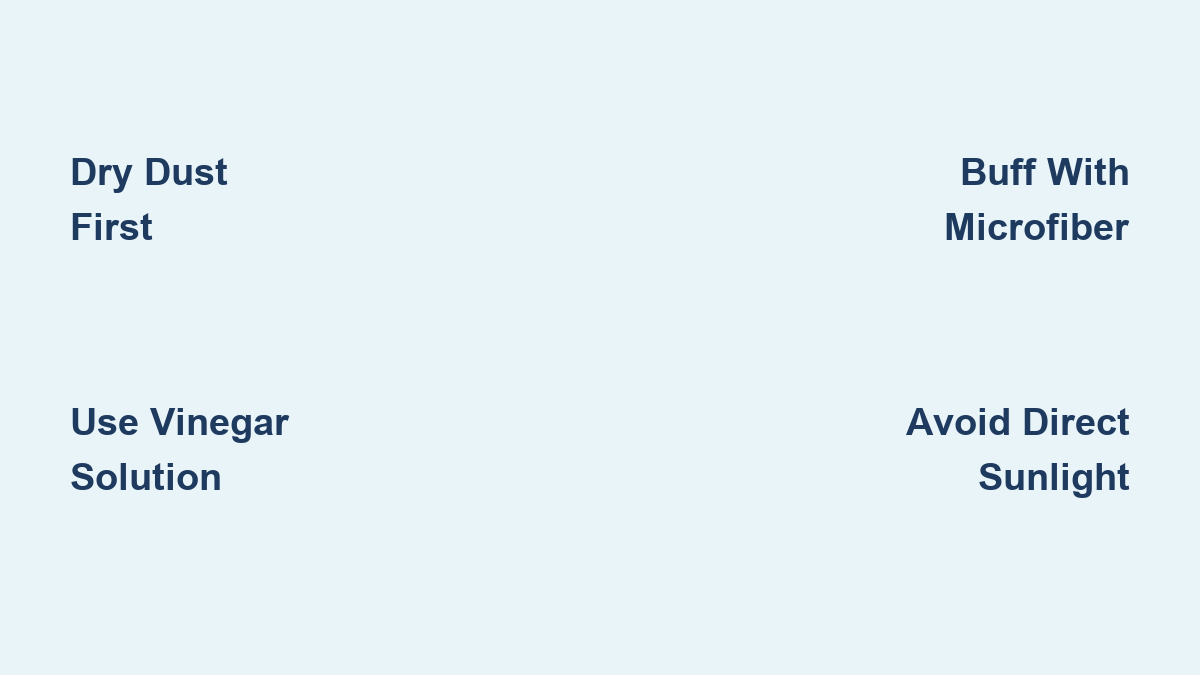
Always start with a dry microfiber cloth to remove dust and crumbs. Skipping this step grinds debris into the glass, causing scratches during the wet cleaning phase.
Lightly spray vinegar solution or commercial cleaner directly on the glass. Alternatively, spray the cloth to avoid drips and overspray. Use minimal liquid to prevent runoff.
Work in one corner, wiping in circular motions to lift oils. Move across the table in overlapping passes. Rinse or flip your cloth if it gets dirty. Apply extra pressure on smudges.
Before the solution dries, switch to a dry microfiber cloth. Buff thoroughly using straight lines to catch every drop. Moisture left behind creates streaks.
Use a soft brush or toothbrush dipped in cleaner to scrub the edges, legs, and frame. Wipe with a damp cloth and dry immediately to prevent water marks.
Cleaning Both Sides of the Glass
Most people only clean the top, but dirt builds up underneath too. If the glass top is removable or adjustable, flip it carefully and repeat the full cleaning process.
Wear cut-resistant gloves when handling large glass panels. Support the glass vertically with both hands to avoid stress on the edges. Clean both sides every few months to prevent slime or film buildup.
How to Remove Stubborn Stains and Cloudiness

White, hazy rings are usually hard water deposits or soap scum, not permanent damage. They respond well to vinegar treatment.
Spray the affected area with fifty-fifty vinegar and water. Let it sit for ten to fifteen minutes. Wipe clean. For tough buildup, reapply and wait thirty minutes before wiping.
If vinegar alone does not clear foggy glass, make a paste of baking soda and water. Gently scrub the area with a soft cloth. Rinse thoroughly and dry. Repeat weekly if needed.
If the glass looks permanently hazy even after deep cleaning, it may be etched. This happens from acidic spills left too long or harsh cleaners. Once glass is etched, it is usually irreversible. No amount of vinegar or scrubbing will restore clarity. Professional resurfacing may help, but replacement is often necessary.
Fingerprints and sticky spills are common but easy to fix. Apply an extra squirt of cleaner directly to the spot. Rub in small circles with a microfiber cloth until dissolved. Never let it dry. Buff immediately with a dry cloth to prevent residue.
Preventing Streaks and Damage
Streaks form when cleaning solution dries too fast, especially in direct sunlight or near heaters. They also result from dirty cloths, paper towel lint, or residue from dish soap.
Never clean a glass table in direct sunlight. Work in a cool, shaded area to slow drying and allow time for proper buffing.
Stick to microfiber for the final step. Paper towels and dyed rags leave behind fibers that look like streaks. If using newspaper, test a small area first because modern ink can smear.
The most important step is buffing. Even the best cleaner leaves streaks if not buffed. Use a dry, clean microfiber cloth and go over the entire surface in straight lines until it shines.
Maintaining Your Glass Table Long-Term
Dust one to two times per week with a dry microfiber cloth. This keeps the surface smooth and reduces the need for heavy cleaning.
Wipe spills immediately, especially acidic liquids like coffee, wine, or juice. They can etch the glass in minutes. Weekly wipe-downs prevent grime buildup. Low-traffic tables can be cleaned monthly.
Always use coasters under drinks and trivets under hot dishes. Heat causes thermal stress or leaves permanent rings. Place felt pads, rubber bumpers, or silicone mats under vases, lamps, and decor to prevent scratches. Use placemats during meals to protect against cuts and stains.
Never drag objects across the glass. Lift them instead because dragging causes scratches. Do not place sharp items directly on the surface. Use a tray or buffer like a book or mat. Rotate mats and placemats periodically to avoid discoloration or permanent marks.
Special Care for Tempered Glass Tables
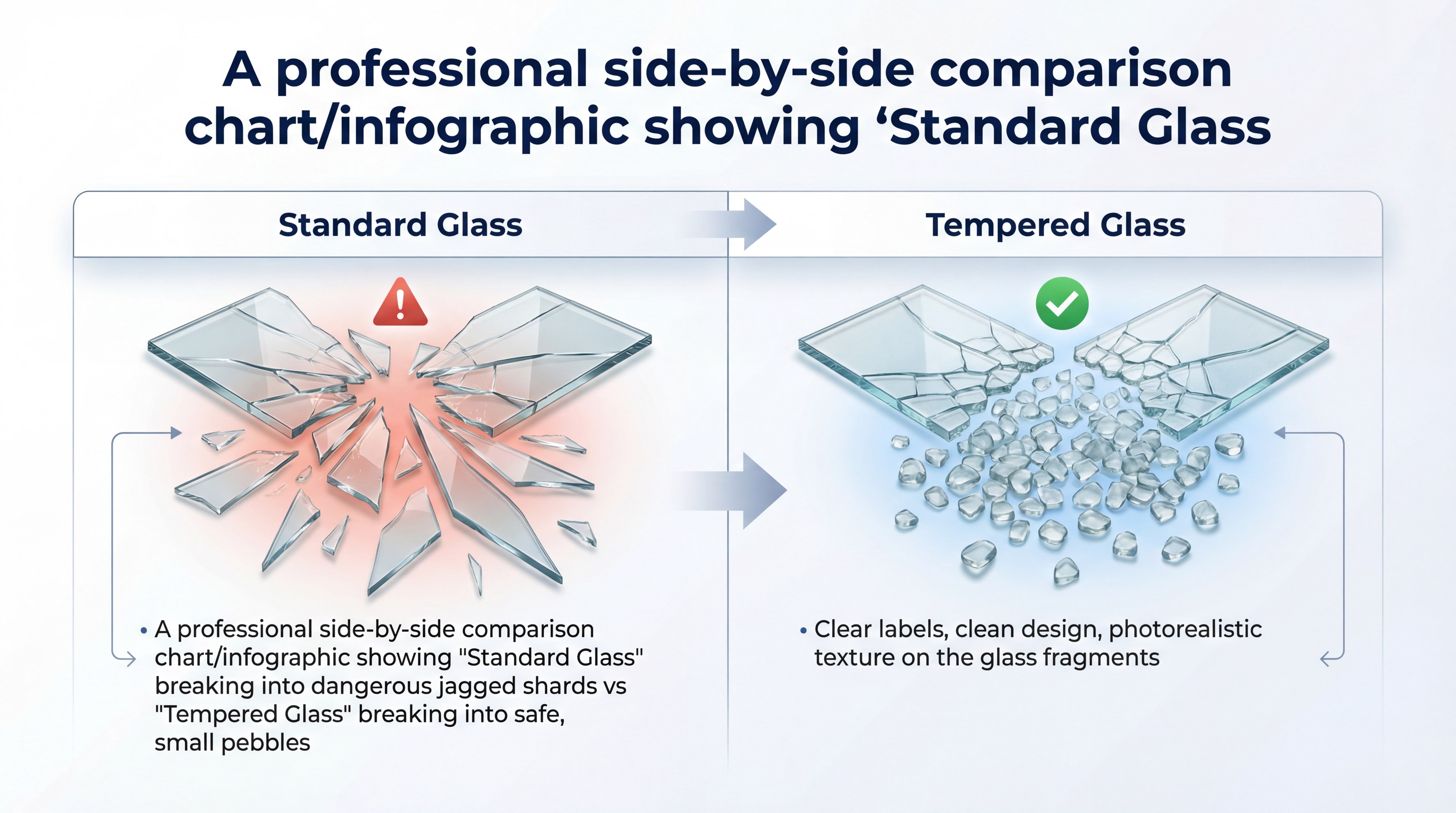
Tempered glass is four to five times stronger than regular glass, making it ideal for tables. But it has a critical flaw: the edges are vulnerable. A chip can cause the entire panel to shatter.
Check for cracks or chips before cleaning. If found, do not use the glass. Tempered glass with damage cannot be repaired and must be replaced.
When removing or flipping a glass top, wear cut-resistant gloves and carry it vertically with both hands. Never lay it flat on hard surfaces.
Avoid ammonia and abrasive pads when cleaning tempered glass. They can degrade the heat-treated surface. Stick to vinegar, mild soap, and microfiber.
Troubleshooting Common Glass Table Problems
If streaks appear, the cause is usually fast drying, dirty cloths, or too much cleaner. Re-buff with a clean, dry microfiber cloth. Spray a small section with distilled water or vinegar solution. Immediately buff using straight lines. Work in shade and avoid overspraying.
Paper towels and low-quality rags leave behind fibers that cling to the glass. Stop using paper towels for the final polish. Use crumpled newspaper or microfiber instead. If lint is already present, wipe with a slightly damp microfiber cloth, then re-buff dry.
Cloudy glass is usually mineral deposits or soap film, not etching. Apply fifty-fifty vinegar-water solution and let sit fifteen minutes. Wipe and buff. If it remains cloudy, it may be etched, and professional help is needed.
Scratches come from dusting with a dirty cloth, dragging items, or using abrasive tools. Always dry dust before wetting. Never wipe a dusty surface because grit causes micro-scratches.
Sticky residue means too much soap or a bad cleaner. After cleaning with soap, go over the surface with a cloth dampened with distilled water. Dry and buff immediately. This removes film and prevents stickiness.
Frequently Asked Questions About Cleaning Glass Tables
What is the best homemade solution for cleaning glass tables?
A mixture of one part white vinegar to two parts water works best for routine cleaning. For stubborn hard water stains, use a fifty-fifty ratio. This solution is eco-friendly, inexpensive, and dissolves mineral deposits effectively.
Why does my glass table still look streaky after cleaning?
Streaks usually appear because the solution dried too fast, you cleaned in direct sunlight, or you used the wrong cloth. Always clean in shade, use microfiber for buffing, and work in sections before the solution air-dries.
Can I use paper towels on a glass table?
You can use paper towels for the initial cleaning phase to agitate stubborn grime. However, never use them for the final buffing step because they leave lint and fibers behind. Stick to microfiber cloths for the best finish.
How do I remove cloudy stains from a glass table?
Cloudiness is often hard water deposits or soap scum. Spray the area with fifty-fifty vinegar and water. Let it sit for ten to fifteen minutes. Wipe clean and buff dry. Repeat if needed.
Is it safe to use ammonia-based cleaners on glass tables?
No. Ammonia can corrode metal frames and etch glass over time. Always choose ammonia-free commercial cleaners or stick with vinegar and water solutions.
How often should I clean my glass table?
Dust the surface one to two times per week. Wipe down high-touch tables weekly. Low-traffic tables can be cleaned monthly. Deep clean both sides every few months.
Key Takeaways for Keeping Your Glass Table Spotless
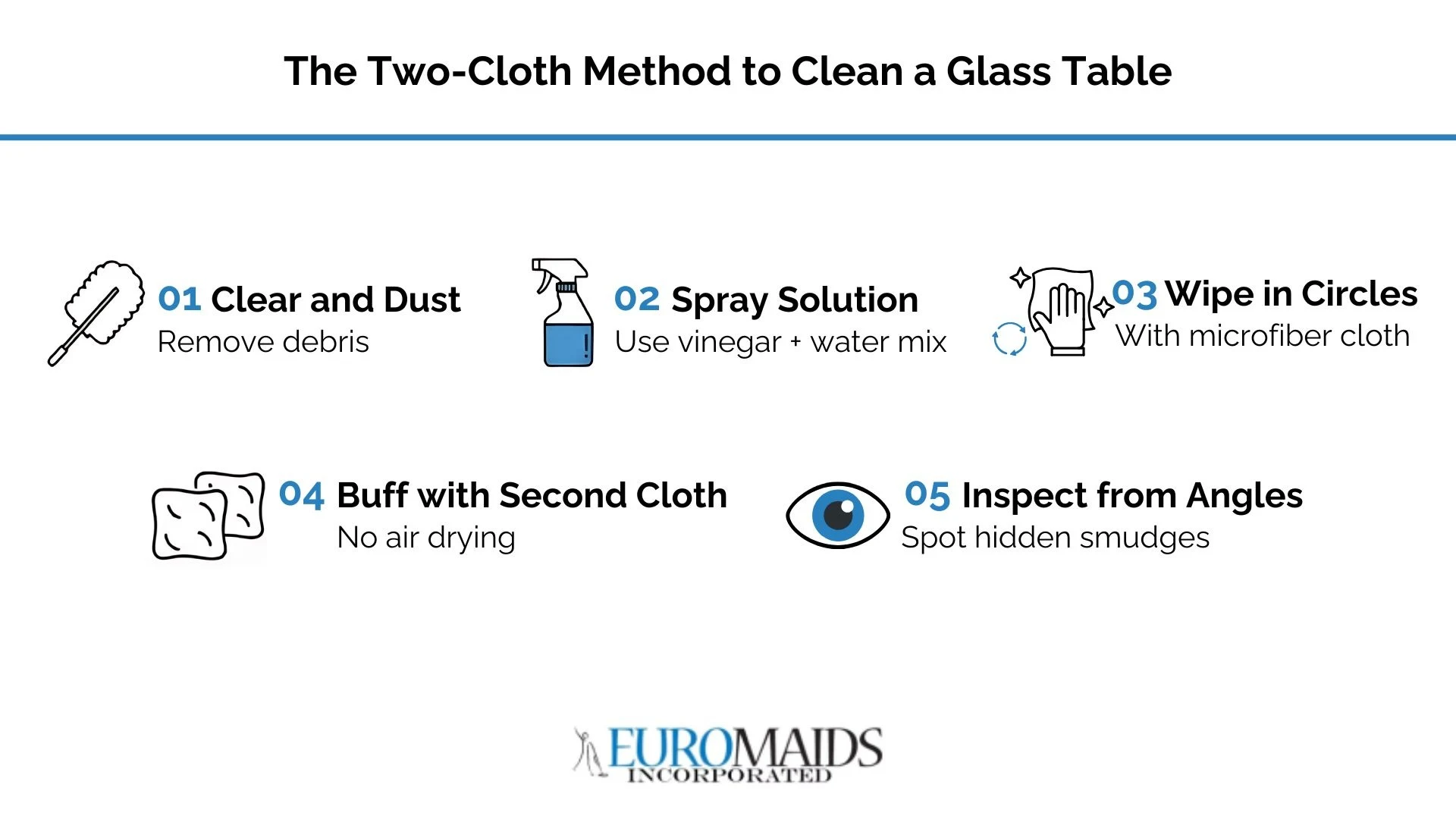
A flawless glass table is within reach with the right routine. Start with dry dusting, use vinegar or ammonia-free cleaner, wipe in sections, and always buff with a dry microfiber cloth. Avoid sunlight while cleaning, skip paper towels for the final polish, and protect the surface with coasters and pads.
Clean spills immediately to prevent etching. Inspect tempered glass for chips or cracks before cleaning. Deep clean both sides a few times a year to prevent film buildup.
Follow these steps, and your glass table will stay clear, strong, and stunning for years.