How to Clean a Marble Table
Marble tables bring timeless elegance to any space, but their beauty requires dedicated care to stay pristine. As a natural calcite-based stone, marble is vulnerable to etching, staining, and scratching if cleaned with the wrong products or techniques. Many homeowners unknowingly damage their surfaces using vinegar, bleach, or abrasive cloths that can dull or permanently mark the stone. This guide provides a complete, step-by-step approach to cleaning, protecting, and maintaining your marble table. You will learn how to handle spills safely, remove stubborn stains, repair etching, and prevent long-term damage to keep your table stunning for decades.
Daily Dusting Routine for Marble Tables
Keeping your marble table free of dust and debris is the first line of defense in protecting this natural stone surface.
Use a Microfiber Cloth for Dusting
Use a soft, colorless microfiber cloth to gently remove dust, crumbs, and loose particles from your marble table. Perform this task weekly or as needed, especially on dining or coffee tables where daily use accumulates debris. Dust particles can act like sandpaper when rubbed across the surface, causing fine scratches over time. Always use a dry cloth for routine dusting rather than damp wiping.
Avoid Colored or Rough Fabrics
Never use paper towels, old T-shirts, or colored rags on marble surfaces. These materials can scratch the stone or transfer dyes, especially when wet. Stick to high-quality microfiber or chamois leather, which are non-abrasive and lint-free options that will not damage your table’s finish.
Safe Cleaning Solutions for Marble Tables

Using the right cleaning products prevents irreversible damage and preserves the marble’s natural shine.
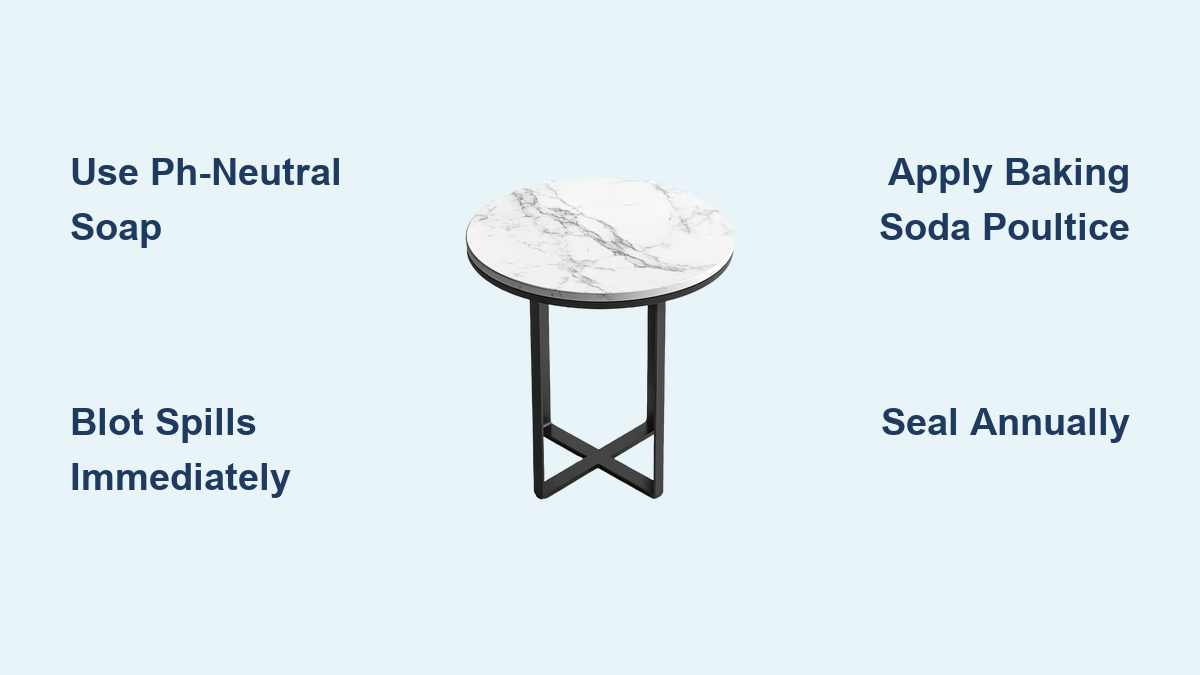
Use pH-Neutral Dish Soap
Mix a few drops of mild, pH-neutral dish soap with warm distilled water for safe daily cleaning. Tap water contains minerals that can build up and dull the surface over time, so distilled water ensures no residue is left behind. Only a small amount of soap is necessary; the solution should be gentle.
Never Use Acidic or Harsh Cleaners
Avoid vinegar, lemon juice, ammonia, bleach, and commercial glass cleaners on your marble table. These substances will etch or degrade the stone immediately. Even products labeled as natural can be harmful if they contain citrus or acid. When in doubt, stick to simple soap and water or a specialized stone cleaner.
Weekly Wet Cleaning Steps
For fingerprints, smudges, and light grime, follow this safe cleaning protocol to maintain your marble table’s beauty.
Dampen Cloth, Not the Surface
Dip a clean microfiber cloth into your soapy water solution and wring it out thoroughly. The cloth should be barely damp, as excess moisture can seep into the stone’s pores and cause clouding or staining. A wrung-out cloth prevents water damage while still effectively cleaning.
Clean in Small Sections
Wipe the table surface in small, overlapping strokes. For corners or detailed edges, use a soft-bristled toothbrush dipped in the solution. Gently brush the area, then wipe clean with the cloth to avoid missing spots or leaving residue.
Rinse and Dry Immediately
After cleaning, rinse your cloth with clean distilled water and wipe the surface again to remove any soap residue. Then, dry the entire table immediately with a second clean, dry microfiber cloth. This critical step prevents water spots and mineral deposits from forming on the surface.
Handle Spills on Marble Tables Immediately
Quick response is essential to avoid permanent damage when liquids contact your marble table.
Blot Spills, Do Not Rub
If a spill occurs, especially wine, coffee, juice, or oil, blot it immediately with a clean, damp microfiber cloth. Press down gently to absorb the liquid. Rubbing can spread the spill and push it deeper into the stone’s pores, making the stain worse and harder to remove.
Treat Acidic Spills First
Acidic liquids like wine or citrus juice cause etching within seconds. Blot fast, then rinse the spot with distilled water and dry thoroughly. The faster you act, the less visible the etch mark will be. Time is critical with acidic spills.
Refresh Cloth Frequently
Use multiple clean sections of the cloth or switch cloths completely to avoid reapplying the spilled substance. A dirty cloth simply redistributes the stain back onto the surface you are trying to clean.
Remove Stains From Marble Tables With a Poultice
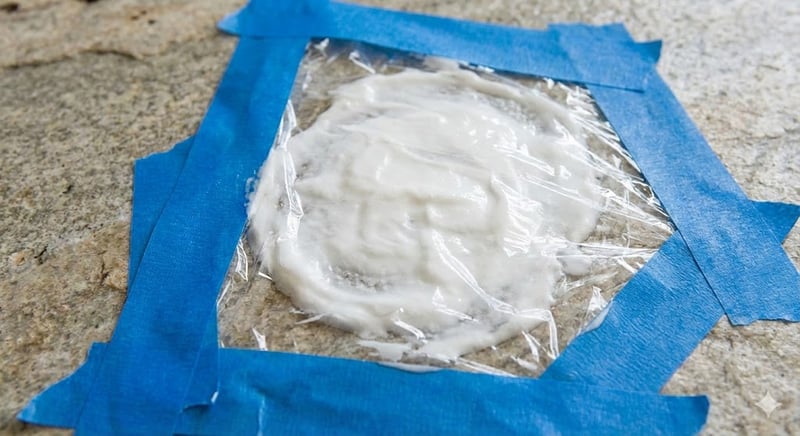
When a stain has soaked into the stone, a poultice draws it out safely without damaging the surface.
Make a Baking Soda Paste
Mix baking soda with distilled water to form a thick, toothpaste-like consistency. The paste should hold its shape when applied to the stained area. This DIY poultice works by drawing the stain out of the pores through absorption.
Apply and Seal the Area
Spread the paste over the stain in a one-quarter inch layer. Cover it completely with plastic wrap and tape the edges to seal it. This keeps the poultice moist so it can actively pull the stain from the stone over time.
Wait 24 to 48 Hours
Let the poultice sit undisturbed for at least one day. For oil-based stains like grease or makeup, 48 hours may be needed for complete extraction. The drying process pulls the stain from the pores into the paste.
Clean and Inspect the Area
Remove the plastic and wipe away the dried paste with a damp cloth. Rinse and dry the area thoroughly. Repeat the process if the stain persists, as deep stains may require multiple treatments to fully extract.
Fix Etching and Scratches on Marble Tables
Etching is a chemical reaction that removes the surface layer, not a stain that can be cleaned away. It requires physical correction to restore the finish.
Repair Minor Etching With Polishing Compound
For light etching that appears as dull spots on a polished surface, use a marble-safe polishing compound. Apply a small amount to a soft cloth and buff the area in a circular motion. This blends the etched spot with the surrounding finish. Wipe clean and reseal the area afterward to protect it.
Sand Deeper Etches Carefully
For more noticeable etching, follow these steps carefully. Clean the area with acetone to remove oils. Wet the spot with distilled water. Use waterproof 400-grit sandpaper to gently sand the etched area in small circles. Keep the surface wet throughout to prevent new scratches. Wipe clean and dry. Apply a stone revitalizer and reseal the area. Test on an inconspicuous spot first before treating visible areas.
Professional Polishing for Severe Damage
Deep etching, widespread dullness, or major scratches require professional re-honing and repolishing. Experts use diamond abrasives to restore the surface to a like-new finish. Professional restoration costs approximately $30 per linear foot and is recommended every 2-3 years for high-use tables.
Prevent Future Damage to Your Marble Table
Proactive habits protect your investment and reduce the need for repairs.
Use Coasters and Trivets
Always place coasters under glasses, especially those containing wine, soda, or coffee. Use trivets or hot pads under hot dishes. Direct heat can cause white scorch marks or thermal cracking that cannot be repaired easily.
Apply Felt Pads
Attach self-adhesive felt pads to the bottom of vases, lamps, and decor items. This prevents scratches when items are moved and reduces wear on high-contact areas of your table.
Lift Objects, Do Not Drag
Never slide objects across the marble surface. Lift them completely to avoid scratching or chipping the edges. This simple habit prevents most surface damage.
Avoid Overloading the Table
Marble is strong but not flexible. Do not sit on it or place heavy appliances on overhanging edges, especially on pedestal tables. Weight concentrated on weak points can cause cracks along natural veins in the stone.
Seal Your Marble Table Annually
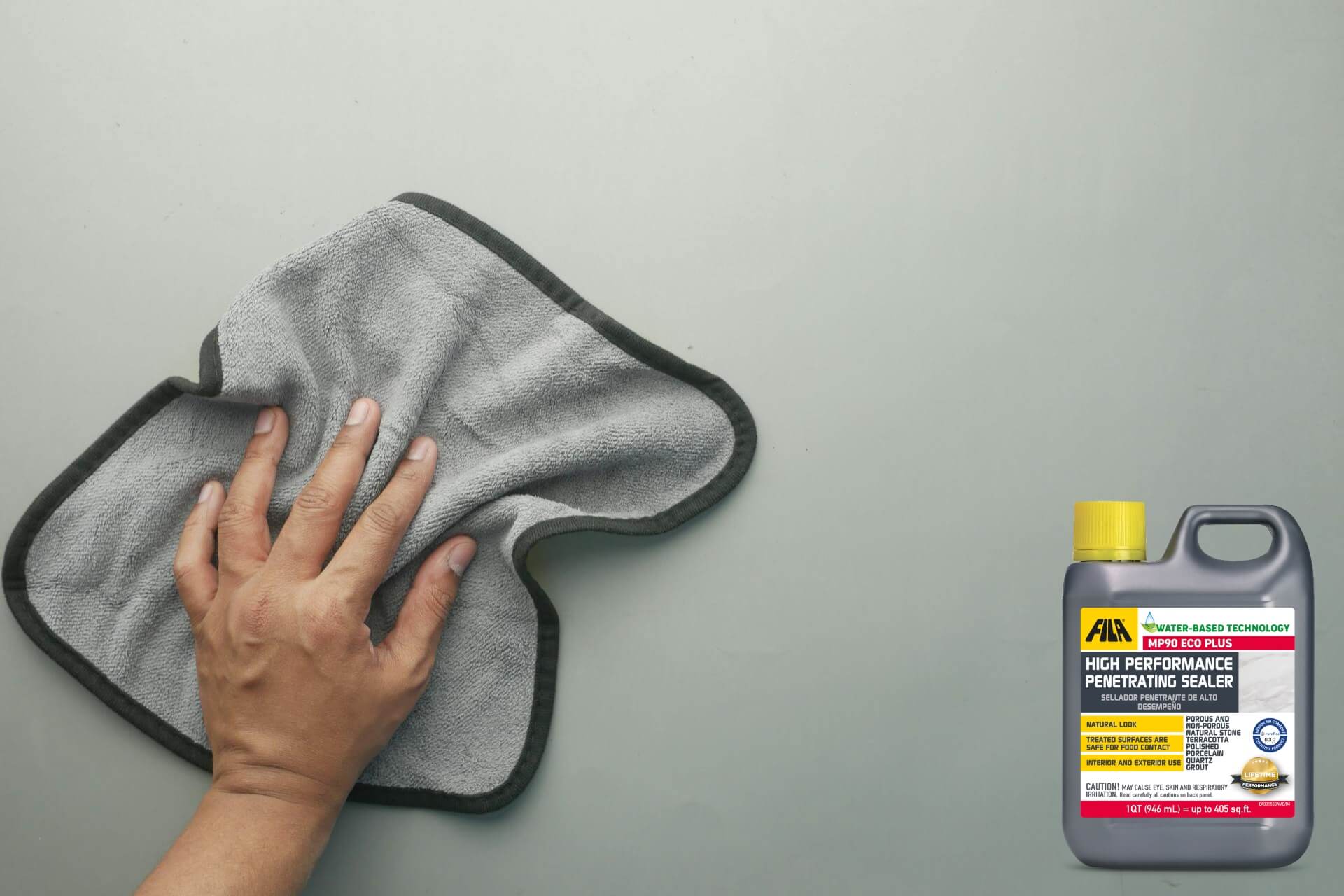
Sealing provides essential stain resistance and gives you time to clean spills before they penetrate the stone.
Test Sealant Effectiveness
Place a few drops of water on the surface. If the water beads up, the seal is intact. If the stone darkens within 10 minutes, it is time to reseal. This simple test takes less than a minute and tells you exactly what your table needs.
Apply Penetrating Sealer Properly
Clean the table thoroughly and let it dry completely. Apply a quality penetrating sealer with a clean cloth. Let it sit for 10-15 minutes, following product instructions. Buff off any excess with a dry cloth to prevent hazing. Allow 24-48 hours to cure before regular use. Seal once a year, or every 1-2 years in low-traffic areas.
Choose the Right Finish for Your Lifestyle
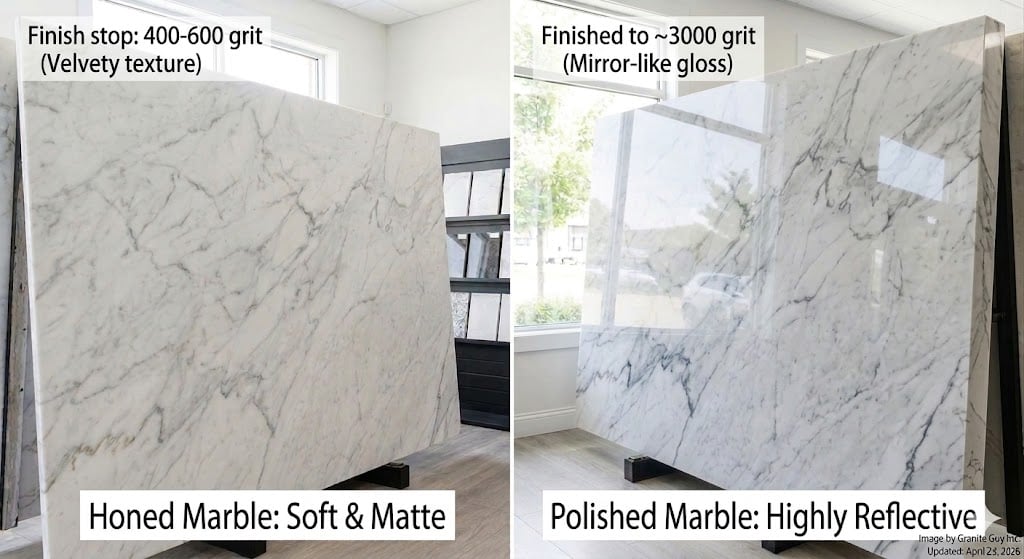
The type of marble finish affects both maintenance requirements and overall appearance.
Polished Finish Characteristics
A high-gloss polished finish enhances color and veining, making it ideal for formal spaces. However, it shows etching and scratches more clearly. This finish requires diligent cleaning and more frequent sealing to maintain its appearance.
Honed Finish Characteristics
A matte honed finish gives a soft, vintage look and hides minor stains better than polished marble. But etching appears as dull patches since the texture changes. This finish works best in lived-in homes where a natural patina is welcome and expected.
Understand Marble Patina Over Time
Marble develops character with age, and understanding this helps you choose the right maintenance approach.
Embrace Natural Aging
After 10 or more years, marble often develops minor etching, soft scratches, and subtle discoloration that create a unique patina. Many designers view these signs of use as authenticity and warmth rather than flaws. Marble is meant to be lived with and enjoyed.
Match Maintenance to Your Aesthetic
Decide early whether you want a flawless, high-maintenance look or are comfortable with a lived-in appearance. Both choices are valid. Align your cleaning habits with your aesthetic preference to avoid frustration.
When to Call a Professional for Marble Table Repair
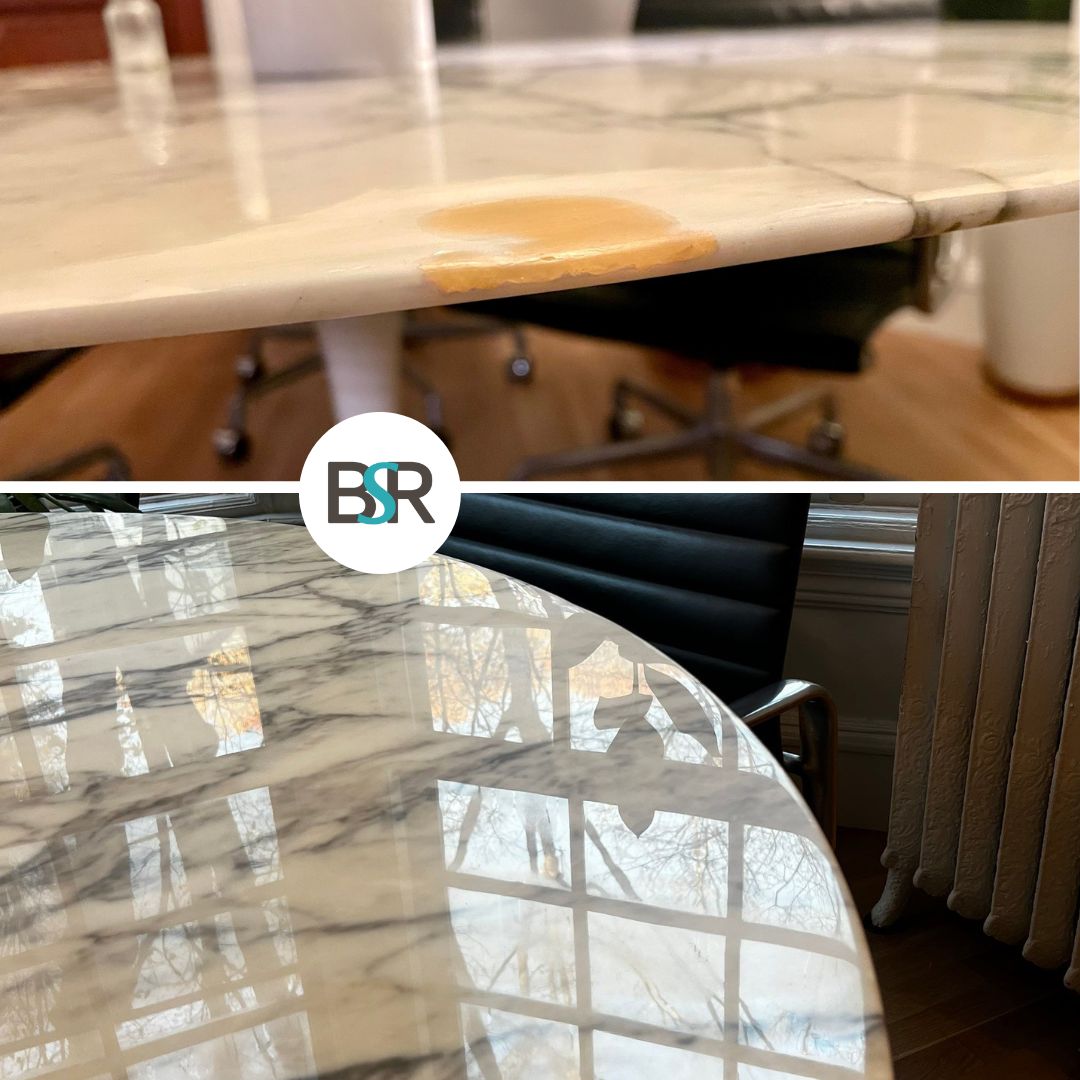
Some damage requires expert intervention that home methods cannot address effectively.
Deep Stains or Structural Damage
If a stain will not lift after two poultice attempts, or if you notice cracks, chips, or widespread etching, consult a stone restoration expert. Professional-grade treatments can address issues that DIY methods cannot resolve.
Professional Chip and Restoration Services
Professionals can fill chips with color-matched epoxy, making them nearly invisible. For tables that have lost their luster, professionals can re-hone and repolish the entire surface, removing years of wear and restoring a mirror-like finish.
Frequently Asked Questions About Cleaning Marble Tables
What is the best daily cleaner for marble tables?
The best daily cleaner is a simple mixture of a few drops of pH-neutral dish soap and warm distilled water. This gentle solution cleans without damaging the stone. Always use distilled water to prevent mineral deposits, and avoid any acidic cleaners like vinegar or lemon juice.
Can I use vinegar to clean marble?
Never use vinegar on marble. Vinegar is acidic and will etch the surface immediately, causing permanent dull spots. Even diluted vinegar damages the stone. Stick to pH-neutral soap and water or specialized stone cleaners.
How often should I seal my marble table?
Seal your marble table once a year for optimal protection. In low-traffic areas, you may extend this to every 1-2 years. Test the seal by placing water drops on the surface; if the water absorbs rather than beading, it is time to reseal.
How do I remove water rings from marble table?
Water rings are often caused by moisture penetrating the seal. Clean the area with mild soap and water, then dry thoroughly. If rings persist, they may be actual etching that requires polishing compound or professional restoration to repair.
Can I use a poultice on old stains?
Yes, a baking soda poultice can still work on older stains, though results may vary. The poultice draws stains out of the pores, but older stains may have set deeper into the stone. Multiple applications may be necessary, and some deep stains may require professional treatment.
Key Takeaways for Maintaining Your Marble Table
Cleaning a marble table requires the right products and consistent care, but the process is straightforward once you understand the stone’s needs. Always use pH-neutral soap and distilled water rather than harsh or acidic cleaners. Respond immediately to spills by blotting, not rubbing, to prevent both staining and etching. Apply a baking soda poultice for stains that have penetrated the surface, and use a polishing compound or professional restoration for etching. Seal your table annually, use coasters and trivets religiously, and lift objects rather than dragging them across the surface. With these gentle, consistent care habits, your marble table will remain a stunning centerpiece for decades, aging gracefully while retaining its natural beauty.