How to Clean a Shuffleboard Table
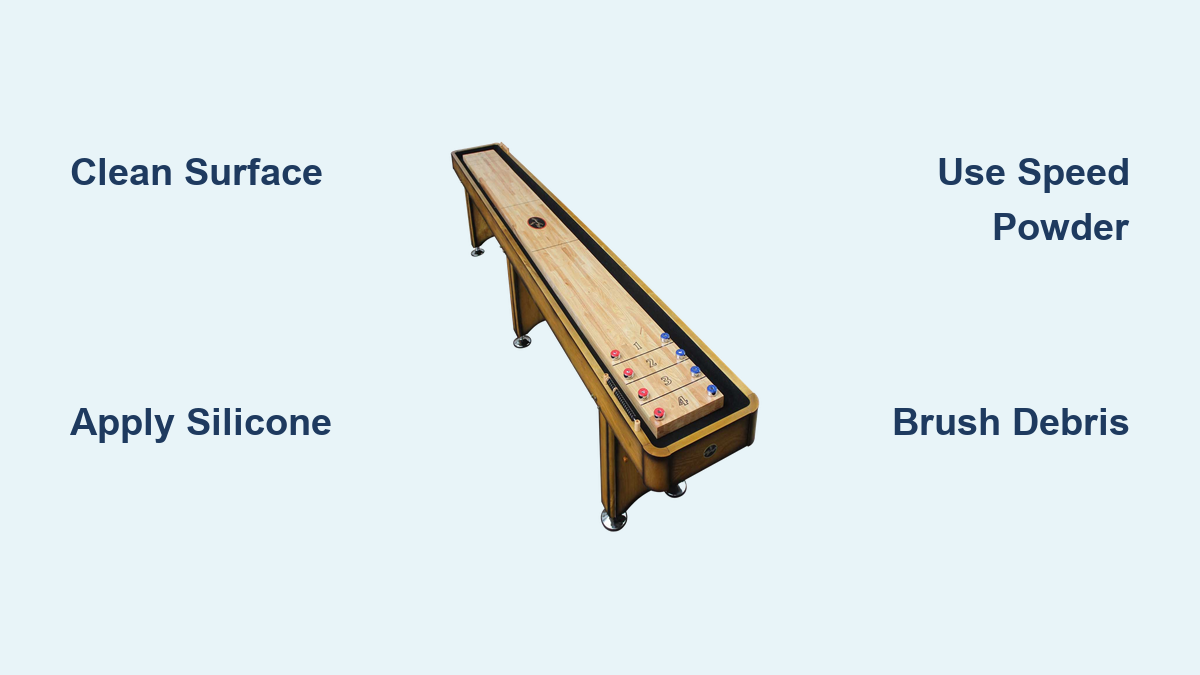
If your shuffleboard pucks are sticking, drifting unexpectedly, or leaving tracks in the wax, the problem likely starts with a dirty or poorly maintained table surface. Knowing how to clean a shuffleboard table properly is the most critical step in preserving performance, ensuring smooth glide, and extending the life of your investment. A clean surface allows silicone spray and speed powder to work effectively, prevents damage to the finish, and delivers consistent gameplay every time. Whether you are using a traditional wood, lacquered, or polymer-coated table, skipping cleaning leads to buildup, uneven play, and long-term wear. This guide walks you through the exact steps by finish type for deep cleaning, lubricating, and preparing your shuffleboard table like a professional.
Choose the Right Cleaner by Finish
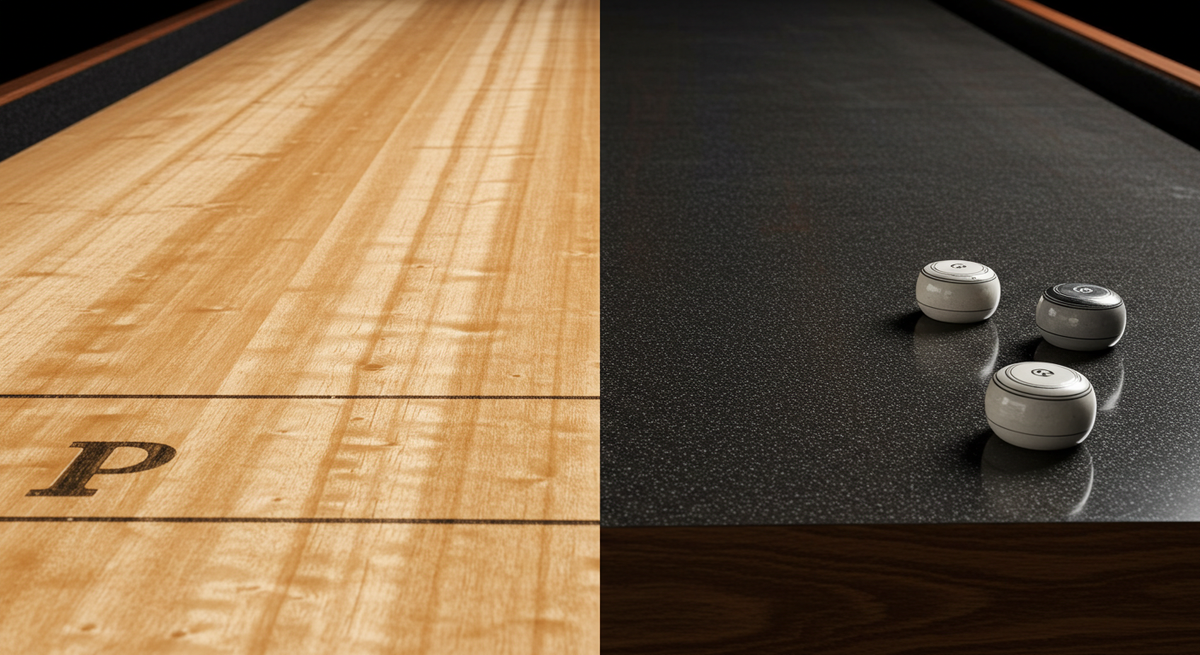
The first rule of cleaning any shuffleboard table is matching your method to the surface type. Using the wrong cleaner can damage finishes, create sticky residues, or cause warping over time. Always identify your table’s finish before applying any product.
Clean Wood or Lacquer Surfaces
Wood and lacquer finishes are common on high-end tables and require gentle but effective cleaning to preserve tone and prevent drying.
• DIY Vinegar and Oil Solution: Mix water with ¼ cup white vinegar and a few drops of jojoba oil. Vinegar lifts grime from the grain while jojoba conditions the wood and will not go rancid over time.
• Application: Dampen a soft, lint-free cloth with the solution. Wipe the surface lightly and never soak it.
• Buff Immediately: Follow with a dry cloth to remove moisture and prevent swelling.
• Frequency: Clean weekly for regular use or monthly for light play.
Pro Tip: Avoid commercial furniture polishes with silicones or waxes unless labeled specifically for shuffleboard use. These can build up and interfere with speed powder adhesion.
Maintain Polymer or Sealed Tables
Polymer-coated tables are more forgiving and easier to clean, but still require care to protect the sealant.
• Safe Cleaners: Use a glass cleaner like Windex or mild all-purpose spray. Never use ammonia-heavy or abrasive cleaners.
• Application: Spray lightly on a microfiber cloth, not directly on the table, to avoid overspray on rails or gutters.
• Wipe and Dry: Clean in long strokes along the grain. Buff dry immediately to prevent streaking.
Warning: Harsh chemicals degrade polymer coatings, leading to pitting and loss of glide. Stick to pH-neutral, non-abrasive formulas only.
Clear Debris Before Deep Cleaning
You must remove old wax, dust, and powder before applying any cleaner. Skipping this step grinds dirt into the surface and reduces cleaning effectiveness.
Brush the Surface Properly
• Use a shuffleboard brush or soft towel.
• Always brush in the direction of the grain, side to side across the width, to avoid micro-scratches.
• Make multiple passes until no visible wax or dust remains.
Vacuum the Gutters
• The cradle or side channels collect old powder, dirt, and debris.
• Use a vacuum with a soft brush attachment to clean gutters thoroughly.
• Never vacuum the playing surface itself because the suction can damage wood or polymer finishes.
Visual Cue: If you see clumps of wax or a hazy film after brushing, the table needs a full clean.
Apply Silicone Spray Correctly
Silicone is not optional. It is the foundation for smooth puck movement and optimal wax performance.
Use Shuffleboard-Specific Spray
• Never use household silicone sprays. They contain additives that leave sticky residues and damage finishes.
• Choose dedicated products like McClure Silicone Spray or Super Slick.
• Benefits include enhanced glide, surface protection, and helping speed powder adhere evenly.
Step-by-Step Application
- Spray After Cleaning: Apply only to a clean, dry surface and never over old wax.
- Even Mist: Hold the can 6 to 8 inches away. Use long, sweeping motions to cover the entire playfield.
- Avoid Overspray: Wipe off any silicone that lands on rails, gutters, or legs immediately.
- Let It Set: On new or freshly cleaned tables, wait 5 minutes. On established tables, wait until tacky, about 2 to 3 seconds.
- Buff If Needed: On clean surfaces, lightly buff with a soft cloth to spread evenly and prevent pooling.
Frequency: Reapply every few games or when the surface feels slow or sticky.
Apply Speed Powder for Optimal Glide
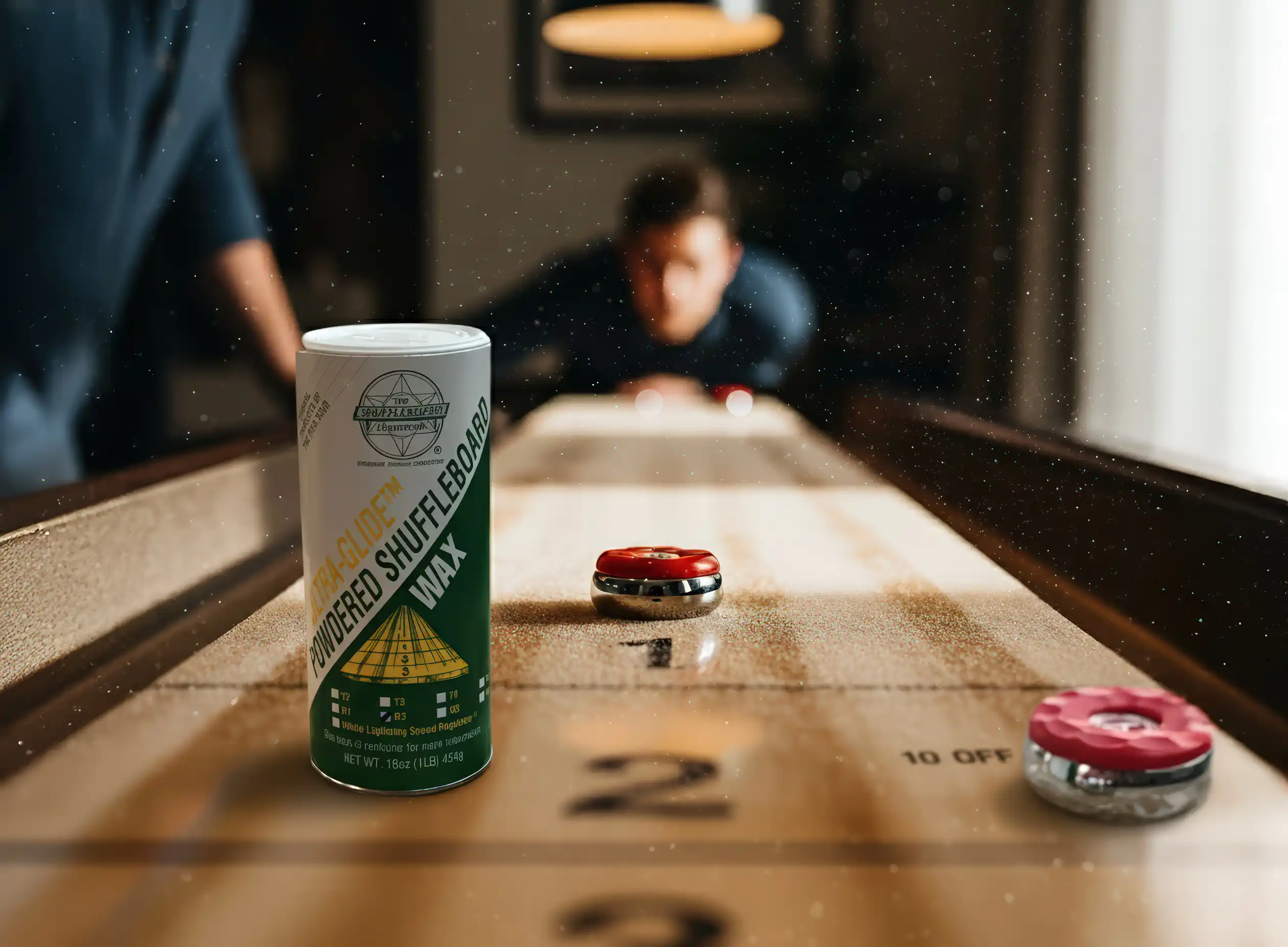
Speed powder, often called wax, is the final layer that reduces friction and controls puck speed.
Pick the Right Powder Speed
Powders are rated 1 to 7, with 1 being fastest and 7 slowest.
• Short Tables (12 to 14 feet): Use #5 to #7 for better control.
• Long Tables (16 to 22 feet): Use #1 to #3 to maintain glide over distance.
• Mix Powders: Combine grades to fine-tune speed, such as #2 plus #4 for mid-range glide.
Choose Safe, Allergy-Friendly Powder
• Brown Powder: Faster but often contains crushed nuts, which poses a hazard for people with nut allergies.
• Yellow Powder: Nut-free alternative, ideal for homes or public spaces.
Apply Powder Evenly
- Wait for Silicone to Set: Apply powder after silicone is tacky or dry.
- Light Dusting: Sprinkle a thin, even layer across the surface. Less is better because over-application causes plowing.
- Spread with Cloth or Hands: Use gloves or a soft towel to distribute uniformly.
- Avoid Piling: Never dump powder in one spot. Use circular or back-and-forth motions instead.
Tournament Rule: Only one full coat is allowed per game. Reuse powder from gutters instead of adding more.
Fix Common Play Issues
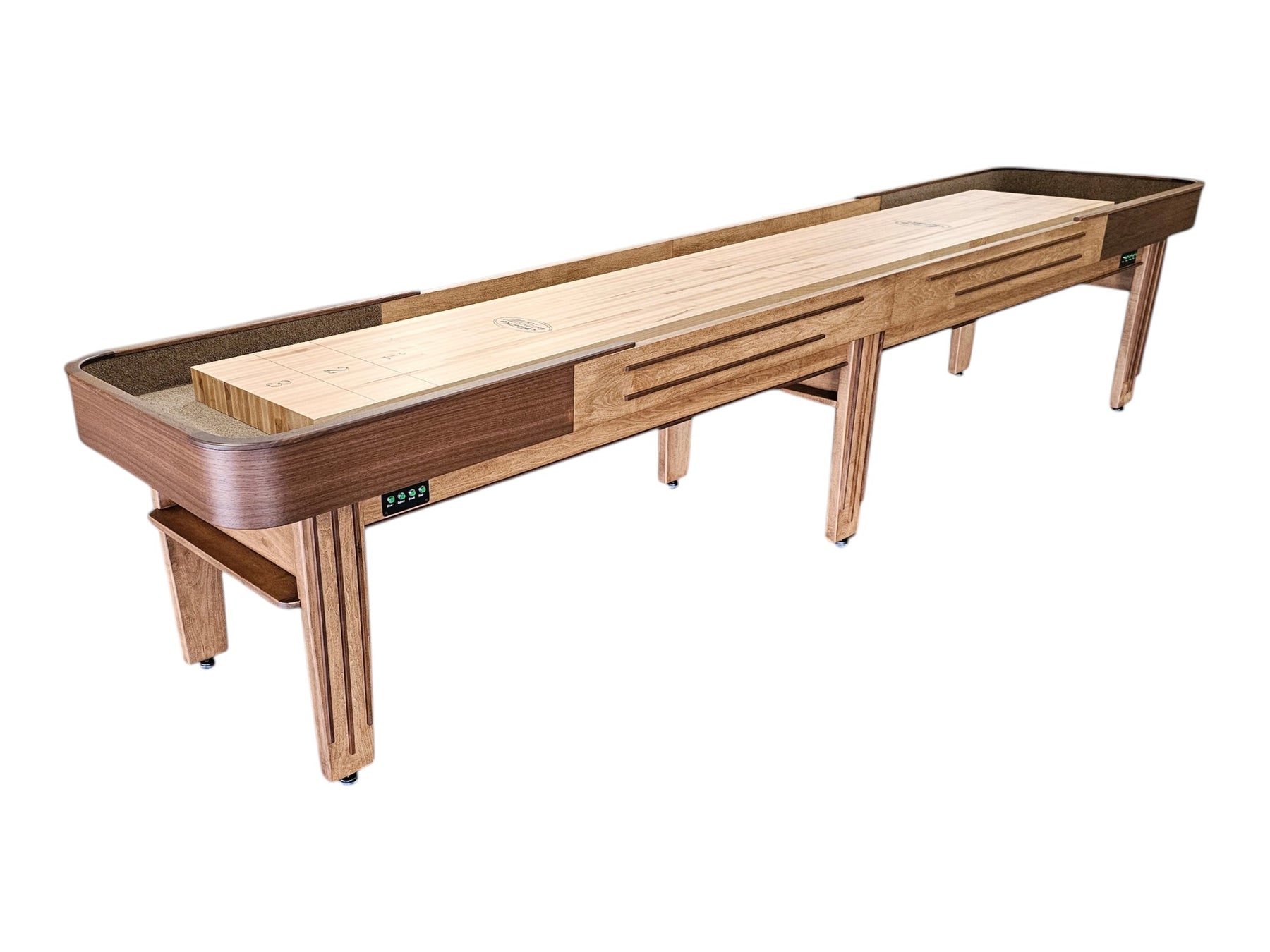
Even with regular cleaning, problems arise. Use these quick diagnostics to restore performance.
Stop Pucks from Plowing
Plowing happens when pucks dig into thick wax instead of gliding.
• Causes: Too much powder, worn or flat pucks, or old dirty wax buildup.
• Fix: Sweep the table completely clean. Reapply a light coat of fresh powder. Inspect pucks for black spots or wear and replace if damaged.
Correct Puck Drifting
If pucks consistently drift to the center or edges, the issue may be structural.
• Drifts to Sides: Table is crowning, meaning the middle is raised.
• Drifts to Center: Table is cupping, meaning the middle is dipped.
• Solution: Check with a straight edge and a sheet of paper. It should slide under the center but not the edges. Adjust climate adjusters underneath the table in small increments. Recheck every few weeks, especially with seasonal changes.
Warning: Climate adjusters only correct minor warping. Severe bowing requires professional resurfacing.
Eliminate Sticky Spots
A sticky surface means silicone and wax are not bonding properly.
• Likely Cause: Residue from improper cleaners or old wax.
• Fix: Deep clean with the correct solution. Reapply silicone and fresh powder. Never use oil-based polishes unless specified for shuffleboard.
Maintain Pucks and Climate
Your table is not the only thing that needs care. Pucks and environment play a big role in performance.
Clean and Inspect Pucks Regularly
Dirty or worn pucks scratch the surface and cause plowing.
- Wipe with a soft cloth to remove wax.
- Spray with glass cleaner.
- Wipe dry and ensure no streaks remain.
- Check for wear. Replace pucks with black spots or flat spots.
Control Temperature and Humidity
Wood moves with climate, and ignoring this leads to warping and inconsistent play.
• Avoid Direct Sunlight: Causes daily expansion and contraction, drying out silicone and wax.
• Keep Table Covered: Use a fitted cover when not in use to block dust, spills, and UV exposure.
• Ideal Environment: Stable temperature of 68 to 72 degrees Fahrenheit and humidity of 40 to 50 percent.
Pro Tip: Solid hardwood tops at 1.5 inches thick or more respond best to climate adjusters. Thin or engineered boards may not adjust properly.
Follow the Complete Maintenance Routine
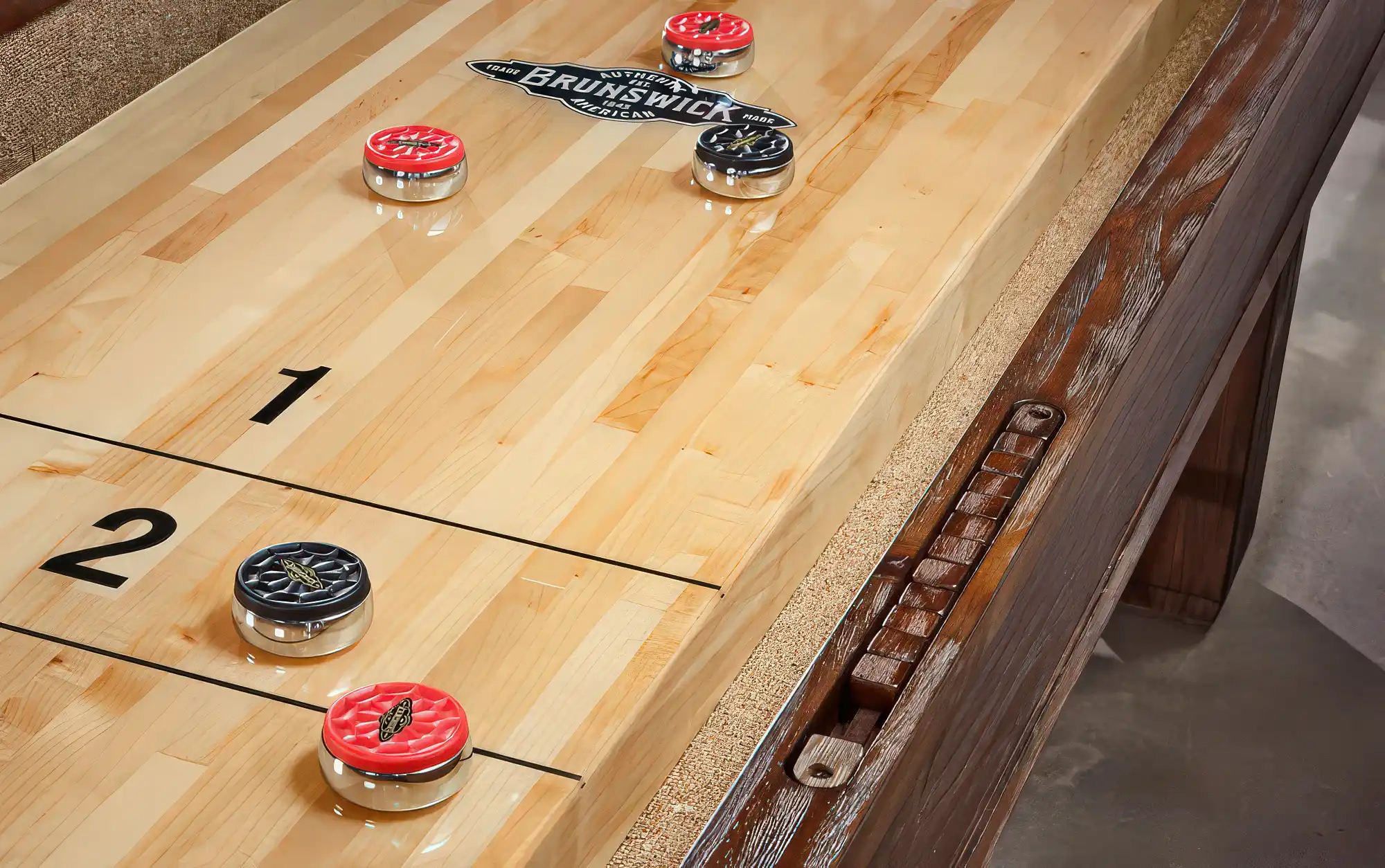
Use this sequence after every few games or when performance declines.
Step-by-Step Cleaning and Prep
- Brush Off Old Wax: Use shuffleboard brush along the grain direction.
- Vacuum Gutters: Remove old powder but never vacuum the playing surface.
- Clean Surface: Wood uses vinegar and oil mix on cloth. Polymer uses glass cleaner on cloth. Wipe and dry thoroughly.
- Apply Silicone Spray: Light mist, wait 2 to 5 minutes, buff if needed.
- Add Speed Powder: Light, even coat. Spread with cloth.
- Test Glide: Slide a puck down the center. Adjust powder if needed.
- Cover When Done: Protect from dust and damage.
Time Estimate: Full process takes 15 to 20 minutes. Spot cleaning during play takes 2 to 3 minutes.
Store and Protect Your Table
Longevity depends on consistent protection, not just cleaning.
Use a Table Cover Always
• Prevents dust, spills, and accidental scratches.
• Blocks UV rays that degrade finishes and dry out wax.
• Essential for tables in living rooms, game rooms, or near windows.
Schedule Deep Cleaning
• Weekly: Light brush and silicone refresh.
• Monthly: Full clean with solution and re-wax.
• Annually: Inspect for wear. Consider professional refinishing if the finish is dull or damaged.
Lifespan Tip: A well-maintained solid maple table can last decades. Neglect cuts its life in half.
Frequently Asked Questions About Cleaning a Shuffleboard Table
What is the best way to clean a shuffleboard table surface?
The best cleaning method depends on your table finish. For wood or lacquer surfaces, use a mixture of water, white vinegar, and jojoba oil applied with a soft, lint-free cloth. For polymer or sealed surfaces, use a gentle glass cleaner or all-purpose spray on a microfiber cloth. Always wipe dry immediately and never soak the surface.
How often should I clean my shuffleboard table?
Clean the surface weekly for regular use or monthly for light play. Apply silicone spray every few games or when the surface feels slow. Schedule a deep clean with proper solutions monthly, and inspect the table annually for wear or damage that may require professional attention.
Can I use regular household cleaners on my shuffleboard table?
No. Regular household cleaners often contain harsh chemicals, ammonia, or abrasives that can damage wood finishes and polymer coatings. Always use shuffleboard-specific products or mild, pH-neutral cleaners. Avoid furniture polishes with silicones or waxes unless labeled for shuffleboard use.
Why do my shuffleboard pucks plow through the wax?
Plowing occurs when too much speed powder accumulates, when pucks are worn or flat, or when old wax buildup exists. Sweep the table completely clean and apply a fresh, thin coat of powder. Inspect your pucks for black spots or flattening and replace them if necessary.
How do I fix puck drifting on my shuffleboard table?
Puck drifting indicates the table surface is not level. If pucks drift to the sides, the table is crowning, meaning the middle is raised. If pucks drift to the center, the table is cupping, meaning the middle is dipped. Check with a straight edge and a sheet of paper. Adjust the climate adjusters underneath the table in small increments until the drift stops.
Key Takeaways for Cleaning Your Shuffleboard Table
Knowing how to clean a shuffleboard table is not just about wiping it down. It is a precise routine that protects your investment and guarantees smooth, professional play. By using the right cleaner for your finish type, applying silicone correctly, choosing the appropriate speed powder, and maintaining proper climate control and puck condition, you will keep your table in tournament-ready condition for years. Stick to shuffleboard-specific products, avoid household cleaners, and always cover your table when not in use. With this guide, you are not just cleaning. You are optimizing performance and extending the life of your shuffleboard table for decades of enjoyment.