How to Clean a Copper Table: Quick Steps
Copper tables are stunning centerpieces that bring warmth, elegance, and timeless character to any room. However, because copper is a soft, reactive metal, keeping it looking its best requires more than a quick wipe. Without proper care, your copper table can develop unsightly tarnish, water spots, or even greenish corrosion, especially if spills are left unattended or harsh cleaners are used.
This guide walks you through every step of cleaning, protecting, and preserving your copper table using safe, effective methods. Whether you love the shiny pinkish glow of fresh copper or the rich depth of a well-aged patina, you will learn how to clean it properly, prevent damage, and extend its life for decades.
Daily Dusting Routine
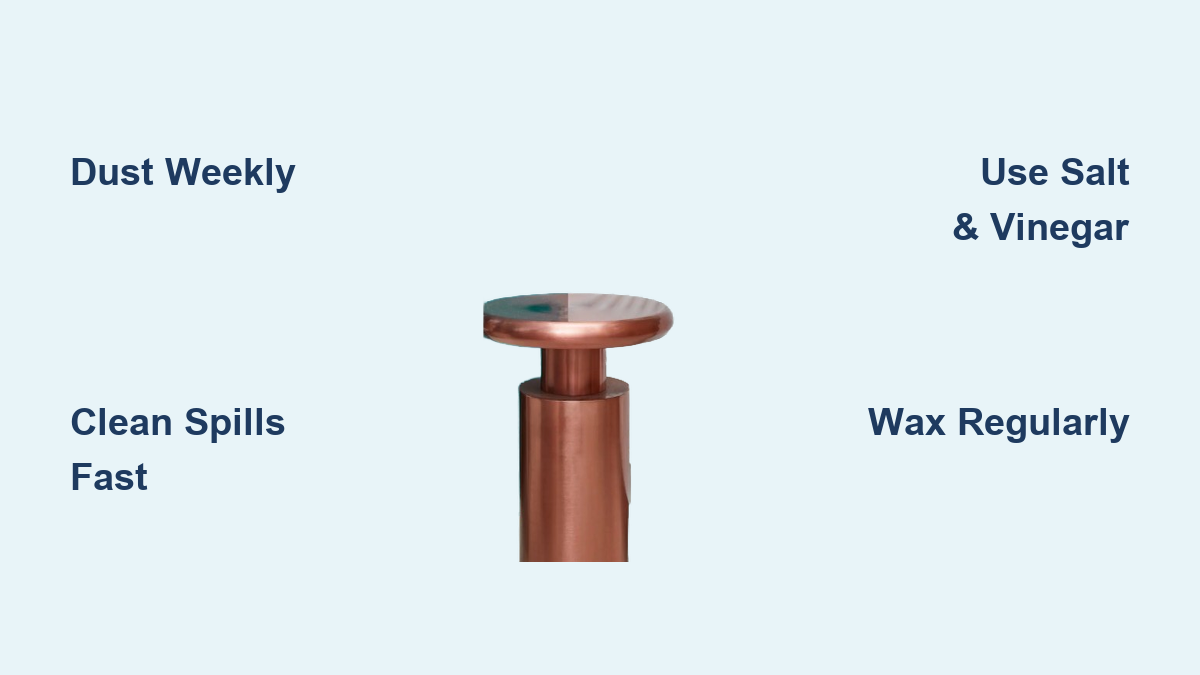
Dust may seem harmless, but on copper, it acts like sandpaper, causing micro-scratches over time. Regular dusting keeps your table looking clean and minimizes the need for deeper cleaning later.
Use a Soft Microfiber Cloth
Dust your copper table at least once or twice a week using a soft microfiber cloth or clean cotton rag. These materials trap dust without scratching the surface.
Avoid paper towels or rough fabrics, which can leave lint or cause fine abrasions. Gently wipe the entire surface, paying extra attention to textured areas like hammered or pressed finishes where dirt can settle.
Clean Spills Immediately
Copper reacts quickly to moisture and acidic substances. Wine, juice, vinegar, citrus, and even water left to dry can leave rings or accelerate oxidation.
Prevent Staining and Corrosion
If something spills, wipe it up immediately with a damp microfiber cloth, then dry thoroughly. Never let liquids sit on the surface, even condensation from a cold glass can cause a water ring.
If you notice a blue or green tint, that is early-stage verdigris, or corrosion, and it needs prompt attention. The faster you respond, the easier it is to prevent permanent damage.
Remove Tarnish Naturally
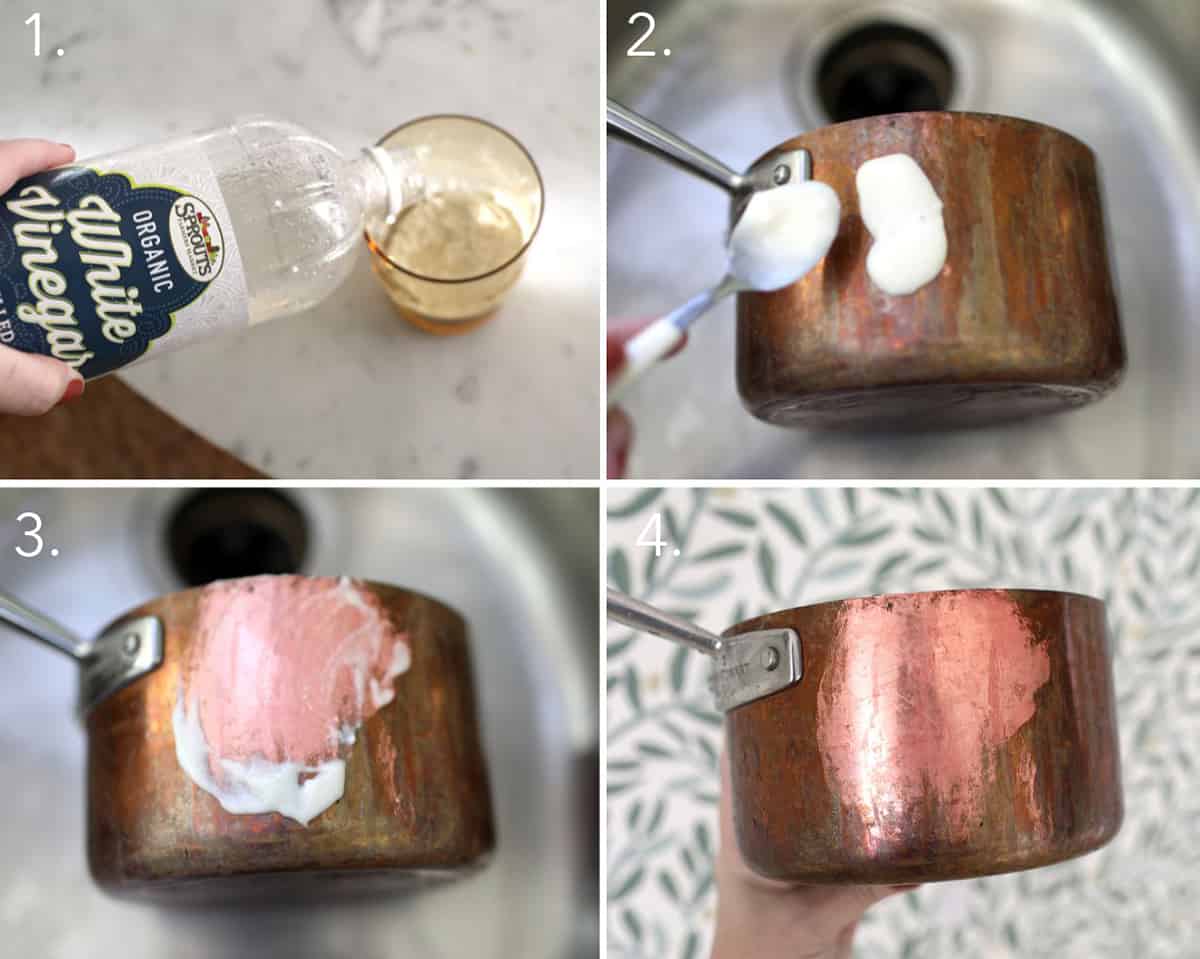
Over time, copper naturally tarnishes, forming a dull, dark layer. If you want to restore the original bright, rosy-copper shine, skip the harsh chemicals.
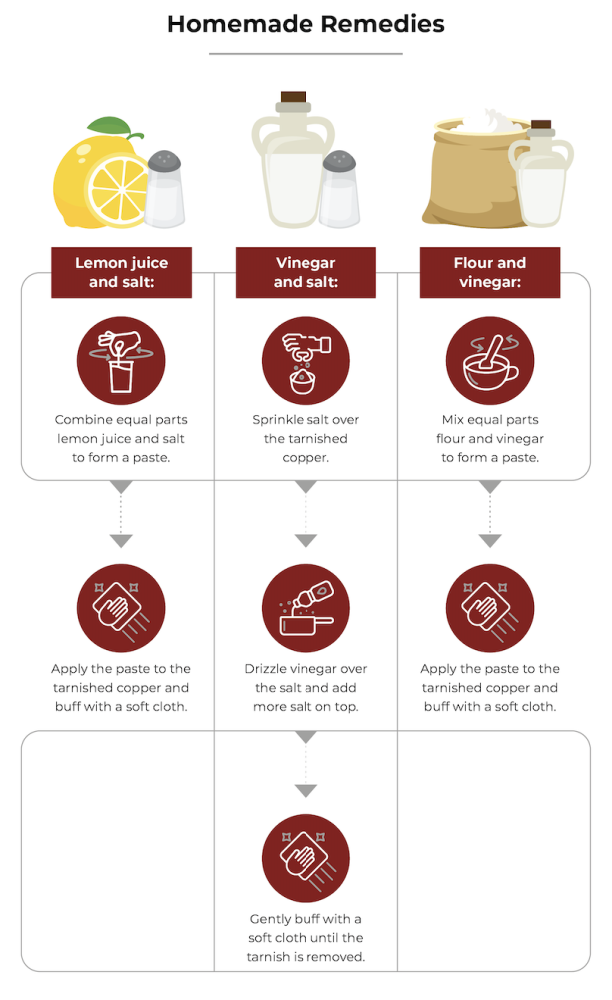
Use Salt and Vinegar Paste
A simple salt and vinegar paste works wonders for removing tarnish.
Steps:
- Sprinkle table salt evenly over the tarnished area.
- Pour white vinegar directly over the salt until it forms a paste.
- Gently rub in small circular motions with a soft cloth.
- Let it sit for no more than 1 to 2 minutes.
- Rinse thoroughly with warm water.
- Dry immediately with a clean, soft cloth.
Try Lemon and Salt
Lemon juice is another natural acid that cuts through tarnish. Cut a lemon in half, sprinkle salt on the cut side, and rub it over the copper surface.
For a less messy option, mix lemon juice and cornstarch into a thick paste. Apply, wait 1 to 2 minutes, then rinse and dry. This is gentler and ideal for delicate finishes.
Avoid Harsh Cleaners
Never use bleach, ammonia, or strong disinfectants on copper. These chemicals react with the metal, strip protective layers, and can cause pitting or discoloration.
No Bleach or Ammonia
Standard metal polishes and abrasive scrubbers like steel wool are equally damaging. They scratch the surface and remove patina unevenly.
Stick to mild dish soap and water for routine cleaning. If you use a commercial cleaner, make sure it is specifically labeled for copper and non-abrasive. When in doubt, natural methods are safer and just as effective.
Protect With Wax
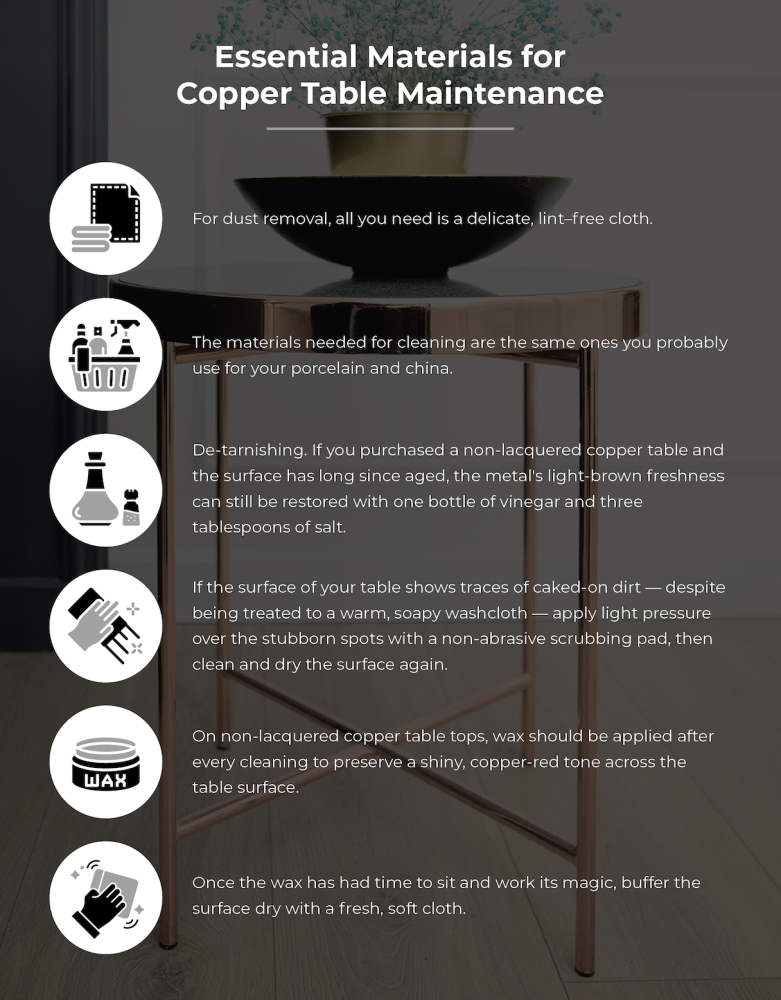
Waxing is the most important step in preserving your copper table, whether you want to lock in shine or protect a natural patina. Wax creates a barrier against moisture, oils, and oxidation.
Apply Clear Paste Wax
Use a clear paste wax like Johnson’s, Briwax, or Minwax. Beeswax also works well and enhances warmth.
Application Steps:
- Ensure the table is clean and completely dry.
- Apply a thin layer of wax with a soft cloth using small circles.
- Wait 5 to 10 minutes for it to haze.
- Buff to a soft shine with a clean, lint-free cloth.
Multiple thin coats are better than one thick one. They build protection without streaking.
Test Wax Integrity With Water
To check if it is time to re-wax, do the water bead test. Place a drop of water on the surface. If it beads up, the wax is still effective. If it spreads or soaks in, it is time to reapply.
Waxing Frequency:
- High-use tables: Every 3 to 4 weeks
- Moderate use: Every 2 to 3 months
- Low use: Every 6 months
Handle Scratches Properly
Copper is soft, so scratches from cutlery or daily use are common. The good news is that copper has a self-healing quality.
Let Minor Scratches Self-Heal
Minor scratches often fade as the metal oxidizes and darkens, usually within 2 to 3 weeks. Resist the urge to over-polish. Buffing too hard can create a shiny spot that stands out more than the scratch.
In most cases, the best action is no action. Let time blend the mark naturally.
Accelerate Healing With Saltwater
If you need to fix a scratch faster, use a saltwater catalyst. Mix 1 part salt with 10 parts water. Gently rub onto the scratch with a soft cloth. Let it sit briefly, then rinse and dry. Re-wax the area afterward.
Prevent Future Damage
Prevention is always easier than repair when it comes to copper tables.
Use Coasters and Placemats
Never place glasses, mugs, or plates directly on copper. Condensation causes rings, and heat can warp or mark the surface.
Always use coasters under drinks and placemats under dishes. Avoid using the table as a cutting board. Knives will leave deep gouges that will not heal.
Control the Environment
Prolonged sunlight can fade copper is natural color, and high humidity speeds up oxidation.
Limit Sun and Humidity
If your table sits near a window, use curtains or blinds to filter UV rays. Keep the room at a stable temperature with moderate humidity.
Avoid placing the table in kitchens or bathrooms with frequent steam exposure.
Maintain the Right Finish
Your cleaning routine depends on your preferred look. Do you want a bright, polished table or a dark, aged patina?
Choose Between Shine and Patina
For a shiny finish, clean regularly and wax monthly. Use natural cleaners as needed to remove tarnish and maintain luster.
For a natural patina, skip the polish. Dust weekly and wipe with a damp cloth when needed. Wax every few months to protect against moisture while allowing slow, even aging.
Never mix methods. Using polish on a patinated table will create patchy, uneven spots.
Avoid Common Mistakes
Over-polishing removes the patina and thins the metal over time. It also creates shiny patches that look unnatural.
Do Not Over-Polish or Use Abrasives
Stick to gentle cleaning and waxing. Never use scouring pads, steel wool, or abrasive sponges. These leave visible scratches and ruin the finish.
Even some non-scratch scrubbers can be too harsh. When in doubt, test on a hidden spot first.
Fix Water Rings and Stains
If a water ring appears, dry the area immediately and buff lightly with a dry cloth.
Treat Early Moisture Damage
If the ring persists, apply a small amount of vinegar-salt paste, rinse, dry, and re-wax. For blue or green spots, act fast. Use the same paste, but rinse thoroughly and wax immediately after.
Prevention is key. Always use coasters and wipe spills quickly.
Address Uneven Aging

If your table looks spotty or discolored, it is likely due to inconsistent cleaning or waxing.
Restore Uniform Color
To fix it, clean the entire surface with a mild vinegar-salt solution. Rinse and dry completely. Apply a fresh, even coat of wax.
This evens out the tone and creates a uniform protective layer.
Identify Lacquered vs. Raw Copper

Second-hand or antique copper tables may be lacquered, coated with a clear sealant to stop oxidation.
Test Before Cleaning
Apply a drop of vinegar or copper cleaner to a hidden spot. If the cloth picks up tarnish, it is raw copper. If nothing happens, it is likely lacquered.
If lacquered, clean only with mild soap and water. Do not use abrasives or acid-based cleaners. Re-lacquering requires professional help.
Use the Right Tools
Keep these items on hand for easy copper care.
Gather Essential Supplies
- Soft microfiber cloths for dusting and drying
- Cotton rags for waxing
- Mild dish soap
- White vinegar
- Lemon juice
- Table salt
- Clear paste wax
- Warm water
Avoid steel wool, scourers, bleach, and ammonia at all costs.
Frequently Asked Questions About Cleaning Copper Tables
How Often Should I Wax My Copper Table?
Wax your copper table every 3 to 4 weeks for high-use tables, every 2 to 3 months for moderate use, and every 6 months for low use. Perform the water bead test to check if the wax barrier is still effective.
Can I Use Vinegar to Clean Copper?
Yes, white vinegar is safe and effective for cleaning copper. Mix it with salt to create a paste that removes tarnish without damaging the metal. Rinse thoroughly and dry immediately after cleaning.
How Do I Remove Scratches From My Copper Table?
For minor scratches, the best approach is usually no action. Let the copper oxidize naturally over 2 to 3 weeks, and the scratch will blend in. For faster results, apply a saltwater solution to accelerate oxidation, then re-wax.
What Should I Avoid Using on Copper Tables?
Never use bleach, ammonia, steel wool, scouring pads, or abrasive metal polishes. These damage the surface, strip the patina, and can cause permanent discoloration.
How Do I Maintain the Patina on My Copper Table?
To maintain a natural patina, dust weekly with a soft cloth and wipe with a damp cloth when needed. Apply wax every few months to protect against moisture while allowing slow, even aging. Skip tarnish removers and polishes.
Is My Copper Table Lacquered or Raw?
Test a hidden spot with a small amount of vinegar or copper cleaner. If the cloth picks up tarnish, it is raw copper. If nothing happens, the table is likely lacquered and requires only mild soap and water cleaning.
Key Takeaways for Maintaining Your Copper Table
Cleaning a copper table is simple when you use the right methods. Focus on gentle, natural cleaning, regular waxing, and immediate spill control. Dust weekly with a soft microfiber cloth, and clean spills right away to prevent staining and corrosion.
Whether you prefer a bright shine or a rich patina, consistent care will keep your table beautiful for decades. Use coasters and placemats to prevent damage, and avoid harsh chemicals entirely.
Stick to soft cloths, natural cleaners like salt and vinegar, and clear paste wax for protection. Let copper is natural character shine through safely and sustainably.