How to Set Flatware on a Table
You’ve prepared the perfect menu, chosen elegant linens, and invited your guests. Now comes the moment that trips up even experienced hosts: placing the utensils. Knowing how to set flatware on a table correctly transforms a well-planned meal into a seamless, polished experience. The good news? There’s one simple rule that governs all proper placement.
The guiding principle is outside-in: utensils are arranged in the order they’ll be used, with the first course’s tools farthest from the plate and each subsequent piece moving closer. This logical system ensures guests intuitively reach for the right utensil without thinking. Beyond the sequence, symmetry and balance matter. Forks go on the left, knives and spoons on the right, with one notable exception. Ready to master the art of flatware placement for any occasion? Let’s dive in.
The Outside-In Rule: Flatware Placement Fundamentals

The foundation of proper table setting relies on logic and consistency. When done correctly, guests naturally know which utensil to reach for next. Every piece should be placed about one inch from the table’s edge, aligned parallel to create a clean, uniform appearance.
Understanding Utensil Sequence
Utensils mirror the menu’s structure, arranged from the outside in toward the plate. This means the outermost fork, knife, or spoon corresponds to the first course, while the pieces closest to the plate are for the final course. Forks always sit on the left of the dinner plate, while knives and spoons occupy the right side.
Key Placement Principles
The entire arrangement is designed with right-handed diners in mind. Knife blades always face inward toward the plate, a tradition dating back to Cardinal Richelieu in 1637 who invented the blunt-tipped knife to discourage toothpicking. Only set out utensils that will actually be used for your specific menu. If soup isn’t on the menu, skip the soup spoon.
Where Forks Belong: Left-Side Arrangement
All forks, with one notable exception, belong to the left of the dinner plate. They’re arranged in the order of use, starting from the outside and moving inward toward the plate.
Fork Types and Their Positions
The salad fork sits on the far outside left if salad is served as a first course. The dinner fork positions closest to the plate on the left side. When a fish course is served as a separate course, the fish fork goes between the salad and dinner forks. Tines should face upward, with even spacing of about half an inch between utensils to avoid crowding.
Fork Placement Checklist
Forks are positioned to the left of the plate in this order: salad fork (outermost), fish fork (if applicable), and dinner fork (closest to plate). Each fork aligns parallel to the table edge, creating visual symmetry with the other side of the setting.
Knives and Spoons: Right-Side Positioning
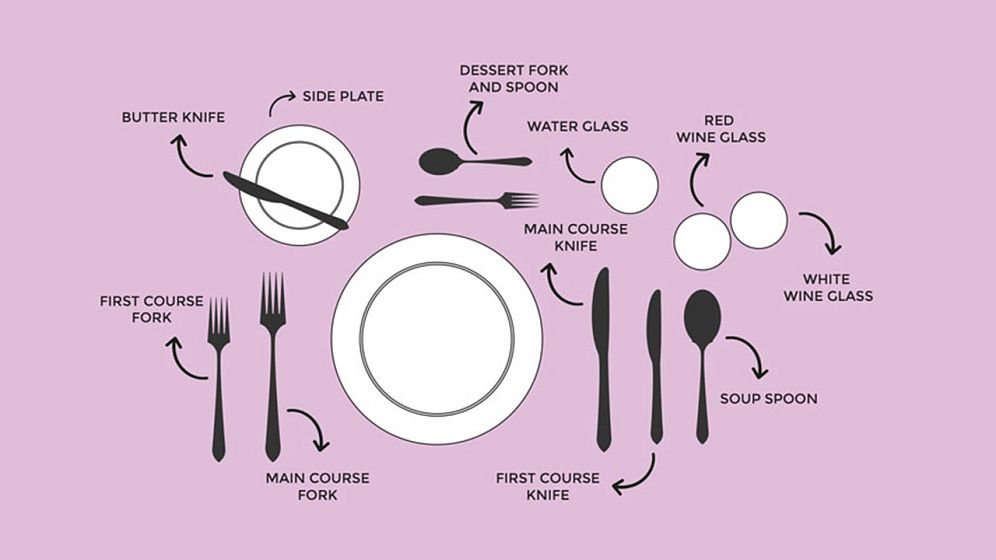
Knives and spoons occupy the right side of the plate, following the same outside-in logic as forks. This arrangement creates a mirror image that balances the table visually.
Knife Placement Rules
The dinner knife sits directly to the right of the plate, with the blade facing inward toward the plate. This inward-facing blade is both a safety measure and an etiquette rule that has persisted for centuries. If a fish course is served, the fish knife positions between the soup spoon and dinner knife.
Spoon Arrangement
The soup spoon goes on the far right (outermost position) if soup is included in the menu. Spoons sit to the right of the knives, with the bowl facing upward. The handle aligns parallel to the other utensils, about one inch from the table edge.
The One Exception: Oyster Fork Placement
The oyster fork is the only fork that breaks the “forks on the left” rule. This small, two-pronged utensil is designed specifically for extracting meat from oysters, crab, escargot, and shrimp.
When and Where to Place It
The oyster fork positions to the right of the spoons, often resting in the bowl of the soup spoon or on the far right of the setting. It features sharp prongs to separate meat from the shell without breakage. Only include this fork if shellfish is on your menu.
Dessert and Bread Utensils: Above the Plate
Dessert utensils don’t always start on the table, but when they do, placement follows a specific pattern above the dinner plate. The bread plate also has a designated zone to keep the setting balanced.
Dessert Fork and Spoon Placement
If dessert flatware is pre-set, the dessert fork rests horizontally above the plate with the handle pointing left. The dessert spoon sits above the fork, handle pointing right. Fork tines face right while the spoon bowl faces left, allowing right-handed guests to grab the spoon with their right hand and fork with their left when dessert arrives.
Bread Plate and Butter Knife
The bread plate sits at the top left of the dinner plate, above the forks. The butter knife places across the plate at a 45-degree angle or along its right edge, with the blade facing inward. Never place the knife vertically as it can appear threatening. In formal settings, the butter knife is small and dull, designed only for spreading.
Casual Table Settings: Simple Arrangements
For everyday meals or relaxed gatherings, flatware placement can be streamlined without sacrificing basic etiquette. A casual setting prioritizes function and simplicity.
Basic Three-Piece Setup
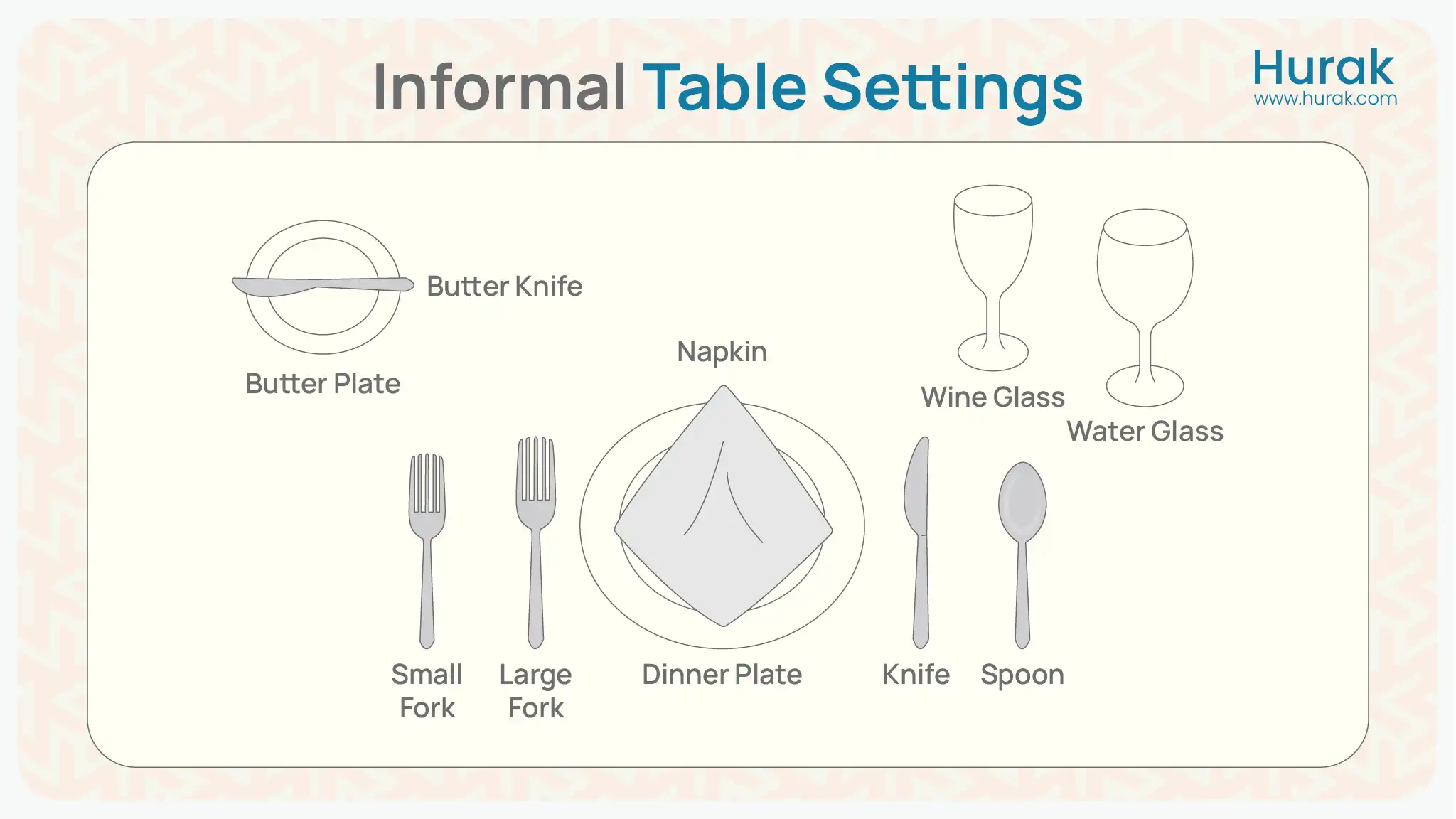
A casual setting typically includes just three utensils: fork on the left, knife on the right with blade inward, and spoon to the right of the knife if soup or cereal is served. The napkin can go to the left of the fork or underneath the utensils. Some hosts stack all utensils on a folded napkin to the left of the plate for picnics or outdoor meals.
Casual Napkin and Glassware Options
The napkin places either to the left of the plate or on top of the fork. The water glass sits directly above the knife or slightly to the right at a 45-degree angle. Placemats or runners work well for lunch, but a tablecloth is preferred for dinner even in casual settings to maintain a touch of formality.
Semi-Formal Settings: Elevated but Approachable
This style suits dinner parties with multiple courses but without the rigidity of full formal dining. The setting is elevated while remaining approachable.
Course-Specific Utensils
If your menu includes salad and a main course, set both forks with the salad fork outermost on the left and the dinner fork closer to the plate. On the right side, place the dinner knife directly to the right of the plate and the soup spoon outermost if soup is served. Fish and oyster forks aren’t necessary unless the menu calls for them.
Semi-Formal Napkin and Glassware
The napkin can be placed to the left, on the bread plate, or in the center of the charger. Glassware includes the water glass above the knife plus one or two wine glasses to the right. Some hosts place the salad fork on top of the napkin to save space, though traditionalists prefer each item remain separate.
Clearing Before Dessert
Remove unused utensils, the butter plate, and butter knife before serving dessert. This keeps the table uncluttered and signals the transition to the final course.
Formal Table Settings: Multi-Course Precision
:max_bytes(150000):strip_icc()/formal-table-setting-up-for-soup-0919-1222b780a742453cbdecfb2e72cfdff0.png)
A formal dinner with three or more courses demands strict adherence to placement rules and visual balance. Symmetry is the most critical element.
Multi-Course Flatware Arrangement
For a five-course meal, the setting expands accordingly. On the left: salad fork, fish fork, and dinner fork (outside to in). On the right: soup spoon, fish knife, and dinner knife (outside to in). The oyster fork goes on the far right if shellfish is served. Each utensil corresponds to a specific course, ensuring guests never reach for the wrong tool.
Charger Plates and Layered Serveware
A charger plate often serves as a decorative base in formal settings. The napkin may be placed in the center or to the left of the charger. The dinner plate sits on top of the charger and is replaced or removed as courses progress. Soup may be served in a cup on the charger if it’s the first course.
Formal Glassware Cascade
In formal setups, glassware flows in a diagonal to the right. The water glass (largest) sits above the knife. The white wine glass positions upper right, the red wine glass next to it, and the champagne flute behind or to the far right. Never set more than four glasses.
Specialized Flatware and Their Uses
:max_bytes(150000):strip_icc()/formal-dining-table-setting-up-for-fish-0919-a1eefcd9a9004bfeaaf547bb4ef4fc44.png)
Many utensils exist for specific foods, and understanding them elevates your table setting from correct to refined. These specialized pieces originated primarily in the Victorian era.
Fish Cutlery
Fish knives and forks are distinct from their dinner counterparts. The fish knife features a blunt tip with a wide blade for lifting delicate flesh. The fish fork has a wider left tine for holding fish steady. Using fish cutlery correctly signals attention to detail and refinement.
Cake and Cheese Utensils
The cake fork is smaller than a dinner fork with shorter, wider tines designed for desserts. The cheese knife has a serrated or forked tip for soft cheeses or a blunt edge for hard varieties. These are often brought out with the course rather than pre-set.
Demitasse and Specialty Spoons
The demitasse spoon is tiny, designed for strong coffee served after dinner. The sauce spoon has a flat bottom, invented for skimming sauces off plates at Paris’s Lasserre restaurant in 1950. These specialty pieces add authenticity to high-end dining.
Common Mistakes to Avoid
Even small errors can disrupt the dining flow and create confusion for guests. Here are the most frequent mistakes to watch for.
Wrong Utensil Order
Placing the salad fork inside the dinner fork (closer to the plate) confuses guests. Always arrange utensils outside-in by course. The first course’s utensil should be farthest from the plate.
Knife Blade Facing Out
A blade pointing toward the diner is both a safety hazard and an etiquette faux pas. The blade must always face inward toward the plate.
Overcrowding the Table
Only set utensils that will be used. If no soup is served, skip the soup spoon. If no salad is offered, don’t include the salad fork. A cluttered table confuses guests and looks unprofessional.
Misplaced Bread Plate
The bread plate belongs at the top left, not top right. Confusing it with drink placement disrupts the symmetry of the entire setting.
Key Takeaways for Perfect Flatware Placement
Setting flatware isn’t just about following rules; it’s about creating a welcoming experience that makes guests feel respected and at ease. The outside-in rule is your foundation: utensils are arranged in the order they’ll be used, from the outside toward the plate. Forks go on the left, knives and spoons on the right, with the oyster fork as the single exception. Only set what you’ll actually use.
Symmetry and alignment matter. All handles should be about one inch from the table edge and parallel to create a clean, professional look. Adapt when needed. Missing a salad fork? Use the dessert fork in its place. Etiquette is flexible when hospitality comes first.
Clear the table before dessert. Remove unused utensils, the butter plate, and bread knife to refresh the setting and signal the meal’s final act. Practice makes perfect. Set your table the day before, walk around it, sit in each seat, and check sightlines and spacing.
Frequently Asked Questions About Setting Flatware
What is the basic rule for placing flatware?
The primary rule is “outside-in”: place utensils in the order they’ll be used, starting with the first course farthest from the plate and moving inward. Forks go on the left, knives and spoons on the right.
Which fork goes where on a table setting?
All forks except the oyster fork go on the left of the plate. The salad fork is farthest from the plate if salad is the first course, with the dinner fork closest to the plate. The oyster fork is the only fork placed on the right side.
How far should utensils be from the edge of the table?
Utensil handles should be about one inch from the table’s edge and aligned parallel to create a clean, uniform appearance.
Does the knife blade face in or out?
The knife blade always faces inward toward the plate. This tradition dates back to the 17th century and is both a safety measure and an etiquette rule.
Where does the dessert fork go?
Dessert utensils can be pre-set above the dinner plate or brought out with dessert. If pre-set, the dessert fork goes above the plate with the handle pointing left, and the dessert spoon sits above the fork with the handle pointing right.