How to Set a Thanksgiving Table
Nothing says “welcome” quite like a beautifully set Thanksgiving table. More than just arranging plates and silverware, setting a Thanksgiving table is about crafting an experience—one that blends warmth, tradition, and thoughtful detail. Whether you’re hosting a small family dinner or a 20-person reunion, the right setup enhances connection, celebrates the season, and makes guests feel truly seen. The key isn’t perfection—it’s intention.
This guide walks you through every step of setting a Thanksgiving table, from planning seating to choosing the perfect centerpiece. You’ll learn how to balance beauty with practicality, use seasonal elements creatively, and avoid common pitfalls like blocking sightlines or overpowering the food’s aroma. We also explore five distinct table themes so you can pick the style that fits your celebration.
Plan Your Guest Seating and Table Layout
Determine Seating Based on Guest Count
Your guest list determines everything about your table setup. For gatherings of 10 or fewer, a single dining table works perfectly. For 20 or more guests, consider combining multiple tables or using outdoor space if temperatures allow. When temperatures sit in the high 40s to low 60s Fahrenheit, an outdoor setup creates a festive, open-air ambiance that guests love.
If using benches, place chargers at each seat to visually define where one setting ends and the next begins. This prevents crowding and helps guests instinctively know where to sit. Keep stackable stools nearby for unexpected additions—you can tuck them in a corner and deploy them without disrupting the flow.
Set Up a Secondary Buffet Table
Keep your main dining table uncluttered by setting up a separate buffet for serving dishes. This clears space for eating, reduces traffic around the dining area, and lets guests serve themselves without reaching across others. Position the buffet nearby but out of the main walkway to maintain smooth movement throughout your space.
Assemble the Base the Night Before
Save time and reduce stress by setting foundational layers the day before: tablecloth or runner, chargers, and non-perishable decor. Leave fresh elements—flowers, greenery, napkins, and candles—for Thanksgiving morning. This staggered approach cuts your setup time to under 15 minutes on the big day, freeing you for last-minute cooking.
Choose Your Table’s Foundation: Cloth or Runner
Select a Runner for Casual Elegance
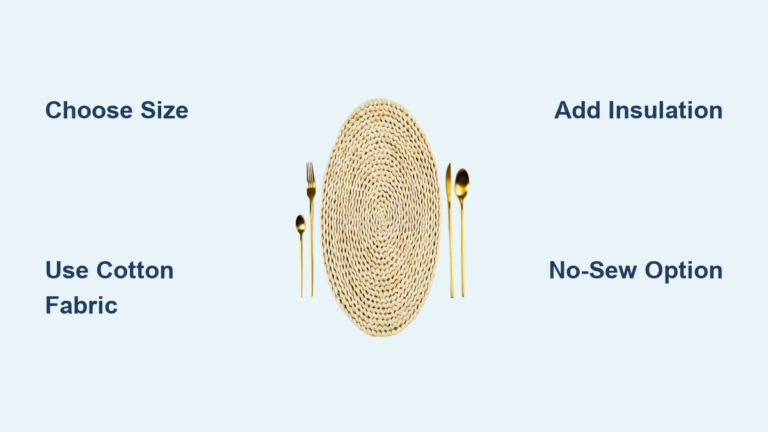
A table runner adds color, texture, and focus without overwhelming your table. It’s ideal for semi-formal or casual Thanksgiving gatherings. Runners make plate placement easier since you can align plates and glassware along their edges. Opt for neutral tones like natural linen or black-and-white patterns—they pair effortlessly with autumnal accents.
For a modern twist, lay the runner across the table instead of down its length. This creates a striking visual break and works especially well for long, narrow tables.
Use a Full Tablecloth for Classic Style
A tablecloth offers a clean, timeless look. Choose a modern damask in beige or gray for subtle sophistication. For outdoor or large indoor setups with joined tables, use extra-long linen cloths that provide full coverage and a polished finish.
If your table has beautiful wood grain you want to show off, skip the cloth entirely. A runner-only setup highlights the natural surface and gives a modern, organic feel.
Embrace Imperfect Linens
Wrinkled cloth napkins aren’t a flaw—they’re a sign of relaxed elegance. Unpressed linens support a “perfectly imperfect” aesthetic that feels warm and inviting. For large crowds, high-quality disposable napkins with gold rims or embossed details offer style while simplifying cleanup.
Design Your Thanksgiving Color Palette

Match Colors to the Season
Your table’s color scheme should reflect autumn’s richness. Classic combinations include traditional neutrals with pops of orange, red, and brown, or modern black and white with soft gold. For an earthy feel, try greens, whites, browns, and purplish-reds. A minimalist approach uses gray and white with soft contrast.
Choose a base color like white or tan, then layer in two to three accent colors. This keeps your design cohesive without feeling chaotic.
Pull Colors from Your Menu
Take visual inspiration directly from your food. A bowl of clementines, red Bartlett pears, or roasted squash can double as decor. This creates visual harmony between the meal and your table, making the spread feel intentional and abundant.
Add Jewel Tones for Sophistication
Even in simple settings, a touch of emerald, plum, or sapphire in vases or glassware elevates the look. These jewel tones blend well with any autumn palette and add a hint of luxury without overwhelming your guests.
Build the Perfect Place Setting

Layer Plates with Chargers
Start with a charger—copper, gold, or woven pumpkin style—to anchor each place setting. It adds height and defines the space. On top, place your dinner plate. Modern settings work well with white square plates, while rustic gatherings benefit from gray or light beige handcrafted ceramics. Minimalist elegance pairs elegant gray plates with a white cloth.
Mixing ceramic styles is encouraged—it creates a curated, “collected over time” look that feels authentic and warm. For large groups, gold-rimmed disposable plates or harvest-themed placemats are stylish and practical.
Fold Napkins Simply and Stylishly
Napkin placement options include under the forks on the left side, on top of the plate, or to the left of the utensils. Avoid stiff, elaborate folds. Instead, roll napkins and secure them with felt pumpkin napkin rings, velvet ribbons, or simple twine with a sprig of eucalyptus.
Choose napkin colors that contrast with the plate or match the runner. Gold velvet napkins on a black-and-white runner, for example, add richness and visual interest.
Arrange Flatware and Glassware Correctly
Follow Standard Placement Rules
Arrange utensils in the order they’ll be used, from outside in. Place the dinner fork closest to the plate on the left side. If serving salad, place the salad fork to the left of the dinner fork. On the right side, place the knife with the serrated edge facing inward toward the plate, then the dinner spoon to the right of the knife. Position water or wine glasses above the plate, slightly to the right.
Keep it simple—no need for dessert spoons unless serving pie immediately after the main course.
Mix Metals and Glassware for Visual Interest
Do not shy away from mixing copper, brass, and silver flatware. Varied textures create visual interest and a “lived-in” feel. Similarly, combine vintage glasses with modern tumblers for a collected, thoughtful look. For large groups, gold-rimmed disposable cutlery is surprisingly elegant and cuts cleanup time in half.
Label Glasses to Prevent Mix-Ups
During long meals, guests often lose track of their drinks. Attach small tags to glass stems with guest names, words of gratitude like “Thankful” or “Blessed,” or fun prompts like “What are you grateful for?” This solves identification issues and sparks conversation.
Create a Low, Functional Centerpiece
Keep It Under 12 Inches Tall
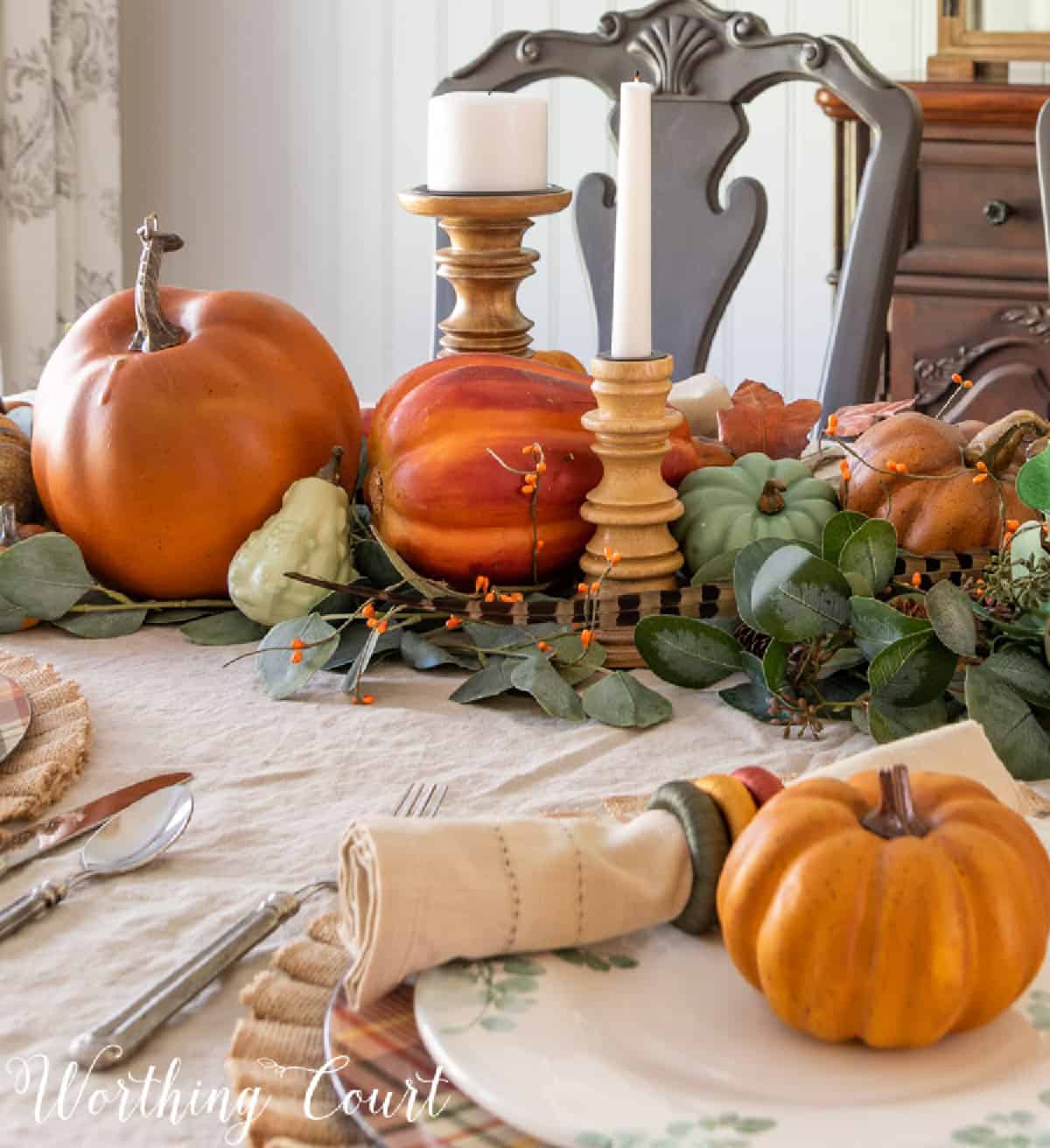
The golden rule for Thanksgiving centerpieces is this: nothing should block sightlines. Centerpieces must stay below 12 inches so guests can see each other across the table. If using tall elements like candlesticks, balance them with low greenery or pumpkins at the ends.
Before finalizing your arrangement, sit in every seat and check the view. Adjust any piece that obstructs the person across from you.
Use Greenery and Foraged Elements
Eucalyptus is a top choice—long, leafy, and fragrant without being overpowering. A $12 bunch from a florist can stretch the length of a table. Overlap branches for fullness, and hide bare stems behind foliage.
For free texture, forage from your yard. Pinecones, branches with pods, or autumn leaves add organic shape and cost nothing.
Add Seasonal Accents Thoughtfully
Scatter mini pumpkins, gourds, and clementines between greenery. Use odd numbers—three tulips, five pinecones—for visual balance. Avoid placing decor too far beyond the runner; keep space for elbows and serving platters.
For kids’ tables, paint gourds in bright colors. For elegance, use natural squash in non-orange hues like Kobucha or blue hubbard.
Light the Table with Warmth and Safety

Use Only Unscented Candles
Never use scented candles during Thanksgiving dinner. Their fragrance can clash with the complex aromas of turkey, stuffing, and pie. Stick to unscented votives, pillars, or tealights. Flameless or drip-free candles are ideal for homes with children or pets.
Stabilize Wobbling Candles
Test each candle before the event. If it wobbles, melt the base slightly with a lighter to create a flat surface, or place a small piece of aluminum foil under it to level. Place candles before adding greenery to avoid awkward adjustments later.
Add Warm Ambient Lighting
Beyond candles, use cordless table lamps, leaf-shaped string lights, or pumpkin-shaped LED candles. These add a soft, warm glow that enhances intimacy without competing with the meal.
Add Personal Touches That Spark Joy
Use Creative Place Cards
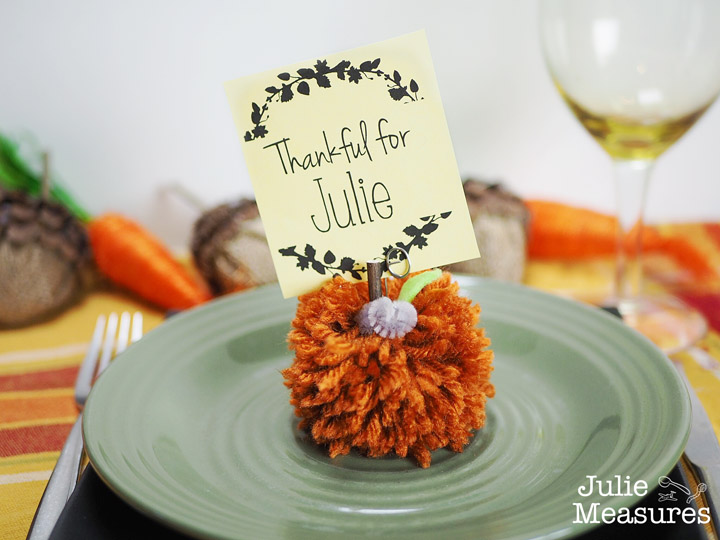
Skip plain name tags. Instead, try edible names like pumpkin-shaped cookies with guest names, free printable cards in seasonal designs, or glass tags tied to stems with gratitude words. These double as decor and conversation starters.
Encourage Conversation with Prompts
Place small cards at settings with gratitude quotes, fun questions like “What’s your favorite Thanksgiving memory?” or Bible verses for a reflective touch. Printing a verse near a salt-filled candle dish adds depth and encourages meaningful conversation.
Mix Guests to Build Connection
Avoid seating family members only together. Blend generations and relationships—grandparents next to nieces, cousins next to friends. This encourages new conversations and creates inclusive energy. Hosts should avoid sitting at the head of the table; moving around to serve and check in makes guests feel more attended to.
Try These 5 Thanksgiving Table Themes
Festive and Foyer-Ready
This theme features a neutral damask cloth with a waterproof runner, white square plates, silver cutlery, and orange napkins folded under forks. The centerpiece combines three orange tulips in drinking glasses, clementines, and unscented candles. Add pumpkin cookie name cards for a polished, welcoming look when company arrives early.
Minimalist Elegance
A plain white cloth pairs with gray plates and gray checkered napkins. White votives and scattered pumpkins of all sizes create a clean, calm centerpiece. Silver bowls of candy corn add a playful detail. This sophisticated look lets the food shine while maintaining refined simplicity.
Dessert-First Celebration
Skip the tablecloth and lay runners across the table instead. Use white plates with everyday glassware. The centerpiece becomes the dessert itself—pedestals holding red Bartlett pears, clementines, cascading grapes, and chocolate-covered sea salt caramels. This theme is ideal for casual, food-focused gatherings where dessert steals the show.
Casual and Meaningful
A black-and-white runner sets the palette of black, white, and gold. Gold velvet napkins secured with matching ribbon pair with backyard pinecones, leaves, and a salt-and-light candle dish. Free printable gratitude cards add personal meaning. This warm, reflective theme works beautifully for intimate dinners.
Large Crowd or Outdoor Setup
Layer extra-long linen cloths across joined tables. Use benches with faux fur covers and chargers to mark seats. Gold-rimmed disposables with mix-and-match copper chargers keep things elegant yet practical. Leaf string lights, pumpkin candles, and artificial acorns handle high traffic and weather with ease.
Final Tips for a Stress-Free Setup
Test Everything Before Serving
Do a final walkthrough before guests arrive. Check sightlines from every seat, test candle stability, verify the design flows from all angles, and ensure there’s clearance for elbows and serving dishes. These few minutes prevent problems later.
Prioritize Freshness
Add flowers, greenery, and beverages on Thanksgiving morning. This keeps everything vibrant and prevents wilting during the celebration.
Embrace Imperfection
A wrinkle in the linen, a mismatched fork, a slightly lopsided centerpiece—these aren’t flaws. They’re signs of a real, human celebration. Guests remember warmth, not perfection.
Clean Up Smarter
For gatherings over 20 guests, use high-quality disposables. Cloth napkins can be piled and sent to the dry cleaner. Focus your energy on being present with your guests, not scrubbing dishes.
Frequently Asked Questions About Setting a Thanksgiving Table
How far in advance can I set the table for Thanksgiving?
You can set the base layer—tablecloth, runner, chargers, and non-perishable decor—the day before. Add fresh elements like flowers, greenery, napkins, and candles on Thanksgiving morning to keep them looking their best.
What height should a Thanksgiving centerpiece be?
Keep centerpieces under 12 inches tall so guests can see each other across the table. Test by sitting in every chair and checking that nothing blocks your view of the person opposite.
Should I use scented candles at Thanksgiving?
No. Never use scented candles during Thanksgiving dinner. Their fragrance conflicts with the natural aromas of turkey, stuffing, and pie. Stick to unscented votives, pillars, or flameless alternatives.
How do I arrange flatware for a Thanksgiving dinner?
Place forks on the left (salad fork farthest from plate, dinner fork closest), knife and spoon on the right (knife with serrated edge facing inward), and glasses above the plate to the right. Arrange in order of use, from outside in.
What is the easiest Thanksgiving table theme for beginners?
The minimalist elegance theme works best for beginners. It uses a simple white cloth, gray plates, and a centerpiece of white votives with scattered pumpkins. The look is sophisticated yet requires minimal effort.
How do I make my table feel festive without much money?
Forage free elements from your yard—pinecones, branches with pods, and autumn leaves. Use what you already have for decor, and focus on candles and a nice runner to create warmth. The “perfectly imperfect” aesthetic embraces natural, gathered elements.
Key Takeaways for Setting a Beautiful Thanksgiving Table
Setting a Thanksgiving table isn’t about rigid rules or perfect symmetry—it’s about creating a space where gratitude, connection, and good food can thrive. The most important elements are intention and warmth. Choose a theme that matches your style, keep your centerpiece low enough for conversation, and always use unscented candles to preserve the meal’s aroma.
Remember to prepare the base the night before, test sightlines from every seat, and embrace imperfect details like wrinkles in linens. Whether you go elegant with crystal and formal china or keep it casual with gold-rimmed disposables and backyard pinecones, the table you create becomes part of the memory.
Now light the candles, pour the wine, and take a moment to admire what you’ve made. It’s not just a table—it’s a gathering place for the people you’re thankful for.