How High to Hang a Chandelier Over a Dining Table
Hanging a chandelier over your dining table is one of the most impactful design decisions in a home. It sets the mood, defines the space, and becomes the visual centerpiece of your meals and gatherings. But get the height wrong, and even the most beautiful fixture can ruin the room’s balance by either bumping heads or disappearing into the ceiling.
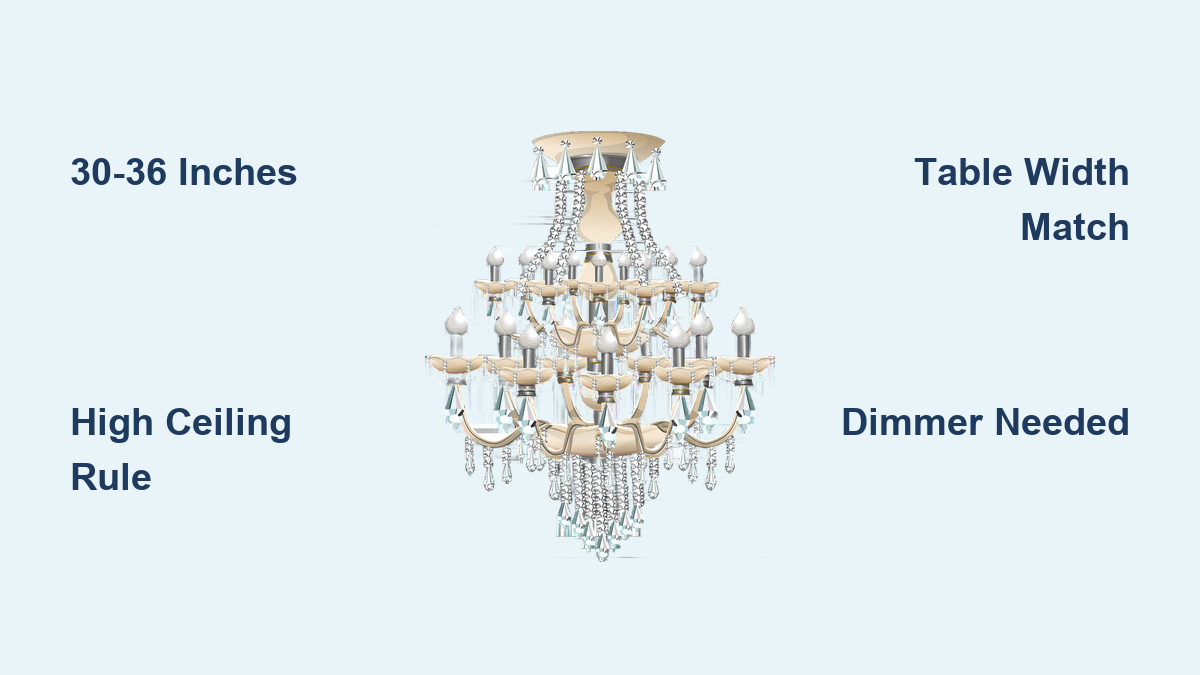
The golden rule? For standard 8-foot ceilings, hang the chandelier 30 to 36 inches above the tabletop. This range ensures safety, comfort, and strong visual presence. If your ceiling is higher, add 3 inches of height for every extra foot beyond 8 feet. In this guide, you’ll learn not just the numbers, but why they matter, plus how to adjust for table size, fixture style, and open-concept spaces.
Standard Height for 8-Foot Ceilings

For most homes with standard 8-foot ceilings, the bottom of the chandelier should hang between 30 and 36 inches above the dining table surface. This range is backed by decades of interior design standards and lighting engineering.
Why 30–36 Inches Works
This height strikes the perfect balance between function and form. The 30-inch minimum prevents heads from hitting the fixture when seated or standing. It keeps the chandelier below eye level when seated, allowing diners to see each other without obstruction. It also positions the light close enough to cast a warm, inviting glow over food and faces.
If you’re unsure where to start, 32 inches is a safe middle ground for standard dining chairs and 8-foot ceilings.
Visual Confirmation Tips
After installation, test the height by sitting at the table and looking across to another seat. No part of the fixture should block your view. Stand and lean back slightly. Your head should not come close to the lowest point. Turn on the light and ensure it illuminates the table surface without harsh glare.
Adjusting for High Ceilings
Rooms with ceilings taller than 8 feet need taller chandelier placement to maintain proportion and visual weight.
Height Adjustment Formula
For every additional foot of ceiling height, raise the fixture by 3 inches. This keeps the chandelier visually anchored over the table instead of floating in space.
| Ceiling Height | Recommended Height Above Table |
|---|---|
| 8 ft | 30–36 in |
| 9 ft | 33–39 in |
| 10 ft | 36–42 in |
| 11 ft | 39–45 in |
| 12 ft | 42–48 in |
Avoiding the Lost Fixture Problem
Even in high-ceiling rooms, do not hang the chandelier too high. If it’s more than 48 inches above the table, it may fail to define the dining zone. In two-story spaces, consider using an adjustable downrod to fine-tune the height. Alternatively, opt for a larger or multi-tiered chandelier to maintain visual weight.
Chandelier Size vs. Table Proportions

A correctly sized chandelier enhances the table. A mismatched one overwhelms or disappears.
Width Rule of Thumb
The chandelier should be 50% to 66% of the table’s width. For example, a 48-inch wide table pairs best with a 24- to 32-inch wide fixture.
Alternative: The 12-Inch Rule
The fixture should be at least 12 inches narrower than the table on each side. This prevents the chandelier from visually crowding the table edges.
Adjusting for Visual Weight
Large or heavy fixtures should hang 1 to 2 inches higher than standard to reduce visual pressure. Small or narrow fixtures can hang slightly lower, or you can use multiple pendants to avoid looking undersized.
Clearance and Safety Checks
Even a perfectly placed chandelier can be unsafe if clearance isn’t verified.
Minimum Headroom Clearance
Ensure at least 30 inches between the tabletop and the fixture’s lowest point. This allows seated guests to stand up without risk. It also accommodates tall individuals and chairs with high backs.
Tall Centerpieces? Raise the Fixture
If you regularly use tall vases, candles, or floral arrangements, add 4 to 6 inches to the hanging height. Test the setup with your tallest centerpiece in place before finalizing.
Open Concept? Lower for Definition
In open-plan homes, hanging the chandelier slightly lower helps define the dining area. It creates a room-within-a-room effect and prevents the space from feeling too vast or disconnected.
Lighting Quality and Ambiance
Height affects more than safety. It shapes the mood and functionality of your dining area.
Ideal Color Temperature
Choose bulbs with a 2700K warm white color temperature. This soft, golden glow enhances food colors and flatters skin tones. It encourages relaxed conversation and creates intimacy.
Avoid cooler tones above 3000K, which can make meals feel clinical or uninviting.
Brightness: Aim for 3,000–4,000 Lumens
Total output depends on room size and fixture design. Small dining nooks around 8×8 feet need approximately 3,000 lumens. Large dining rooms around 12×14 feet need 4,000 lumens or more.
Use multiple lower-lumen bulbs instead of a few high-output ones to reduce glare and create even light spread.
Always Use a Dimmer
A dimmable chandelier gives you flexible control. Use bright light at 100% for homework, cleaning, or daytime use. Dim to 30 to 50% for dinner, entertaining, or cozy nights.
Install a wall dimmer switch or use dimmable smart bulbs for maximum flexibility.
Fixture Design and Material Impact
The chandelier’s style and materials influence how low it can safely hang.
Upward vs. Downward Light
Upward-reaching arms create lift and work well in lower ceilings. They may allow slightly lower hanging. Downward-pointing crystals or shades cast focused light. Ensure the tips are at least 30 inches above the table.
Material and Visual Weight
Glass or crystal feels lighter and can hang lower without crowding the space. Metal or wood appears heavier. Consider hanging these materials 1 to 2 inches higher.
Opaque shades block more light and may require higher lumen bulbs or slightly lower placement to compensate.
Installation: Hardware and Safety
Even the best-planned chandelier fails if installed incorrectly.
Weight Limits and Support
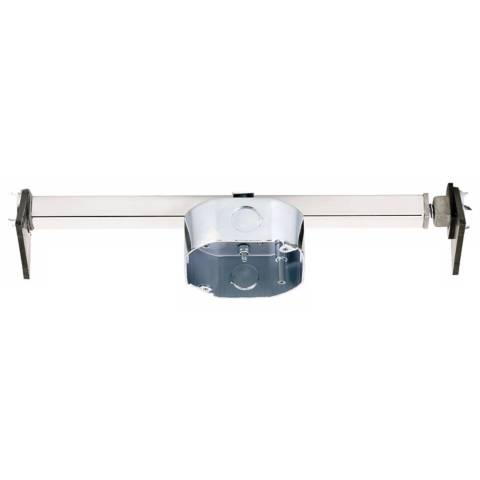
Standard electrical boxes hold up to 50 pounds. If your chandelier exceeds this, install a fan-rated brace between joists. Use a pancake box if mounting directly to a joist.
Never rely on drywall anchors or lightweight boxes for heavy fixtures.
Wiring Safety Steps
Turn off power at the circuit breaker. Test wires with a voltage tester to confirm no current. Connect black to black, white to white, and ground to ground. Secure with wire nuts and wrap with electrical tape. Assemble the fixture before mounting, threading wires through the chain or rod.
Measuring Chain or Downrod
To calculate hanging length, measure from ceiling to desired height. Subtract the fixture’s height. Add 1 to 2 extra chain links for final adjustment.
Use temporary rope to test height before cutting chain or downrod.
Troubleshooting Common Issues
Off-Center Ceiling Box
If the electrical box isn’t over the table, don’t rewire the ceiling. Instead, use a decorative ceiling hook and swag the chandelier with a chain to visually center it over the table.
Round Table vs. Rectangular Table
Round tables pair best with round or globe chandeliers for symmetry. Rectangular tables work well with linear pendants, oval fixtures, or multiple small pendants. Square tables accept both round and square chandeliers.
Tall Chairs or Counter-Height Tables
For counter-height tables around 36 inches or bar stools, raise clearance to 36 to 42 inches above the surface. Ensure the fixture doesn’t interfere with standing guests.
Maintenance and Long-Term Use
A well-placed chandelier should be easy to maintain.
Easy Bulb Replacement
Ensure the lowest point is reachable with a standard step ladder. For very high ceilings, use long-life LED bulbs rated for 25,000 hours or more. Consider smart bulbs to reduce physical access needs.
Cleaning Access
Dust and fingerprints show quickly on glass and metal. If the chandelier is hard to reach, plan for annual professional cleaning. Choose smooth, wipeable materials over intricate crystal.
Periodic Safety Check
Every 6 to 12 months, inspect mounting hardware for looseness. Check chain or rod for wear. Tighten all screws, especially in older homes or earthquake-prone areas.
Frequently Asked Questions About Hanging Chandeliers Over Dining Tables
What is the standard height for hanging a chandelier over a dining table?
For standard 8-foot ceilings, hang the chandelier 30 to 36 inches above the tabletop. This range provides optimal clearance, sightlines, and ambiance. The middle ground of 32 inches works well for most situations.
How do I calculate chandelier height for high ceilings?
Add 3 inches to the hanging height for every foot of ceiling height beyond 8 feet. A 10-foot ceiling calls for 36 to 42 inches above the table. A 12-foot ceiling requires 42 to 48 inches.
What size chandelier should I choose for my dining table?
The chandelier should be 50% to 66% of the table’s width. Alternatively, ensure it’s at least 12 inches narrower than the table on each side. A 48-inch wide table needs a 24- to 32-inch wide fixture.
Can I hang a chandelier lower than 30 inches above the table?
Only if necessary. The 30-inch minimum exists for safety and sightlines. If using short dining chairs or no centerpieces, some designers recommend going slightly lower for drama. However, test thoroughly before committing.
What if my ceiling box is not centered over the table?
Use a decorative ceiling hook and swag the chandelier with a chain to visually center it over the table. This avoids rewiring while achieving the desired look.
How do I maintain a chandelier hung at dining table height?
Clean the fixture during regular dusting. Ensure bulb replacement is easy by choosing an accessible height. For high ceilings, use long-life LED bulbs or schedule professional cleaning annually.
Key Takeaways for Perfect Chandelier Placement
The ideal chandelier height balances safety, proportion, and atmosphere. Start with 30 to 36 inches above the table for 8-foot ceilings. Adjust by adding 3 inches for every extra foot of ceiling height. Match the fixture width to your table size using the 50% to 66% rule.
Always test the height before final installation by sitting and standing at the table. Verify sightlines and light distribution. Use a dimmer for flexibility between task lighting and ambient mood.
With the right placement, your chandelier will not just light the table. It will elevate every meal and become the stunning focal point your dining room deserves.