How Long Is a Shuffleboard Table?
If you’re asking “how long is a shuffleboard table,” you are likely planning a game room, measuring a space, or discovering that this classic game comes in more sizes than you expected. Shuffleboard tables range dramatically in length, from compact 9-foot models perfect for apartments to full 22-foot regulation tables built for tournament play. Your ideal size depends on available room space, your skill level, and how seriously you take the game.
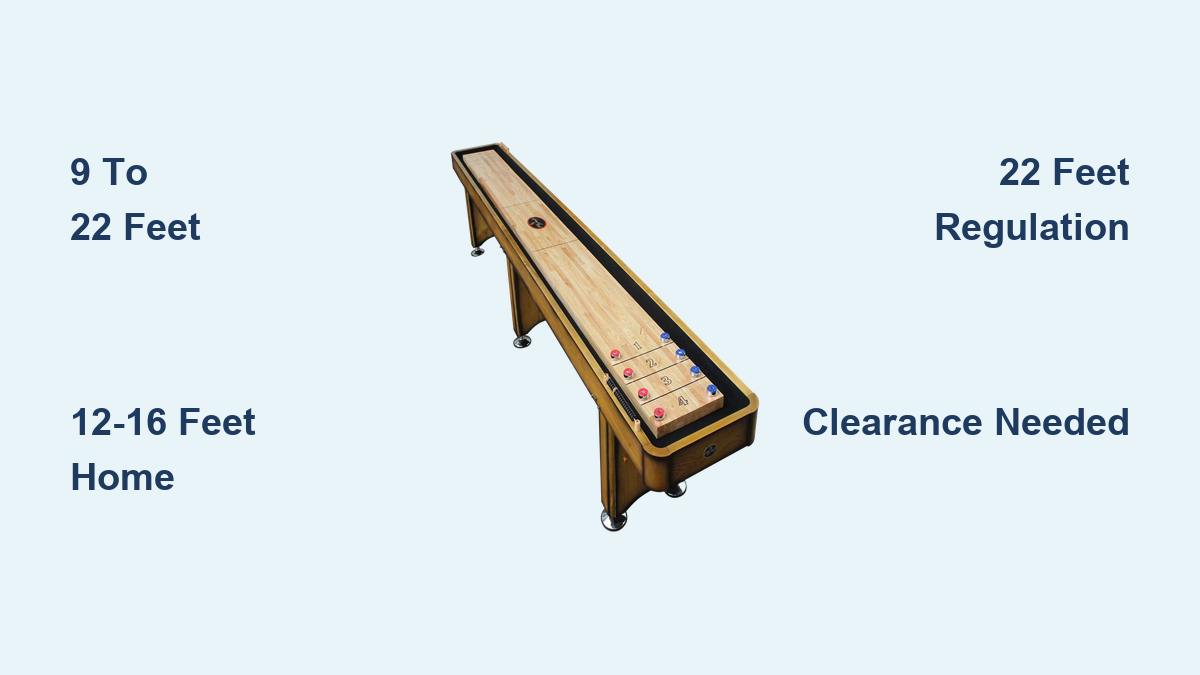
Most home players choose tables between 12 and 16 feet long, where fun meets challenge without requiring a mansion to fit it. But if you want the authentic competitive experience or plan to host tournaments, only a 22-foot table will do. This guide covers every standard size, explains how length affects gameplay, and helps you calculate what fits your room.
Standard Shuffleboard Table Lengths
Shuffleboard tables come in precise, industry-standard lengths to ensure consistent gameplay and wax compatibility. These sizes are not arbitrary. They are engineered to balance space, speed, and skill across all playing environments.
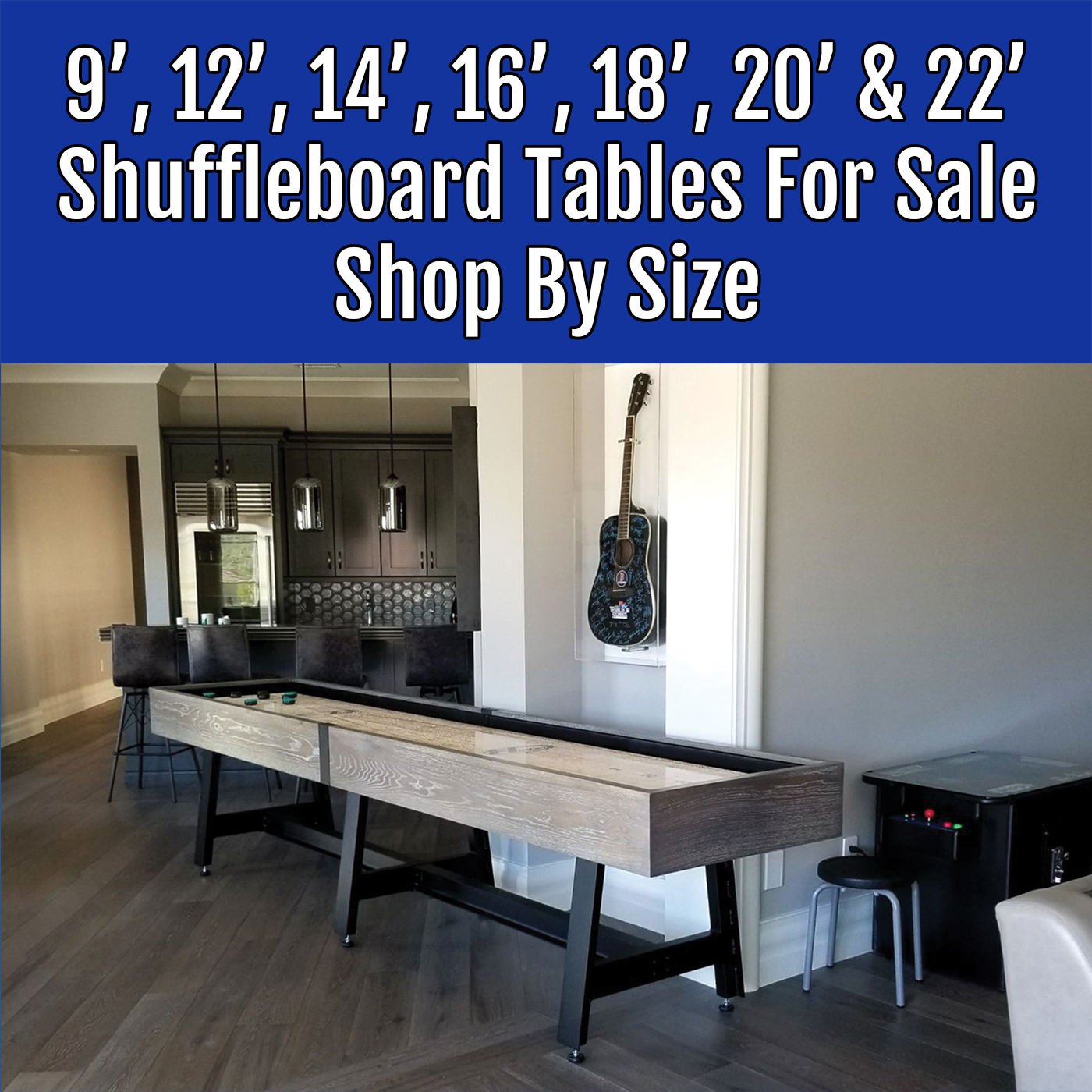
Available Sizes From 9 to 22 Feet
The full range of standard shuffleboard table lengths includes nine options manufactured by every major producer. These sizes allow buyers to match their space constraints and playing preferences precisely.
The standard lengths available are:
- 9 ft
- 10 ft
- 11 ft
- 12 ft
- 14 ft
- 16 ft
- 18 ft
- 20 ft
- 22 ft
While custom lengths exist, these nine sizes represent the go-to options for residential and commercial buyers alike.
Most Popular Home Sizes
For residential buyers, 12-foot and 14-foot tables dominate sales. These sizes offer enough length for real strategy while remaining manageable in average basements and game rooms. They are compatible with faster waxes than shorter models and often feature one-piece playfields that simplify maintenance. A 12-foot table fits where larger ones cannot, yet still delivers satisfying gameplay that keeps friends coming back.
Regulation Tournament Length
Twenty-two feet is the only length allowed in official tournament play, as mandated by the National Shuffleboard Association. This size defines competitive fairness, ensuring all players face the same distance, wax response, and skill demands across the playing surface. Tables of 18 and 20 feet are considered near-regulation, meaning they are excellent for practice but not suitable for sanctioned events.
Small Shuffleboard Tables for Tight Spaces
Compact shuffleboard tables bring the game to tight spaces without sacrificing the fun and strategy that make the sport enjoyable. These models are designed specifically for apartments, corners, and rooms where larger tables simply will not fit.
Best for Apartments and Small Rooms
If your game room doubles as a storage area or guest room, a 9 to 12-foot table is your best option. These models are designed for condos, basement corners, multi-table bars, and family recreation with younger players. They take up less floor space than a standard dining table while still providing genuine shuffleboard gameplay.
9-Foot Table Room Requirements
Even the shortest shuffleboard table needs breathing room to play comfortably. For a 9-foot model, you need a minimum room length of 13 to 15 feet. Plan for 2 to 3 feet of clearance at each end for shooting and viewing. Side clearance should be at least 2 feet per side. This makes a 9-foot table viable in rooms as small as 15 by 10 feet, though larger spaces always improve the experience.
Play Style on Short Tables
Shorter tables change the physics of the game noticeably. Puck movement is faster with less glide time, reducing the need for precision in long-distance shots. Bumper impacts are more abrupt, creating louder play that can echo in small rooms. Beginners benefit from easier scoring opportunities, but advanced players may find the game too forgiving for developing serious technique.
Mid-Range Tables for Most Homes
For most homeowners, 14 and 16-foot tables strike the perfect balance between space requirements and performance quality. These sizes are the sweet spot for dedicated game rooms where the family wants real shuffleboard action without building an addition.
Ideal for Home Game Rooms
Mid-range tables offer an authentic shuffleboard feel that shorter models cannot match. Players gain room for varied shot techniques, including the crucial “knock-off” shots that define competitive play. These sizes support medium-to-fast waxes that add excitement to each round. They also hold strong resale value if you upgrade later, as the market for 14 and 16-foot tables remains active.
14-Foot Table Clearance Needs
To play comfortably on a 14-foot table, your room needs 18 to 20 feet of length. Allow 2 to 3 feet of clearance at each end for proper shooting stance and puck viewing. Side space should be 2 to 3 feet for player movement and reach. This size often uses a one-piece playfield, which provides seamless gameplay but can be challenging to move through narrow hallways during delivery.
16-Foot Table: Near-Regulation Performance
At 16 feet, you enter near-regulation territory that serious hobbyists prefer. This table requires a room length of 20 to 22 feet. It often features a two-piece playboard that simplifies delivery through standard doorways. The extended surface supports faster waxes and finer control, making every shot feel more deliberate and rewarding.
Regulation and Large Tables for Serious Play
When space allows, larger tables deliver tournament-grade gameplay that serious players demand. These sizes represent the pinnacle of the shuffleboard experience, where skill, wax speed, and table crown matter most.
22-Foot Table: The Gold Standard
The 22-foot shuffleboard table is the official NSA regulation size required for all sanctioned tournaments. This is non-negotiable for anyone hosting competitive events, training professionals, or operating dedicated recreation centers. Only this length provides the exact conditions players expect in tournament play.
Room Size for a 22-Foot Table
You need serious square footage to accommodate a regulation table. The minimum room length is 26 to 28 feet. Width should be at least 14 to 16 feet to allow proper side clearance and player movement. High ceilings help with lighting and player comfort during extended sessions. Few homes have this space available, so most 22-foot tables live in clubs, bars, or custom-built game rooms designed specifically for the game.
18-Foot and 20-Foot Options
These semi-regulation sizes offer an excellent compromise for serious players with significant but not unlimited space. They allow practicing long-distance shots and using fast wax that shorter tables cannot support. While not tournament-legal, they provide approximately 90 percent of the authentic experience in substantially less space than a full regulation table.
Table Width and Height Standards
While length varies dramatically, other dimensions stay remarkably consistent across all shuffleboard table sizes. This standardization ensures predictable gameplay regardless of which length you choose.
Standard Width: 20 Inches
The total width of a shuffleboard table is approximately 20 inches across all sizes, from 9-foot models to 22-foot regulation tables. The actual playing surface width between the gutters is slightly narrower at approximately 16 inches. This narrower playing field demands accuracy, especially on longer tables where small errors compound over distance.
Playing Height: 30 to 32 Inches
The playing surface sits 30 to 32 inches above the floor, measured from ground to playing surface. This height is designed for standing play and matches standard countertop heights for ergonomic comfort during extended sessions. Quality tables include adjustable legs that allow leveling on uneven floors without professional assistance.
Playfield Thickness and Material Construction
What lies beneath the wax matters as much as the table length. The construction quality directly affects puck glide, consistency, and long-term durability.
3-Inch Solid Maple Standard
Premium shuffleboard tables use 3-inch thick hard rock maple for the playfield, regardless of table length. This thickness ensures consistent puck feel, proper weight distribution, and predictable drift behavior across the entire surface. The multi-layer polyurethane finish seals the wood while facilitating optimal glide when combined with shuffleboard wax.
Why Maple Matters
Hard rock maple delivers specific performance advantages that other materials cannot match. It resists dents from heavy pucks, holds a slight crown for balanced play, and reacts predictably to humidity when properly controlled. Softwoods or laminate alternatives may save money upfront but hurt performance significantly and require replacement sooner.
Room Planning and Space Requirements

Length is not the only factor that determines whether a table fits your space. Clearance for player movement is equally critical and is often overlooked during the purchasing process.
Minimum Clearance Guidelines
For comfortable play, you need specific clearance zones around the table. Each end requires 2 to 3 feet of space for the shooting motion and for viewing puck positions at the far end. Each side needs 2 to 3 feet for movement, leaning, and retrieving pucks without obstruction. Tight spaces lead to awkward stances, missed shots, and frustration.
Total Room Length Formula
Calculate your minimum room length using this formula: Table Length plus twice the end clearance equals minimum room length. For example, a 14-foot table with standard 3-foot clearance at each end requires a minimum of 20 feet. Always measure your actual space after accounting for furniture, door swings, and lighting fixtures.
Recommended Room Sizes by Table Length
Proper planning prevents costly mistakes. Here are the minimum room dimensions for each standard table size.
- 9-foot table needs 13 to 15 feet length, ideal room size approximately 15 by 12 feet
- 12-foot table needs 16 to 18 feet length, ideal room size approximately 18 by 14 feet
- 14-foot table needs 18 to 20 feet length, ideal room size approximately 20 by 14 feet
- 16-foot table needs 20 to 22 feet length, ideal room size approximately 22 by 14 feet
- 18-foot table needs 22 to 24 feet length, ideal room size approximately 24 by 14 feet
- 20-foot table needs 24 to 26 feet length, ideal room size approximately 26 by 14 feet
- 22-foot table needs 26 to 28 feet length, ideal room size approximately 28 by 14 feet
How Table Length Affects Gameplay

The size of your shuffleboard table changes everything about the game, from wax selection to sound levels. Understanding these effects helps you choose the right size for your goals.
Wax Speed and Table Length
Using the correct wax for your table length is essential for enjoyable gameplay. Short tables of 9 to 12 feet require slow wax because the puck travels less distance before reaching the scoring area. Mid-range tables of 14 to 16 feet work well with medium-to-fast waxes. Long tables of 18 to 22 feet require fast wax to achieve full glide across the extended surface. Using the wrong wax leads to poor control and frustration.
Sound Levels by Size
Table length significantly impacts the auditory experience during play. Short tables produce sharper, more abrupt sounds because pucks hit end bumpers with higher residual velocity. Longer tables are surprisingly quieter. The extended surface allows pucks to decelerate gradually, resulting in softer interactions with the scoring zone.
Skill Development by Size
Table length directly affects skill development opportunities. Short tables are great for learning basics and building confidence with easier scoring. Long tables force precision and touch that reveal even small errors in technique. Regulation tables expose every weakness in your game, making them ideal for serious practice.
Delivery and Installation Challenges

Bigger tables mean bigger logistical challenges. Understanding these issues before purchasing prevents costly surprises.
One-Piece Versus Two-Piece Playfields
Tables 9 to 14 feet typically feature one-piece playboards that provide seamless playing surfaces but can be difficult to move through narrow hallways and stairwells. Tables 16 feet and above often come with two-piece playboards that join invisibly at the center, simplifying delivery through standard doorways. Some manufacturers offer two-piece options for 14-foot models as well.
Can It Fit Through Your Door
Standard doorways measure 28 to 32 inches wide. A 20-inch-wide table can technically fit through, but only if hallways are straight with no tight turns. For tables 16 feet and larger, white-glove delivery service that includes setup and leveling is highly recommended. Professional movers have the experience and equipment to handle these heavy, fragile pieces safely.
Leveling and Adjustments
All shuffleboard tables require proper leveling for accurate puck movement. Adjustable legs allow correction for minor floor imperfections. Climatic adjusters, typically metal rods beneath the playfield, can be tightened or loosened to maintain the crown as humidity changes. Skipping these adjustments causes pucks to drift off course.
Environmental Needs for Long Tables
Wood responds to humidity, and longer tables are more sensitive to environmental changes than shorter ones. Controlling your room climate protects your investment.
Ideal Humidity Range
Maintain relative humidity between 35 and 45 percent to prevent warping, maintain proper crown, and extend the finish life of your table. Use a humidifier in dry climates and a dehumidifier in humid regions. Seasonal changes require monitoring and adjustment.
Why Longer Tables Are More Sensitive
A 22-foot maple board expands and contracts more dramatically than a 9-foot model when humidity fluctuates. Without proper climate control, you will experience gapping or crowning issues, uneven glide, and sticky or slow spots that ruin gameplay. Check table alignment every 3 to 6 months and adjust as needed.
Price and Value by Size
Larger tables cost more, but the price difference reflects genuine differences in materials, construction, and gameplay quality.
What Drives the Cost
Several factors determine shuffleboard table pricing. Wood volume increases directly with size, meaning more hard rock maple drives material costs higher. Construction complexity rises with two-piece boards and reinforced frames required for larger sizes. Finish quality matters more on long surfaces where imperfections are more visible. White-glove delivery adds $100 to $300 for professional setup.
Price Range Overview
- 9 to 12-foot tables range from $800 to $1,800
- 14 to 16-foot tables range from $1,800 to $3,500
- 18 to 22-foot tables range from $3,500 to $8,000 or more
Premium brands like Venture, Fat Cat, and Hudson charge more for craftsmanship and warranty coverage.
Warranty and Longevity
Top manufacturers offer lifetime finish warranties on the playfield plus 5 to 10 year structural coverage. Hand-built quality tables last decades with proper care, making the higher initial investment worthwhile for serious players.
Custom and Commercial Options
When standard sizes will not fit your space, customization options become valuable. Many manufacturers build to order for unusual room dimensions.
Custom Lengths Available
Manufacturers frequently build custom sizes to maximize odd-shaped rooms or fit between specific architectural features. Expect a 4 to 8 week lead time for custom orders. This option eliminates the need to cut down standard tables or compromise on room layout.
Commercial Use Considerations
Bars and clubs often choose multiple 9 or 12-foot tables to maximize capacity in limited space. Dedicated sports bars invest in 22-foot regulation tables to host tournament events and attract serious players. Durability and foot traffic dictate material choices for commercial applications.
Final Thoughts on Choosing Your Shuffleboard Table Length
Shuffleboard tables range from 9 to 22 feet long, giving you options for every space and skill level. The 22-foot length is the regulation standard for official tournament play. Width stays consistent at approximately 20 inches, while height averages 30 to 32 inches. Always add 4 to 6 feet to the table length for player clearance when calculating your room requirements.
Your best choice is the longest table your room can reasonably accommodate. Every extra foot adds challenge, authenticity, and enjoyment to the game. Whether you are a casual player looking for family fun or an aspiring champion practicing for tournaments, the perfect shuffleboard size is waiting for you. Measure your space carefully, consider your goals honestly, and choose once with confidence.
Frequently Asked Questions About Shuffleboard Table Lengths
What is the standard length of a home shuffleboard table?
The most common home shuffleboard table lengths are 12 feet and 14 feet. These sizes offer the best balance between gameplay quality and fitting within standard residential room dimensions. They are best-sellers for residential buyers seeking authentic shuffleboard experience without requiring dedicated tournament space.
Is a 22-foot table required for tournament play?
Yes, a 22-foot table is required for official tournament play sanctioned by the National Shuffleboard Association. Only this length meets regulation standards for competitive events. Tables of 18 or 20 feet are considered near-regulation and are excellent for practice but not suitable for sanctioned competitions.
How much room do I need for a 12-foot shuffleboard table?
A 12-foot shuffleboard table requires a room approximately 16 to 18 feet long. This accounts for the table length plus 2 to 3 feet of clearance at each end. The ideal room size is approximately 18 by 14 feet, allowing proper side clearance for player movement.
Do shorter tables require different wax than longer tables?
Yes, shorter tables require slower wax while longer tables require faster wax. Short tables of 9 to 12 feet use slow wax because pucks travel less distance. Mid-range tables of 14 to 16 feet work well with medium-to-fast waxes. Long tables of 18 to 22 feet need fast wax to achieve proper glide across the extended surface.
Can I fit a 16-foot table through standard doorways?
A 16-foot table can be challenging to deliver through standard doorways. Many 16-foot tables feature two-piece playboards that simplify delivery by splitting the playing surface into two sections. White-glove delivery service is highly recommended for tables this size to ensure safe handling and proper setup.
What happens if my room humidity is too high or too low?
Improper humidity causes wood to expand or contract, leading to warping, uneven glide, and crown problems. Ideally, maintain 35 to 45 percent relative humidity around your table. Longer tables are especially sensitive to humidity changes and should be checked every 3 to 6 months for proper alignment and adjustment.