How to Measure a Round Table
Choosing the right tablecloth or cover for a round table starts with one crucial step: accurate measurement. A poorly sized cloth can bunch, drag on the floor, or leave too little coverage, ruining both function and aesthetics. Whether you are preparing for a dinner party, protecting outdoor furniture, or ordering a custom piece, knowing how to measure a round table correctly ensures a perfect fit every time. This guide walks you through the exact steps, formulas, and pro tips to measure your round table like a professional, avoiding common mistakes and guaranteeing a seamless result.
You will learn how to find the true diameter, calculate the ideal drop, and size your tablecloth for any occasion, from casual dining to formal events. With clear examples and expert insights, you will never guess at sizes again.
Find the True Table Diameter
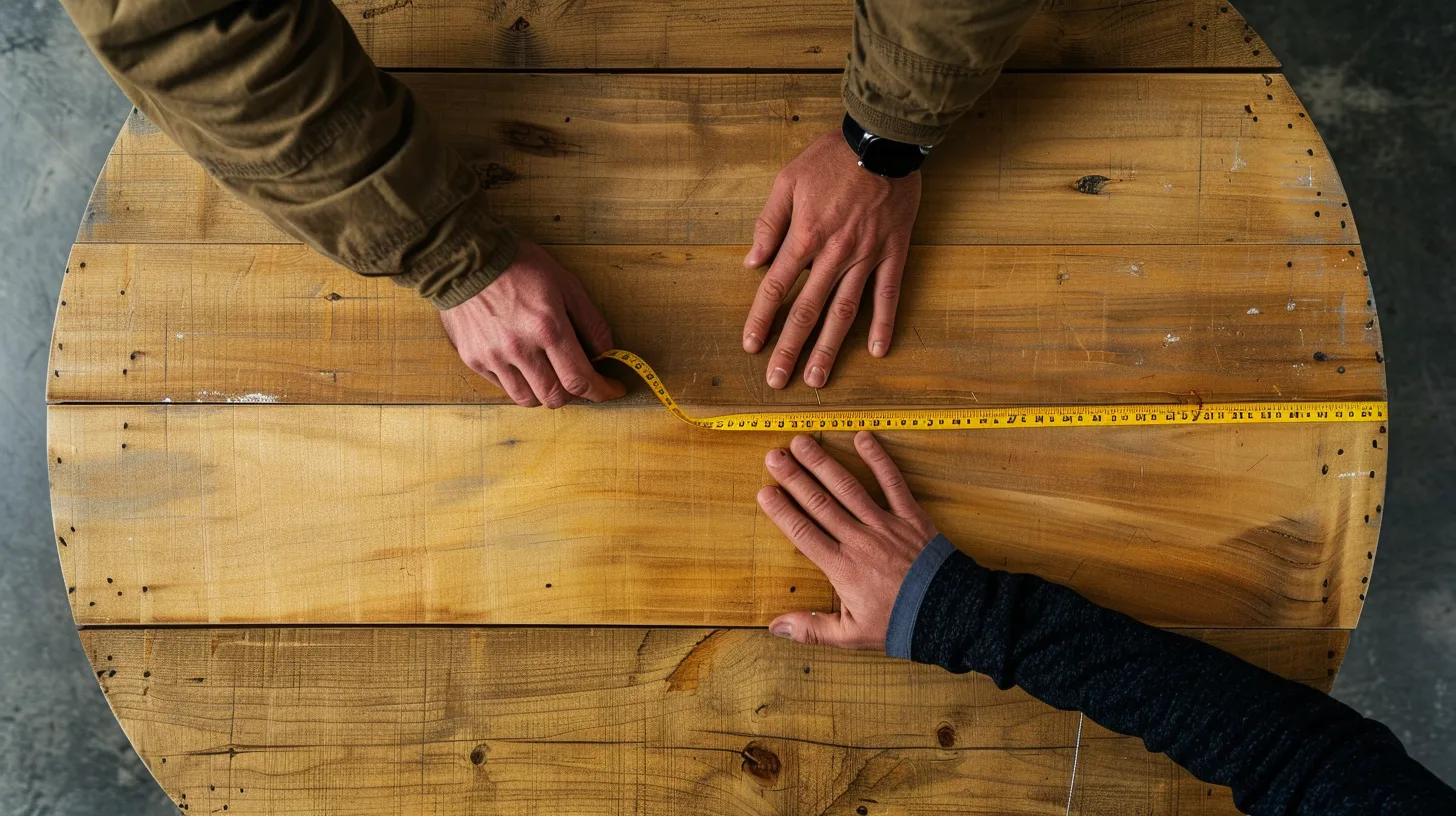
The diameter is the most important measurement for any round table. It determines the base size for all tablecloth or cover calculations, making accuracy essential from the start.
Measure Across the Center Point
To get an accurate diameter, follow these steps:
- Clear the table surface completely.
- Place the end of your measuring tape at the outer edge of the table.
- Stretch the tape straight across to the opposite side, ensuring it passes through the center.
- Slowly pivot the tape slightly in both directions while watching the measurement.
- The longest reading is your true diameter.
This method prevents measuring a chord, which is a shorter line that does not pass through the center and would lead to undersized tablecloths.
Use a Flexible Tape Measure
A soft, flexible measuring tape conforms to the curve of the table edge and lies flat across the surface. Avoid rigid rulers or yardsticks because they are too short and cannot span the full width accurately. Record the final diameter in inches, rounding up to the nearest whole number if needed.
Determine Your Desired Drop Length

The drop is the vertical distance the tablecloth hangs below the table edge. It affects both style and function, making your choice important for the overall look you want to achieve.
Choose Based on Occasion
Consider these drop options for different scenarios:
- 6 to 12 inch drop: Ideal for casual dining. Keeps fabric clear of chairs and legs while adding coverage.
- Floor-length drop: Reaches all the way to the ground. Used for formal events, weddings, or when hiding table legs.
- 1 to 2 inch clearance: For outdoor furniture covers, leave a small gap to allow airflow and prevent moisture buildup.
Measure Drop From Table Edge
For a custom or floor-length cloth, measure from the table edge down to the floor to determine your ideal drop length. For standard dining tables at about 30 inches high, a 30-inch drop equals floor length. Always account for carpet or uneven flooring that may affect the final hang.
Calculate Total Tablecloth Diameter

Once you have the table diameter and desired drop, use this simple formula to get the correct tablecloth size. This calculation ensures full coverage on all sides.
Apply the Correct Formula
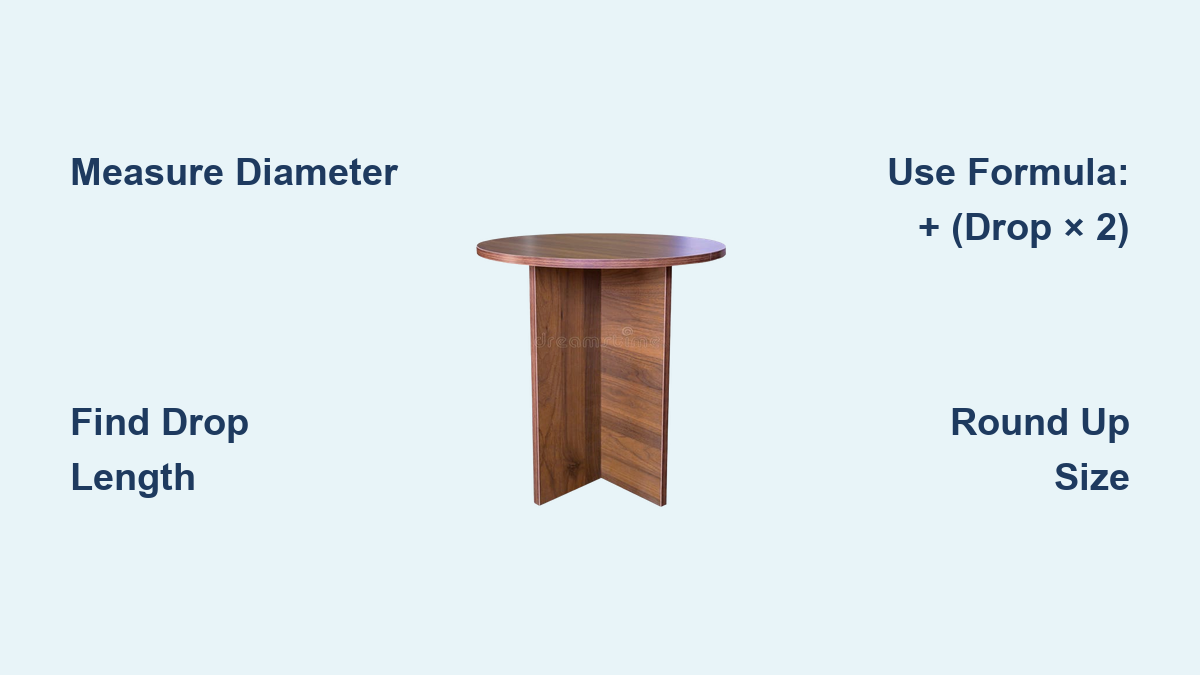
Tablecloth Diameter = Table Diameter + (Drop × 2)
Why multiply by 2? Because the drop extends equally on both sides of the diameter, left and right, front and back.
Example Calculations
Here are practical examples to guide your purchase:
- 40-inch table, 8-inch casual drop: 40 + (8 × 2) = 56. You need a 56-inch round tablecloth.
- 60-inch table, floor-length 30-inch drop: 60 + (30 × 2) = 120. You need a 120-inch round tablecloth.
- 48-inch patio table with 1-inch clearance: If total height is 29 inches, subtract 1 inch for breathability. 48 + (28 × 2) = 104. You need a 104-inch cover diameter.
Avoid the Common Math Mistake
Never use the incorrect formula: Table Diameter + Drop. This only adds one side of the drop. Always use Table Diameter + (Drop × 2), which is the only correct method for round tables.
Select the Right Size and Round Up
Manufactured tablecloths come in standard sizes. Matching your calculation to the closest available option is key for a successful purchase.
Size Up When in Doubt
If your calculated size falls between standard options, choose the next larger size. A slightly oversized cloth drapes better than one that is too small. For protective covers, always round up to ensure full coverage and edge protection.
Standard Size Reference Guide
Use this reference for common table sizes:
- 36-inch table with 6-inch drop needs a 48-inch cloth.
- 42-inch table with 9-inch drop needs a 60-inch cloth.
- 48-inch table with 11-inch drop needs a 70-inch cloth.
- 60-inch table with 15-inch drop needs a 90-inch cloth.
- 60-inch table with 30-inch drop needs a 120-inch cloth.
These combinations deliver popular looks, from relaxed overhangs to elegant floor sweeps.
Visualize the Final Look
Understanding how different drops appear helps you choose the right style for your space. The visual impact matters as much as the measurement.
6 to 12 Inch Drop (Casual Dining)
A 6 to 12-inch drop keeps the tablecloth above chair height, making seating easy. On a 48-inch table, a 70-inch cloth gives an 11-inch drop, which is just past the edge. This look is perfect for everyday use, family meals, or brunches.
15 to 21 Inch Drop (Semi-Formal)
On a 30-inch high table, a 21-inch drop ends about 9 inches above the floor. This offers a polished look without touching the ground. It is great for dinner parties or holiday gatherings.
Floor-Length (Formal/Banquet)
For a 60-inch round table, a 118 to 120 inch cloth reaches the floor. This hides legs, storage, and imperfections, making it ideal for weddings or catered events. It creates a clean, unified visual line under centerpieces and decor.
Choose Fabric With Fit in Mind

Your fabric choice impacts drape, care, and how precise your measurements need to be. Different materials behave differently and may affect your sizing decisions.
Match Material to Use Case
Consider these fabric options for your needs:
- Cotton and Linen: Natural fibers that drape well. Ideal for dining. May shrink slightly, so pre-wash if making your own.
- Satin: Smooth and shiny. Perfect for formal events. Requires exact sizing due to stiffness.
- Oilcloth or Vinyl: Wipeable and durable. Great for kids tables or outdoor use. Less flexible, so measure precisely to avoid pulling.
- Polyester Blends: Wrinkle-resistant and affordable. Common in ready-made cloths.
Consider Pattern Placement
Think about how your design will appear with different drop lengths. Center designs stay visible regardless of drop. Edge embroidery may climb up the vertical drop depending on length. Trailing motifs extend down the sides, so longer drops showcase more detail. For embroidered or printed cloths, confirm the design layout before buying.
Prepare for Protective Outdoor Covers

Outdoor furniture covers serve a different purpose than tablecloths. They protect from weather rather than decorate, so the fit requirements differ.
Allow for Airflow
Never let a cover touch the ground. A 1 to 2 inch gap at the bottom prevents moisture trapping, mold and mildew growth, and wind uplift damage. Measure total table height, then subtract 1 to 2 inches to set the correct drop.
Use Waterproof, Breathable Materials
Choose covers made from these materials:
- Polyester with PVC coating
- Solution-dyed acrylic
- Vinyl laminate
Ensure grommets or elastic hems fit snugly around legs without stretching.
Follow the Final Verification Checklist
Before ordering or cutting fabric, double-check your work with this quick review to avoid costly mistakes.
Confirm All Measurements
Verify each of these before purchasing:
- Table diameter measured through center (longest point)
- Drop length chosen based on use (casual, formal, or cover)
- Formula applied correctly: Diameter + (Drop × 2)
- Size rounded up to nearest standard option
- Floor or carpet height considered
- Fabric type and care requirements confirmed
Troubleshoot Common Issues
If your cloth is too small, there is no fix other than replacing it with a larger size. If the cloth is too big, you can tuck it gently or drape it artistically, but avoid creating tripping hazards. Uneven hang is likely due to off-center placement or a warped table. When in doubt, request a sample swatch or consult the seller with your exact numbers.
Frequently Asked Questions About Measuring Round Tables
What is the correct formula for calculating tablecloth size?
The correct formula is Table Diameter + (Drop × 2). This accounts for the drop on both sides of the table. Using just Table Diameter + Drop is incorrect because it only adds one side.
What drop length should I choose for casual dining?
For casual dining, a drop of 6 to 12 inches is standard. This keeps the tablecloth above chair height while providing a relaxed, practical look for everyday meals.
How do I measure a round table for a protective cover?
Measure the table diameter through the center, then measure the total height. Subtract 1 to 2 inches from the height to allow for airflow. Apply the formula: Diameter + (Drop × 2).
Can I use a rectangular tablecloth on a round table?
While possible, a rectangular tablecloth will not hang evenly on a round table. Round tables require round cloths for a uniform drop and proper appearance.
What is the standard drop for formal events?
For formal events, floor-length is the standard. Measure from the table edge to the floor and use that full measurement as your drop for an elegant, dramatic look.
Key Takeaways for Measuring Your Round Table
Measuring a round table does not have to be complicated. By following these clear steps, you will always get a flawless fit. First, measure the true diameter by finding the longest point through the center of the table. Second, choose your desired drop based on the occasion, whether casual, formal, or protective. Third, apply the correct formula by adding the drop multiplied by 2 to your table diameter. Finally, always round up to the nearest standard size to ensure proper coverage.
Whether you are dressing up a dining room for guests or shielding patio furniture from the elements, precision ensures beauty, function, and longevity. Take your time with measurements, double-check your calculations, and choose the right fabric for your needs. Save this guide for future reference, and you will never struggle with tablecloth sizing again.