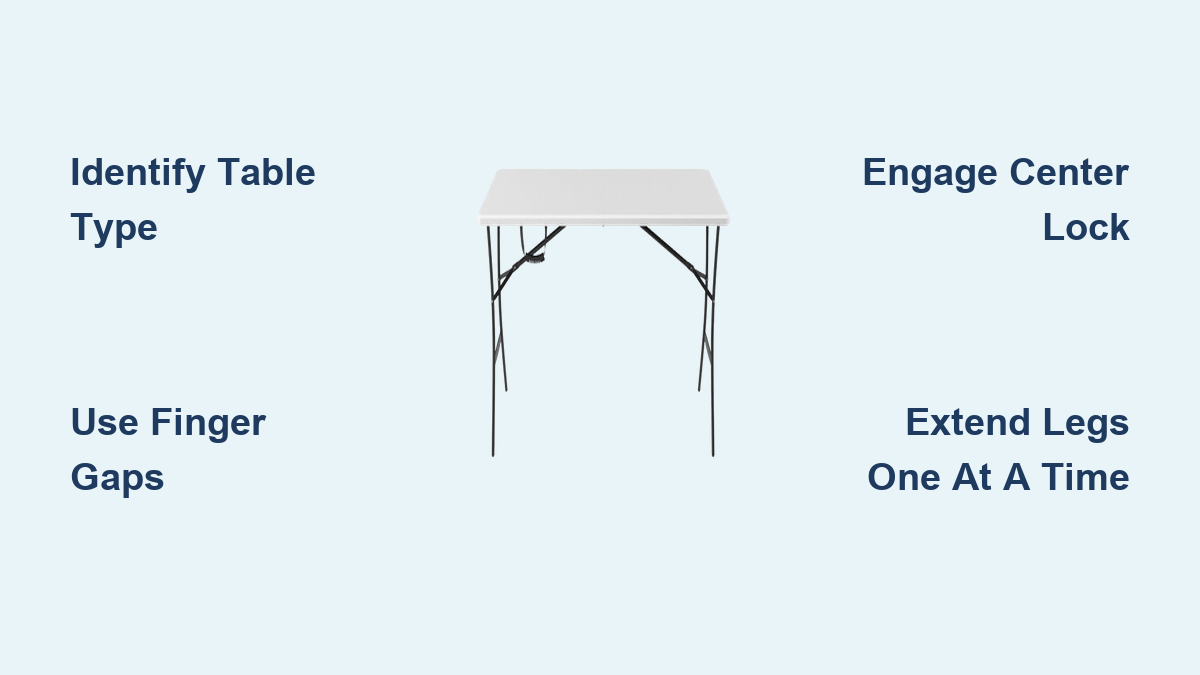
How to Open a Folding Table
If you’ve ever stood in front of a folded table, unsure where to grip or which part moves first, you are not alone. Learning how to open a folding table correctly prevents hinge damage, pinched fingers, and frustrating struggles. This guide covers every major table type, from Lifetime fold in half designs to Cosco leg first models, with step by step instructions you can trust.
You will learn exactly how to identify your table type, open it safely, troubleshoot common problems, and maintain smooth operation for years to come.
Identify Your Folding Table Type
Before pulling on any part of your table, you need to know what kind of folding mechanism you have. Different brands use different designs, and using the wrong technique can damage the hinges or locking system.
Fold in Half Versus Leg First Models
Folding tables generally fall into two categories:
- Fold in Half (Lifetime style): The tabletop splits down the center line. You pull the two halves apart first, then extend the legs.
- Leg First (Cosco style): The legs unfold while the tabletop stays closed. Once legs are locked, you stand the table upright.
Check for a visible center seam with finger gaps along the edge. This indicates a fold in half model. A single solid top with latches on each side suggests a leg first design.
Locate the Locking Mechanism
Look for these visual clues to determine your lock type:
- A red clip or tab means a manual lock (common on residential Lifetime tables)
- No visible clip, just a click sound indicates an automatic lock system
- A gray sliding bar suggests an older pre-2008 model
Knowing your lock type prevents skipped steps during setup and ensures the table is properly secured before use.
How to Open a Fold in Half Table

The fold in half design is the most common modern folding table. Follow these steps exactly to avoid strain or damage.
Position the Table Correctly
Lay the folded table flat on a stable surface such as the floor or a workbench. The hinge side should face upward. Never attempt to open the table while holding it upright or at an angle.
Locate the molded finger gaps along the edge of the table. These grooves are specifically designed for your hands. Never grip near the hinge pin or insert fingers into the joint itself.
Pull the Halves Apart
Grip both finger gaps with your hands. Apply steady, even pressure outward in a straight line. Do not twist or jerk the table.
New tables often require significant force due to tight manufacturing tolerances. Older models may stick from accumulated dirt or corrosion. If one side resists, try lifting slightly while pulling outward.
You will feel or hear a click when the table is fully extended and flat.
Engage the Center Lock
Once the tabletop is flat, secure the center hinge:
- Manual red clip: Push the red tab fully into place until it clicks. On older models, slide the gray bar instead.
- Automatic lock: No action is needed. The mechanism locks automatically when fully extended.
Skipping this step is dangerous. An unlocked center hinge can collapse under weight.
Extend the Legs
Turn the table carefully onto its side so the legs face outward. Extend each leg one at a time:
- Swing one leg out until the hinge is completely straight
- Slide the locking ring down the hinge until it sits flush against the joint
- Press on the support bar to confirm the leg is locked
- Repeat on the opposite side
Never extend both legs at the same time. This can cause misalignment and stress the hardware.
Test Stability
Lift the table gently to a standing position. Press down firmly on each corner and check for:
- Rocking (indicates uneven floor or incomplete leg extension)
- Loose locking rings
- Flex or movement at the center hinge
If any movement occurs, recheck all locks and leg positions before placing items on the table.
How to Open a Leg First Table
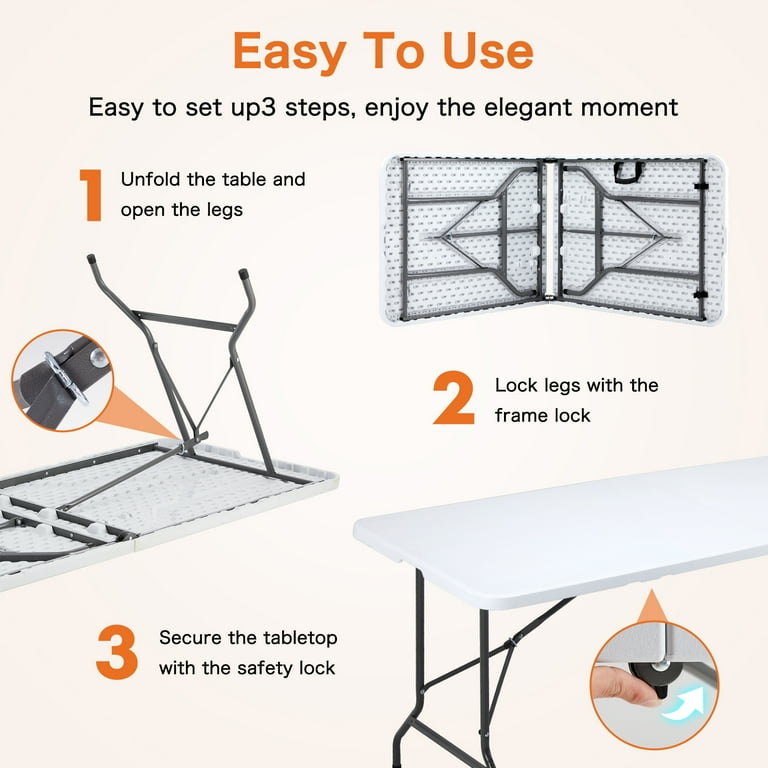
Leg first tables are common in older models and budget friendly designs. The opening sequence differs from fold in half models.
Unlock and Extend All Legs
Keep the table in its folded position. Locate the leg latches on each side. Pull outward firmly to release and extend each leg. Listen for a click confirming full extension.
Ensure all four legs are locked in the extended position before proceeding. Skip this step and the table may collapse when you try to stand it up.
Stand the Table Upright
Once all legs are extended, grasp the edges of the tabletop. Lift and rotate the table into its standing position. Let it rest evenly on all four legs.
Avoid dragging or tilting aggressively during this step. Either action can stress the leg hinges or cause the table to fall.
Perform Final Stability Check
Press down on each corner of the tabletop. The table should sit level with no wobbling. All legs must be flush with the floor.
If rocking occurs, adjust the leg positions or check that your floor surface is flat and even.
Troubleshooting Common Problems

Even with correct technique, some tables refuse to cooperate. Here is how to handle the most frequent issues.
Table Halves Will Not Separate
This usually happens from tight manufacturing tolerances, debris in the hinge, or an engaged lock clip.
Try these fixes in order:
- Verify the red clip or locking bar is fully disengaged
- Press down evenly on both halves to release hinge tension
- Pull straight outward using only the finger gaps
- Lightly tap the hinge with a rubber mallet if needed
Never use pliers or pry bars. You risk cracking the polyethylene tabletop.
One Leg Will Not Extend
Asymmetric hardware or cross brace interference often causes this problem.
Fold the working leg back in. Try extending the opposite side first. Many users report success only when opening the non-intuitive side first, especially on tables with internal braces.
Cannot Lift the Table Onto Legs
Large tables can be heavy and awkward for one person.
Use the leverage method. Lift one end onto a chair or stool, then pivot the rest upward. Place your foot on the crossbar to stabilize while lifting.
For tables six feet or longer, get help. Commercial sized tables are not designed for solo setup.
Prevent Damage During Opening
A single wrong move can bend hinges or break clips. Avoid these common mistakes.
Never Force or Twist
Apply only steady, even pressure. Twisting or jerking warps steel hinges, cracks plastic locking tabs, and misaligns leg joints.
If resistance persists, stop and reassess rather than forcing the mechanism.
Keep Fingers Clear of Pinch Points
Pinch injuries are the most common hazard when opening folding tables.
Always use finger gaps for your hands. Remove fingers before the final snap into place. Fold or extend legs one at a time rather than simultaneously.
Never place fingers along the center hinge line during opening or closing.
Verify All Locks Are Engaged
An improperly locked table can collapse without warning.
Check that the red clip is fully seated. Confirm locking rings are flush with the hinge. Verify legs are vertical and rigid.
Recheck all locks after setup and before placing any weight on the table.
Maintain Smooth Operation
A well maintained table opens easier over time, not harder.
Clean and Dry After Each Use
Wipe the table with a damp cloth only. Avoid harsh chemicals, abrasive scrubbers, and soaking the hinge area.
Dry immediately, especially metal components, to prevent rust and corrosion.
Store Properly
Store the table indoors, away from moisture and direct UV exposure. Keep it fully folded and latched.
Stand the table upright or stack multiple tables flat. Never lean a folded table at an angle. This places continuous stress on the hinges and reduces lifespan.
Lubricate Only When Necessary
Most folding tables require no lubrication. If hinges become stiff, use silicone spray sparingly on hinge pins only. Wipe excess immediately.
Oil based lubricants attract dust and degrade plastic parts over time.
Know Your Model Limits
Respect the design specifications to avoid catastrophic failure.
Weight Capacity
Residential models typically support 200 to 350 pounds when weight is evenly distributed. Commercial models have higher capacity, but check your specific model label.
Exceeding weight limits risks leg collapse or hinge breakage.
Surface Requirements
Always use folding tables on flat, hard surfaces such as tile, wood, or concrete. Avoid carpet or uneven terrain.
Soft or sloped surfaces compromise stability and can cause the table to tip.
Final Setup Checklist
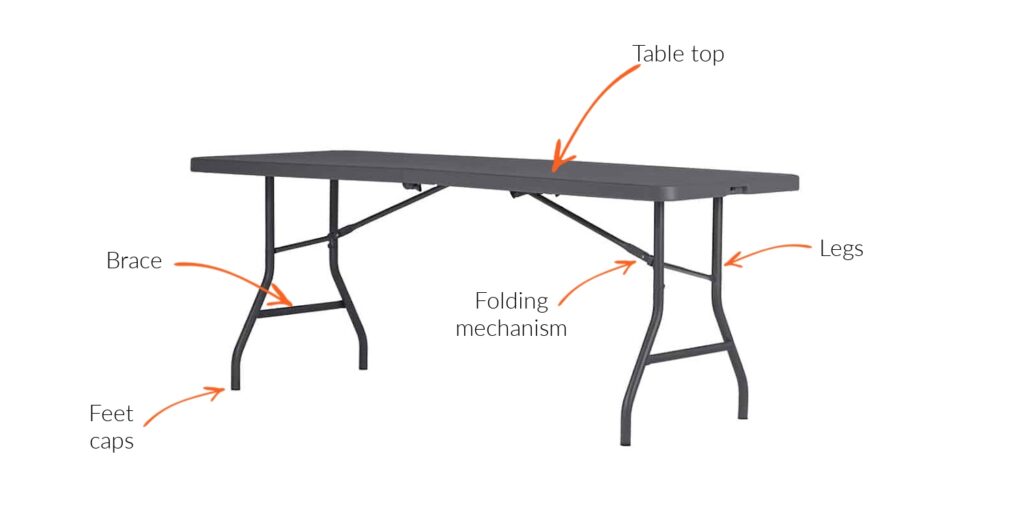
Before using your table, confirm every item:
- Table fully extended and flat
- Center lock engaged (red clip visible)
- All legs extended and vertical
- Locking rings secured if present
- No rocking or flexing at hinge
- Surface is clean and dry
- Fingers clear of all moving parts
This quick verification prevents accidents and ensures reliable performance.
Frequently Asked Questions About Opening Folding Tables
What is the correct way to open a fold in half table?
Lay the table flat with hinge side up. Grip the finger gaps and pull the halves apart with steady, even pressure. Engage the center lock, then extend the legs one at a time. Stand upright and test stability.
Why is my folding table so hard to open?
New tables often have tight manufacturing tolerances. Older tables may have debris or corrosion in the hinges. Check that no locking clip is engaged, then apply steady pressure. If resistance is extreme, tap the hinge lightly with a rubber mallet.
How do I know if my table is fold in half or leg first?
Look at the design. A center seam with finger gaps indicates fold in half. A solid top with latches on each side indicates leg first.
Can I open both legs at the same time?
No. Always extend legs one at a time to prevent misalignment and stress on the hardware. Extending both simultaneously can cause the legs to bind or the hinges to warp.
What should I do if one leg will not extend?
Try folding the working leg back in and opening the opposite side first. Many tables require a specific sequence due to asymmetric hardware or cross brace placement.
Key Takeaways for Opening Your Folding Table
Knowing how to open a folding table correctly saves time, prevents injury, and extends the life of your furniture. Start by identifying your table type, whether it is a fold in half or leg first design. Use finger gaps for gripping, apply steady even pressure, and always engage all locking mechanisms before use.
Maintain your table by cleaning it after each use, storing it properly indoors, and checking all components regularly. For stubborn tables, never force the mechanism. Instead, troubleshoot the specific issue, whether it is debris, an engaged lock, or an incorrect opening sequence.
Follow these steps every time you set up your table, and you will enjoy smooth, safe operation for years to come.