How to Use a Dog Grooming Table
Using a dog grooming table the right way transforms grooming from a stressful chore into a safe, efficient, and even enjoyable experience for both you and your dog. Whether you’re a home groomer or running a professional salon, the key lies not just in having the right equipment, but in how you use it. The most common mistake? Setting the table too high, forcing you to raise your arms and strain your shoulders with every clip. That is not just uncomfortable, it leads to long-term injury. A properly used grooming table brings your dog up to your body natural working height, keeps them secure with correct restraints, and lets you work smoothly, safely, and ergonomically. In this guide, you will learn how to set up your table correctly, acclimate your dog, use restraints safely, and maintain proper posture to protect your body during grooming sessions.
Set the Right Table Height

The height of your grooming table is the single most important factor in preventing physical strain and ensuring precision during every session.
Keep Arms Below Shoulder Level
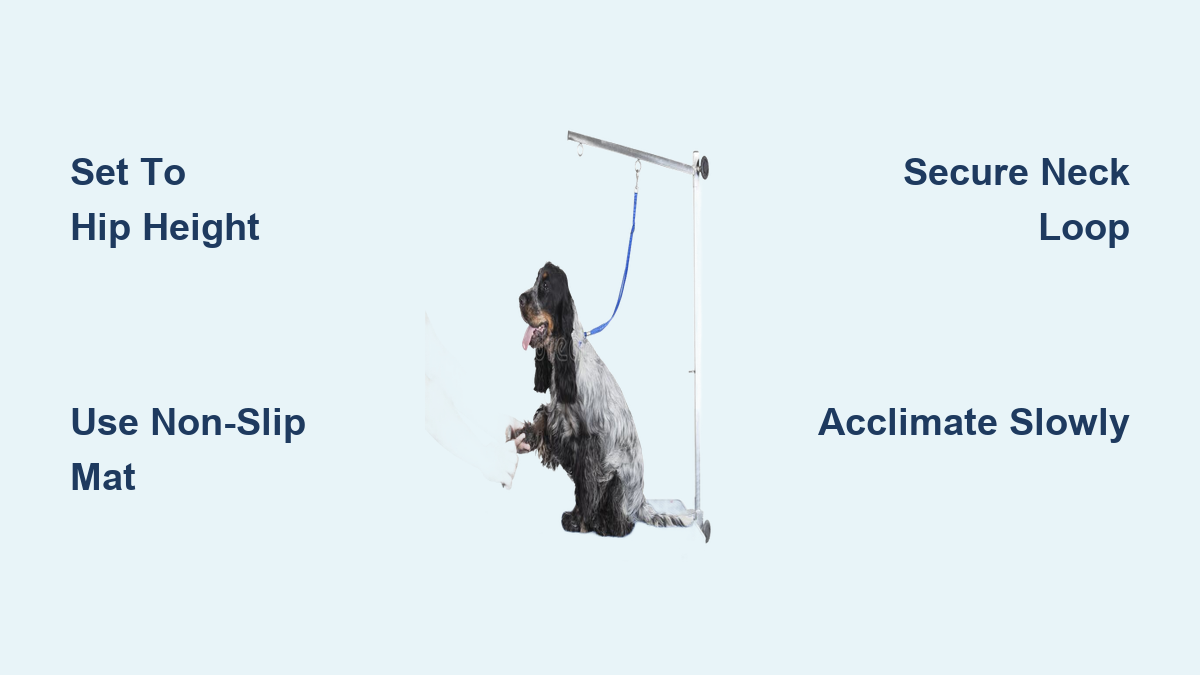
Never set the table at navel height. That forces your arms above shoulder level, especially when trimming the face or underbelly, leading to shoulder and upper back fatigue over time. The ideal working height is at hip level, which keeps your arms relaxed and below the shoulder joint. This simple adjustment reduces strain, improves control, and lets you work longer with less fatigue. Always adjust the table so your body stays neutral. The dog should come to you, not the other way around.
Adjust for Each Grooming Task
Different areas of the dog require subtle positioning changes to maintain proper posture. For face and ears, lower the table slightly so you can work without lifting your elbows. For underbelly and legs, bring the dog closer or use a swivel base to avoid leaning over. For tail and rear, maintain a centered stance to avoid twisting your spine. If you find yourself hunching, reaching, or lifting your arms, stop and readjust the table height or your stance immediately.
Choose the Right Grooming Table
.jpg)
Not all grooming tables are created equal. Your choice should match your space, budget, dog size, and how often you groom.
Compare Table Mechanisms
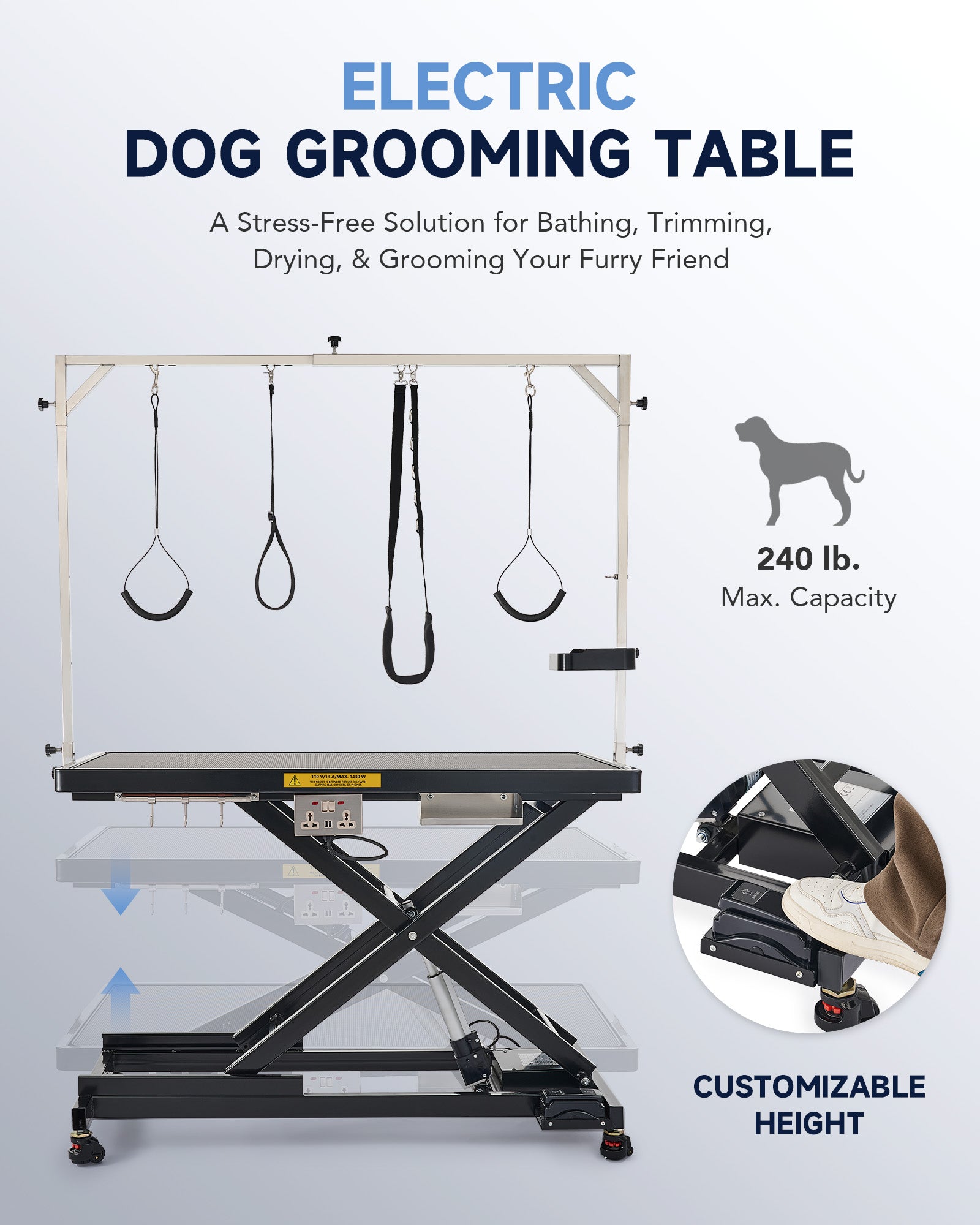
There are five main types of grooming tables, each with distinct advantages. Foldable tables work best for home users with small dogs and limited space. They are portable, affordable, and lightweight, typically costing between $50 and $150. Hydraulic tables are ideal for breeders and salons handling large dogs. They use a foot pump for operation, cost between $200 and $500, and require no electricity. Electric tables suit professionals and large breeds best. They offer smooth, precise lift control but cost $500 or more and need a power source. Stationary tables work well in dedicated spaces for small to medium dogs. They are sturdy with fixed heights, ranging from $100 to $300. Wall-mounted tables save floor space in apartments and cost between $100 and $250, though they require installation.
Electric tables offer the smoothest operation, which is ideal for nervous dogs that startle at jerky movements. Hydraulic models are durable but may move abruptly during height changes. Foldable tables are great for home use but less stable for large or wiggly dogs.
Prioritize Stability and Surface
Stability prevents accidents and builds dog confidence during grooming. Look for X-style accordion legs, which are the most stable with minimal side movement. Z-style legs are common but may shift horizontally during height changes. Pedestal bases are compact but often limited in height range. The tabletop must have a non-slip, rubberized surface to prevent slipping. High-density polyethylene tops resist moisture and are easy to clean. Always check weight capacity. Standard tables hold up to 100 pounds, while heavy-duty models support larger breeds.
Install and Use Restraints Safely

Restraints are not optional. They are essential for safety. Used correctly, they prevent falls and keep your dog calm and still throughout the grooming session.
Secure the Grooming Arm
The grooming arm must be clamped tightly to the frame, not the tabletop. A loose arm can rotate or slip, causing sudden movement that startles your dog. Use full-length or half-length arms depending on your dog size. For maximum control, position the arm over the dog shoulders or mid-back.
Fit the Neck Loop Correctly
Use a sliding ring or clip-on loop around the dog neck. The tension should allow two fingers to fit loosely between the loop and the neck. The chain should run straight and taut from the arm to the dog, with no sagging or twisting. Nylon or coated wire loops are safest. Avoid bare metal chains that could injure your pet.
Never let the loop tighten under the chin or restrict breathing. It should prevent jumping, not choke the dog.
Add a Stomach Strap if Needed
For anxious dogs or extra stability, use a belly band. Wrap it snugly around the abdomen, just behind the front legs. Attach it to the chain link or use it independently. A luggage strap with clips works well as a DIY option and is fully adjustable. Stomach straps prevent dogs from stepping off the table or lying down during grooming. They are especially helpful with overhead arm setups.
Acclimate Your Dog to the Table
A dog that fears the table will resist grooming. Start early and build positive associations to make every session smoother.
Begin with Short, Positive Sessions
Start as early as 8 to 12 weeks with puppies. Let your puppy sniff the table. Place a soft towel or non-slip mat on the surface to make it less intimidating. Use high-value treats and a calm voice. Gently guide them onto the lowered table. Never force. Reward calm behavior immediately.
Train Confidence Gradually
On day one, just standing on the table for 10 seconds earns a treat. On day two, add light brushing while on the table. On day three, practice raising the table slightly while they stay calm. Use verbal cues like “Up” when jumping on and “Stay” once in position. Over time, your dog will learn that the table means treats, not stress.
Secure and Groom the Dog Properly
Once your dog is comfortable, follow a safe, step-by-step process for every grooming session.
Position the Dog Correctly
Lower the table to its minimum height. Gently lift or guide your dog onto the center. Attach the neck loop first, then the stomach strap if using. Connect the chain and adjust tension to two fingers at the neck. Raise the table slowly to hip level. Ensure the dog stands square with weight evenly distributed. If they lean or shift, reposition and recheck restraints.
Follow a Systematic Grooming Routine
Work in this order for best results. First, brushing. Use a slicker brush or comb to remove tangles, especially behind ears and under legs. Second, blow-drying. Keep the dryer moving and never point directly at ears or eyes. Third, clipping. Start with body, then legs, face, and tail. Keep cords clear of the dog. Fourth, nail trimming. Clip one paw at a time. Avoid the quick and use a light to see it in dark nails. Fifth, ears and teeth. Clean ears with vet-approved solution and brush teeth with pet-safe toothpaste.
Use the cue “Tie up, wake up, stand” to keep the dog alert and upright during drying and clipping.
Prevent Common Problems
Even with the right setup, issues can arise. Here is how to fix them fast.
Dog Refuses the Table
Go slower. Use higher-value treats like chicken or cheese. Keep sessions under 30 seconds at first. Add a soft mat to warm the surface. Cold plastic can scare dogs. If your dog backs off, do not chase. Call them calmly and reward any step toward the table.
Dog Slips or Slides
A slippery surface is dangerous. Always use a non-slip mat or towel. Clean the table surface after each use. Hair and moisture reduce traction. Check that the mat stays flat and does not bunch under the dog paws.
Dog Panics at Height Changes
Desensitize to the lift by moving the table up and down without the dog while giving treats. Repeat with the dog standing beside it. Finally, try short lifts with the dog on board. Electric tables are best for this because smooth, quiet motion is less frightening than the jerky pump of hydraulic models.
Table Wobbles or Feels Unstable
Check that all legs are fully extended and locked. Ensure the floor is level. For Z-style tables, make sure the base is not hitting a wall during adjustment. Tighten any loose screws or bolts. If wobbling persists, consider upgrading to an X-style frame.
Maintain Your Grooming Table
A well-maintained table lasts longer and stays safe for every grooming session.
Clean After Every Use
Wipe the surface with a damp cloth to remove hair, dirt, and product residue. Disinfect with a pet-safe cleaner. Wash restraints, loops, straps, and chains with mild soap and water. Hang to dry completely before storage.
Inspect for Wear and Damage
Weekly, check clamps and arms for looseness or bending. Check leg locks for wear or failure. Check non-slip surface for peeling or loss of grip. Check chain links for fraying or stiffness. Replace worn parts immediately. A broken clamp can lead to a fall and serious injury.
Care for the Mechanism
For hydraulic tables, wipe the piston shaft clean and lubricate if recommended by the manufacturer. For electric tables, check cords for damage and keep the motor area dust-free. For foldable tables, ensure folding joints move smoothly and lock securely. Store in a dry place. Fold flat if possible. Hang grooming arms on wall hooks to prevent warping.
Buy the Right Table for Your Needs
Do not overspend or underspend on your grooming table. Match it to your real-world needs.
Match Table to Your Situation
Ask yourself key questions before purchasing. Space limited? Choose foldable or wall-mounted. Back pain or frequent grooming? Choose electric or hydraulic. Large breed dog? Choose a high-weight-capacity electric or hydraulic table. On a budget? Choose a sturdy foldable or static table. Nervous dog? Choose electric for quiet, smooth lift over hydraulic.
Home users with one small dog rarely need a $1,000 electric table. A $120 foldable with a non-slip mat and basic restraints is often enough.
Consider Used or Refurbished
Many professional groomers upgrade and sell their old tables. Check online marketplaces or local salons. A well-maintained used hydraulic table can save hundreds of dollars and last for years.
Top Picks by Use Case
For home use, the Yahi Tech foldable is lightweight and includes storage and waist restraints. For professionals or large dogs, the CO-Z Electric offers sturdy steel, a quiet motor, tool organizers, and a power outlet. For budget static needs, the Clipit Portable has adjustable feet, a stable base, and easy setup.
Frequently Asked Questions About Using a Dog Grooming Table
What is the correct height for a dog grooming table?
The correct height is at hip level, below your navel. This keeps your arms below shoulder joint level, reducing strain on your shoulders and upper back during grooming.
How do I stop my dog from slipping on the grooming table?
Always use a non-slip mat or towel on the surface. Clean the table after each use to remove hair and moisture. Ensure the mat lies flat and does not bunch under the dog paws.
Can I leave my dog unattended on the grooming table?
Never leave the dog unattended, even for a moment. Accidents happen instantly. Always maintain visual supervision throughout the entire grooming session.
How tight should the grooming noose be?
The noose should be snug enough to prevent jumping but loose enough to fit two fingers comfortably between the loop and the dog neck. It should not restrict breathing or circulation.
What type of table is best for a nervous dog?
An electric table is best for nervous dogs because the smooth, quiet motion is less frightening than the jerky pump action of hydraulic tables.
How do I get my dog comfortable with the grooming table?
Start with short, positive sessions using high-value treats. Let the dog sniff the table first. Place a soft towel on the surface. Gradually increase session length as your dog gains confidence.
Key Takeaways for Using a Dog Grooming Table
Using a dog grooming table correctly means more than just lifting your dog off the floor. It is about ergonomics, safety, and building trust with your pet. Set the table at hip height to protect your shoulders and back. Use restraints properly, ensuring the neck loop allows two fingers of space. Acclimate your dog with patience, starting with short positive sessions and high-value treats. Maintain your equipment by cleaning after every use and inspecting weekly for wear. When done right, grooming becomes faster, safer, and kinder for both you and your pet. Start small, stay consistent, and your dog will stand calmly on the table, tail wagging, waiting for their next treat.