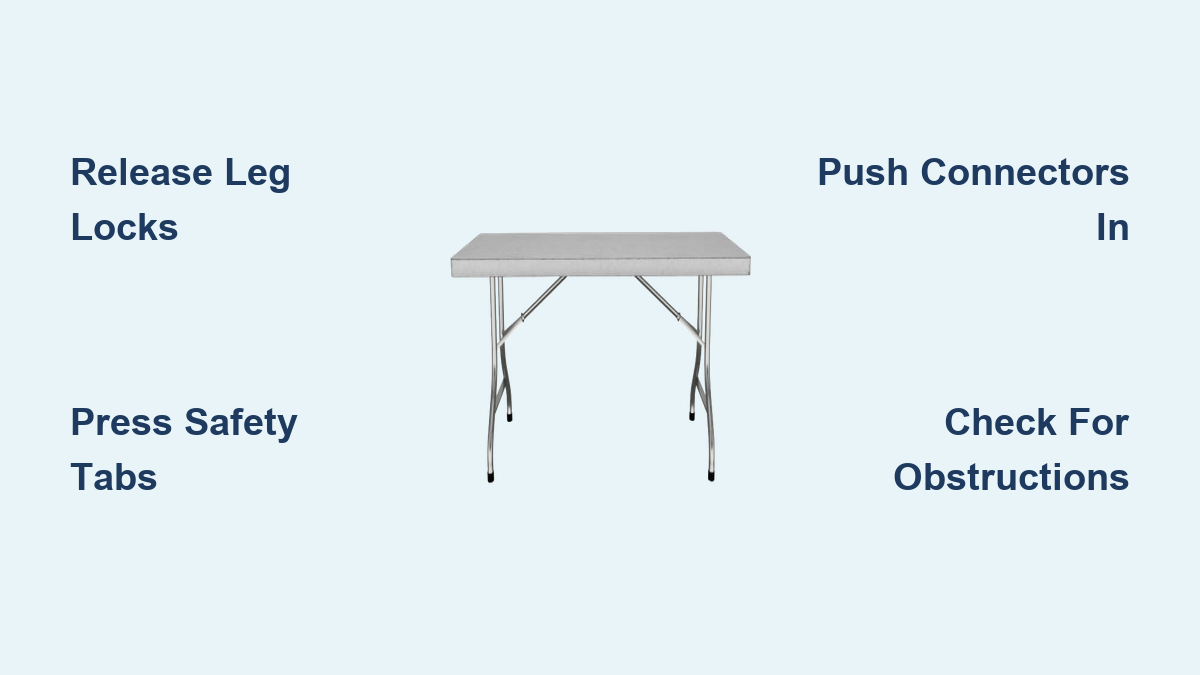
How to Fold a Table: Quick Steps
Folding a table might seem straightforward until you are staring at a stubborn frame that refuses to collapse. Whether it is a banquet table after an event, a camping table from your trunk, or a Lifetime model in your garage, knowing how to fold a table correctly saves time, prevents damage, and avoids frustration. Most issues stem not from complexity, but from missing one critical step like releasing the right lock, compressing legs fully, or pushing side connectors at the right moment.
This guide breaks down exactly how to fold any common folding table using model-specific techniques. You will learn universal prep steps, identify your table type, and follow precise folding sequences for standard slider models, portable camping units, Lifetime auto-lock tables, and COSCO bracket styles. No more guesswork. Just clear, actionable steps that work.
Prepare the Table Properly
Before touching any mechanism, follow these universal prep steps to ensure a smooth fold.
Clear and Position the Table
Remove all items from the surface. Even a water bottle can throw off balance during folding. Then place the table on its side to give full access to leg locks, sliders, and hinges. For heavier models, clear space around all sides to avoid pinching fingers or damaging walls.
Check Leg Position
Legs must be in the correct state before folding. For standard and utility tables, lower legs to the shortest height setting and lock them in place. For portable and camping tables, start with legs fully extended as compression is part of the release sequence. For Lifetime and COSCO models, confirm legs are stable and not wobbly since misalignment blocks folding.
Inspect for Obstructions
If the table feels stuck, do not force it. Check sliders, hinges, and connectors for dirt, debris, or bent metal. A quick wipe with a dry cloth often restores function. For outdoor tables, sand or grass clippings commonly jam mechanisms.
Fold Standard Slider Tables
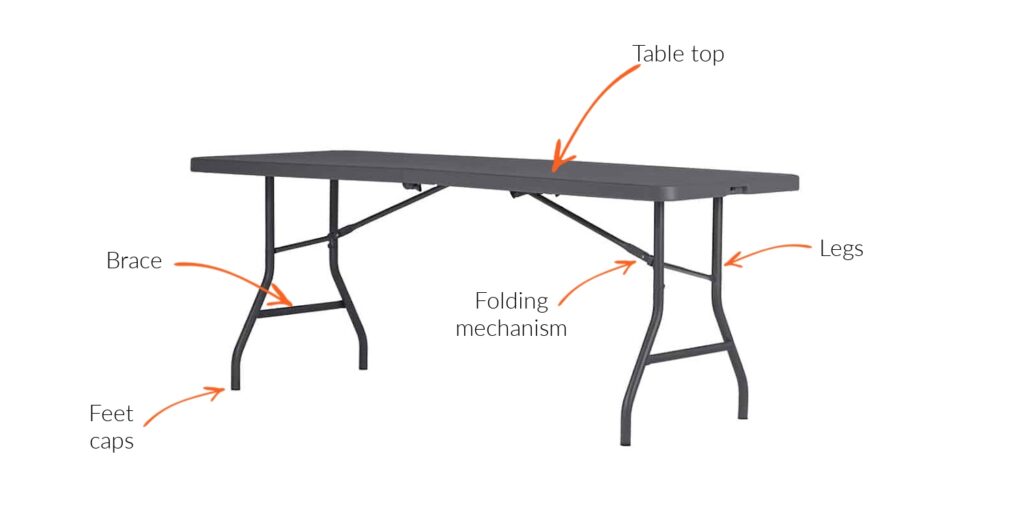
These are the most common folding tables. They are rectangular with metal frames, sliders at each leg base, and safety tabs at the center hinge.
Release Leg Locks
With the table on its side, locate the sliders where the legs attach to the frame. Slide each one away from the leg joint to unlock. Once released, pivot the legs inward toward the tabletop. Repeat for all four legs.
Press Safety Tabs Simultaneously
Lift the table slightly to access the center hinge. You will see two safety tabs. Press both down at the same time while guiding the two halves together. Many models have a detent mechanism. You will feel resistance then a distinct click. This means the lock has disengaged and the table can now fold.
Lock in Closed Position
Push the halves fully together until a briefcase-style latch clicks shut. If your table has a carrying handle, unfold it now. This final lock keeps the unit compact and safe to carry.
Fold Portable Camping Tables
These lightweight compact tables confuse users because compressing the legs is not enough. You must release the side connectors.
Compress Legs Fully
Start with legs extended. Find the small release buttons on each side near the leg frame. Press and hold them while pushing legs inward until they are fully compressed. Stopping too soon is the most common mistake. Legs must be at their shortest possible length before the next step works.
Push Side Connectors Inward
Even with compressed legs, the table will not fold unless you push the side connectors inward with both hands. These are plastic or metal joints on the left and right sides of the frame. These connectors lock the leg assembly. Skipping this step leaves the legs rigid and blocks the hinge.
Activate the Hinge Button
Once connectors are released, locate the hinge button at the base. Press it and use your knee if hand pressure fails. Bring both halves together until they snap shut. The table should close flat with legs folded neatly inside. If it will not close, recheck the side connectors.
Fold Lifetime Tables

Lifetime tables use smart auto-lock systems. The key is never pull from the hinge side. Always use the finger gap on the opposite edge.
Identify the Lock Type
Check which model you have. Manual lock switches have a single tab you slide to lock and unlock. Auto-lock leg-triggered models lock when legs extend and fold when legs fold. Auto-lock open-position models lock with a click when fully opened and require lever release.
Use the Finger Gap
Always pull the table open or start folding using the finger gap on the non-hinge side. Pulling from the hinge end damages the internal teeth and voids warranties.
Follow Model-Specific Steps
For manual lock models, slide the lock tab to unlocked. Bring halves together slowly and keep fingers clear of the closing gap.
For leg-triggered auto-lock models, fold the legs inward. This disengages the center lock. Once legs are folded, the table halves will close freely. Close carefully and watch for pinch points.
For open-position auto-lock models, press and hold the lock lever. Slide one half inward slightly to disengage the locking teeth. Release the lever, then close the table fully.
Fold COSCO Bracket-Style Tables

COSCO tables use a unique bracket system that requires precise alignment during folding.
Unlock and Fold Legs
First, disengage the leg locks and fold all legs inward toward the frame. Unlike other models, the legs fold before the tabletop moves. Ensure legs are fully folded and parallel since misaligned legs prevent proper bracket engagement.
Lower Tabletop onto Legs
Instead of folding the table in half first, lower the entire tabletop down onto the folded legs. The frame should rest directly on the support brackets. The tabletop must sit flush with the brackets. If it wobbles, adjust leg position and try again.
Secure with Strap or Latch
Once aligned, fasten the included strap or latch to hold the unit closed. This prevents accidental unfolding during transport. Check the strap regularly for wear since a broken strap means the table will not stay folded.
Troubleshoot Common Folding Problems
Even with the right steps, issues happen. Here is how to fix them fast.
Legs Will Not Fold Flat
Cause: Side connectors not released on portable models or legs not fully lowered on standard models. Fix: Re-compress legs and push side connectors firmly inward. For standard tables, ensure sliders are fully retracted.
Table Will Not Close at the Hinge
Cause: Safety tabs not pressed or lock lever not engaged on Lifetime models. Fix: Re-lift the table and press both safety tabs simultaneously. For Lifetime tables, confirm you are using the finger gap and correct release method.
Stiff or Jammed Mechanism
Cause: Dirt, sand, or moisture in sliders or hinges. Fix: Wipe down all moving parts with a dry cloth. For sticky sliders, use a silicone-based lubricant. Never use oil since it attracts grime.
Pinching or Snapping Too Fast
Cause: Letting go of safety tabs too early or not guiding the fold. Fix: Press tabs, start the fold, then slowly release pressure while guiding the halves together. Keep hands clear of the gap.
Maintain Your Table for Longevity
A well-maintained table folds smoothly for years. Follow these care steps.
Clean After Every Use
Wipe the tabletop and frame with a damp cloth. For outdoor use, rinse off dirt or salt. Never hose it down since water can seep into hinges.
Dry Completely Before Storage
Moisture causes rust, mold, and sticky mechanisms. Store only when fully dry, especially after rain or beach use.
Store Indoors and Flat
Keep the table upright or flat in a dry area. Avoid damp garages or hot attics. UV exposure degrades plastic and weakens metal over time.
Inspect Locks Regularly
Check sliders, buttons, and brackets monthly. Look for cracks, bends, or wear. Replace damaged parts before they fail during setup or breakdown.
Frequently Asked Questions About Folding Tables
Why will my folding table not collapse?
The most common reasons are not releasing side connectors on portable tables, not pressing safety tabs on standard models, or not using the correct unlock method on Lifetime tables. Check our troubleshooting section for your specific table type.
Can I force a folding table to close if it is stuck?
No. Forcing a fold damages locking mechanisms and hinges. Always check for debris, verify all release buttons are engaged, and ensure legs are in the correct position before attempting to fold.
How do I know which type of folding table I have?
Examine the leg mechanism. Tables with sliders at the leg base are standard models. Tables with side connectors and release buttons are portable camping types. Tables with auto-lock features and finger gaps are Lifetime models. Tables with bracket systems are COSCO styles.
Is it safe to fold a table with wet hands?
No. Wet hands reduce grip control and increase the risk of dropping the table or pinching fingers. Always ensure hands are dry and the table is dry before folding and storing.
How often should I maintain my folding table?
Inspect locks and mechanisms monthly. Clean after every outdoor use. Check for wear and tear regularly to catch problems before they cause folding failures.
Key Takeaways for Folding Your Table Successfully
Folding a table does not have to be frustrating. With the right technique, whether it is sliding a tab, pushing a connector, or using the finger gap, you can collapse any model in under a minute. The most important steps are identifying your table type first, then following the correct sequence for that specific mechanism.
Always prepare properly by clearing the surface, positioning the table on its side, and checking for debris. Never force a fold since resistance means something is not released correctly. Teach others the correct method since misfolding is the top cause of broken tables.
Maintain your table by cleaning after use, drying before storage, and inspecting locks regularly. A well cared-for table will fold smoothly for years. Soon, folding will be second nature.