How to Clean a Foosball Table
Nothing kills the fun of a fast-paced foosball match like a dirty, sticky table. Grime builds up fast, leaving black ball marks on the playfield, dust coating the rods, and grimy player figures that sluggish gameplay and broken parts. If you are wondering how to clean a foosball table properly, this guide gives you everything you need: the right tools, step-by-step cleaning methods, and pro tips to keep your table running smoothly for years.
Using only proven maintenance techniques, we will walk you through every critical component, from the playfield to the rods, men, bearings, and more. You will learn what cleaners to use and which to avoid, how to lubricate rods correctly, and how to troubleshoot common issues like wobbly players or drifting balls.
Gather the Right Cleaning Supplies
Before touching the table, assemble the proper tools and cleaning agents. Using the wrong products can cause long-term damage to your table.
Essential Cleaning Agents
Use only proven, safe cleaners for your foosball table:
• Isopropyl alcohol (70% to 94%): Best for playfield, rods, and balls. Evaporates quickly, removes marks, and prevents warping.
• Simple Green: Ideal for deep cleaning men, bumpers, and stubborn grime. Soak parts, then rinse with alcohol.
• Mild dish soap and warm water: Safe for plastic men, HPL surfaces, and Gerflex mats. Never soak wood components.
• WD-40: Only for rust removal on rods. Never use as a lubricant. It dries rubber and attracts dust.
• Silicone lubricant (liquid): The only approved lubricant for rods. Oil-based products gum up bearings.
Tools You Will Need
• Microfiber cloths for streak-free wiping
• Cotton rags for applying silicone
• Scotch Brite pad (medium-abrasive) for rust removal
• Soft-bristle toothbrush for cleaning men and bearings
• Punch tool and small hammer for replacing player pins
• Vacuum or shop vac for debris under side strips
• 2000-grit automotive sandpaper for polishing rods
• Leveling tool or smartphone app
• Shims for unlevel legs
Clean the Playfield Properly
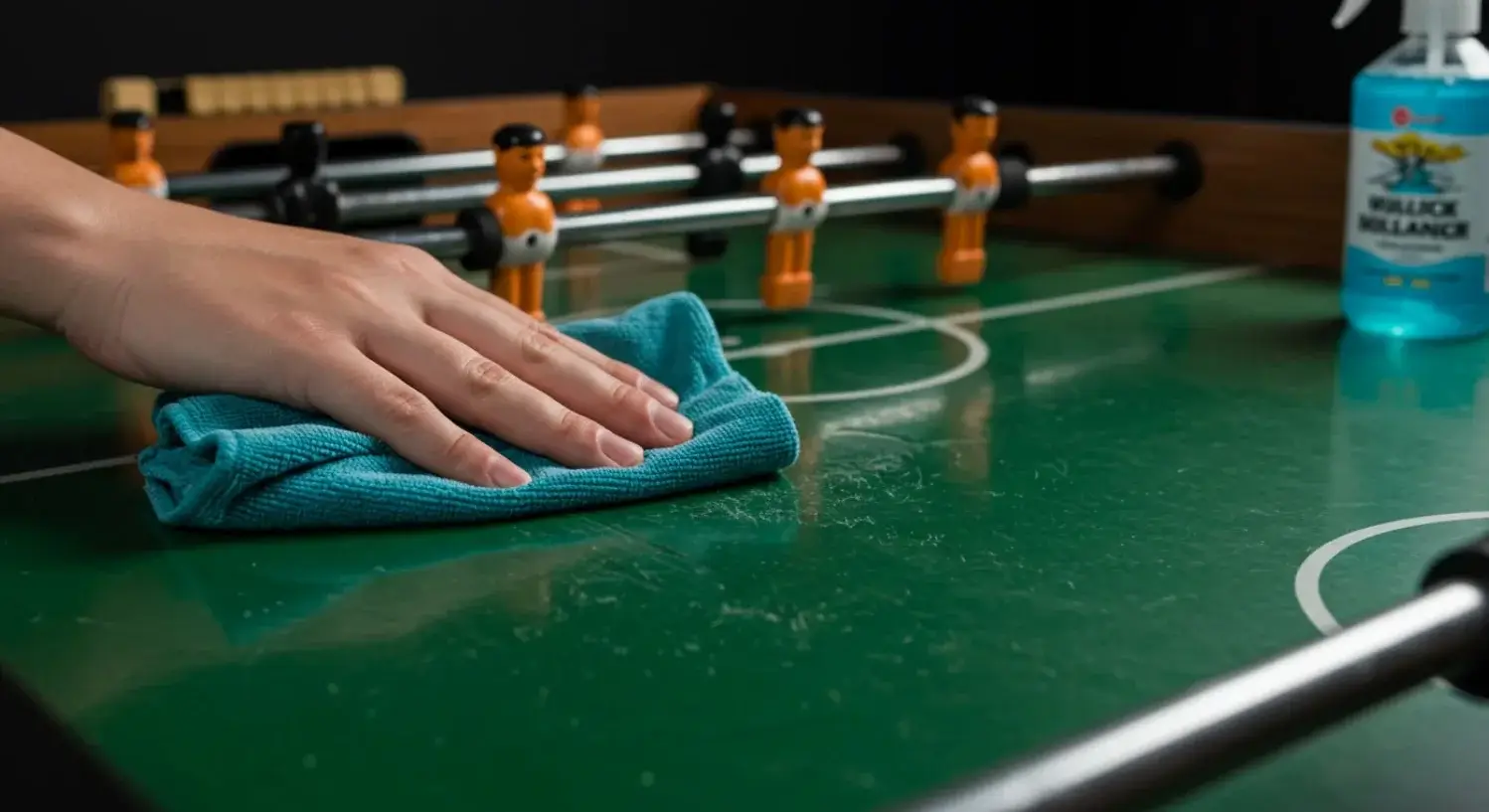
A clean playfield ensures smooth, fair ball roll. Dirt and moisture are the biggest threats, so always dry spills immediately and cover the table when not in use.
Wipe Down the Surface
Follow these steps for routine cleaning:
-
Vacuum the entire playfield first to remove loose dust and debris.
-
Dampen a microfiber cloth with isopropyl alcohol. Never spray directly onto the table.
-
Wipe in straight lines from left to right, covering every inch.
-
For corners and edges, fold the cloth into a small square and scrub gently.
-
Buff with a dry cloth to restore shine.
Pro Tip: For glossy finishes, a final dry pass removes static and reduces dust attraction.
Remove Stains and Deep Clean
Stubborn black marks require extra attention. Use one of these methods:
• Apply multiple light coats of alcohol, letting each dry before the next.
• Soak stained areas briefly with Simple Green, then rinse immediately with alcohol to prevent residue.
For tables with Gerflex mats, follow this special procedure:
-
Vacuum first to remove loose debris.
-
Clean with mild soapy water and a soft sponge using circular motions.
-
Rinse with clean water and dry immediately.
-
Never use bleach, ammonia, or hot water, as these damage the surface.
Protect Against Damage
• Avoid moisture: Spills must be wiped within seconds to prevent swelling or warping.
• Use a cover: Always drape a quality cover over the table when idle. It blocks dust, pet hair, and accidental spills.
• Control environment: Keep the table away from humidity, direct sunlight, and extreme temperatures.
Maintain and Lubricate the Rods
Rods should spin smoothly and quietly. Stiff or squeaky rods mean it is time for cleaning and lubrication.
Remove Rust from Rods
Rust builds up in high-friction zones, especially near bearings. Follow these steps:
-
Spray WD-40 lightly on the rusted area.
-
Scrub vigorously with a Scotch Brite pad. Focus on the center of the five-bar and near the handles.
-
Wipe clean with a dry cloth.
-
For a mirror finish, polish with 2000-grit sandpaper in circular motions.
-
Never use steel wool. It scratches rods and damages bearings.
Clean Non-Rusty Rods
-
Dampen a cloth with isopropyl alcohol.
-
Slide the rod in and out while wiping to clean the full length, including the inner section.
-
Let rods air dry completely before lubricating.
Apply Silicone Lubricant Correctly
Only use liquid silicone. Oil-based lubes attract dust and ruin rubber components.
-
Apply one small drop where the rod enters the bearing.
-
Slide the rod in and out 5 to 10 times to spread the lubricant.
-
Rotate the rod slowly to coat all sides.
-
Wipe off excess to prevent dust buildup.
Lubrication Frequency:
• Heavy use (bars, schools): every 1 to 2 weeks
• Home use: once a month
• If rods squeak or stick: lubricate immediately
Straighten Bent Rods
A bent rod causes erratic play and damages men. Follow these steps:
-
Spin the rod slowly to spot the bend.
-
Insert it so the curve aligns with the entry point.
-
Rotate so the bend faces downward, handle up.
-
Apply gentle downward pressure to straighten.
-
Do not force it. Bend gradually to avoid breaking.
Clean and Replace Player Figures

Dirty or wobbly men reduce control and transfer grime to the ball.
Deep Clean the Men
-
Remove men from rods if possible.
-
Soak in warm, soapy water or Simple Green for 10 to 15 minutes.
-
Use a toothbrush to scrub feet and crevices where black marks collect.
-
Rinse thoroughly and dry completely. Tap heads on a cloth to remove trapped water.
-
Reinstall only when fully dry to prevent internal rust.
Install or Replace Pins
Pins must be installed correctly to avoid damage.
-
Use a punch tool to drive the old pin out front to back.
-
Slide the new figure on, facing forward.
-
Align holes and drive the new pin in from the back, with teeth facing up.
-
Stop before the punch end flares out. Do not push it all the way through.
Trick for 5-Bar Middle Men: If bearings are split, loosen the end figure, slide the rod into the bearing, and pull the broken man out without removing other pins.
Fix Wobbly Figures
• Tighten the pin if loose.
• If the hole is stripped, add a paper shim between the rod and figure.
• Test by thumping the figure against a ball. The sound should be solid, not hollow.
Service Bearings and Bumpers
Internal parts wear down over time. Clean or replace them to restore smooth operation.
Clean Bearings
Gunk in bearings causes friction and stains. Follow these steps:
-
Remove bearings if possible.
-
Soak in warm, soapy water.
-
Scrub with a toothbrush to remove debris.
-
Dry completely before reinstalling.
Installation Tip: If a bearing is rough on one side, install it with the smooth side down. This minimizes contact with the ball.
Maintain Adjustable Bearings
• Do not over-tighten.
• Clean regularly to prevent gunk buildup.
• Replace if cracked or worn.
Clean and Replace Bumpers
Rubber bumpers protect the table and rods.
-
Soak in soapy water or scrub with Simple Green.
-
Use a toothpick to clean gunk from the sleeves (recessed areas).
-
Ensure holes face outward when reinstalling.
Replace bumpers if they are hard, dry, or cracked, or if they cause rod drag or no longer rebound properly.
Clean and Replace the Balls
The ball is central to gameplay. A dirty or worn ball affects speed and control.
Clean Plastic Balls
Two safe methods work well:
-
Washing machine method: Place balls in a sock or mesh bag with non-colored, durable clothes. Wash on cold. Never use the dryer. Air dry only.
-
Alcohol wipe method: Roll balls in a cloth soaked with isopropyl alcohol to remove marks.
Never machine-wash cork balls. Wipe them gently with a damp cloth instead.
Replace Worn Balls
Replace balls when they are cracked or chipped, have lost grip (slippery during play), or cause inconsistent rolls.
Choose balls based on play style. Smooth plastic works for fast, competitive games. Textured or cork balls suit casual, controlled play.
Level the Table for Fair Play

An unlevel table causes ball drift and unfair advantages. Level it regularly.
Check for Levelness
-
Place the table on a solid, non-slip surface. Use a rug on concrete.
-
Lower all adjustable legs fully.
-
Use a bubble level or smartphone app to check both directions: lengthwise and widthwise.
-
Roll a ball slowly across the center. If it drifts, the table is unlevel.
Adjust the Legs
-
Raise one or two legs at a time. Never adjust all four at once.
-
Keep at least one leg fully grounded for stability.
-
Once level, lock legs with nuts if equipped.
-
For non-adjustable legs, use shims under short legs.
Pro Tip: Mark leg positions with tape before removal for easy reassignment.
Prevent Damage During Moves
Moving a foosball table incorrectly can break legs, warp the frame, or bend rods.
Remove Legs Safely
-
Place the table on chairs or bar stools taller than the legs.
-
Remove or install legs while the table is fully supported.
-
Tighten legs securely.
-
Lift the table slightly and kick the supports out.
Never tilt the table on its legs. This stresses and breaks the feet.
Transport Tips
• Remove legs if possible.
• Always use a cover during storage or transport.
• Store in a dry, temperature-controlled room.
Preventive Maintenance Schedule
Regular upkeep prevents major repairs and extends table life.
Weekly Tasks
• Dust playfield with microfiber cloth
• Wipe rods with alcohol
• Check handles for dirt
Monthly Tasks
• Deep clean playfield, men, and handles
• Lubricate rods with silicone
• Inspect ball return track for debris
Quarterly Tasks
• Re-level the table
• Tighten all screws, bolts, and leg adjustments
• Inspect bearings and bumpers
Yearly Tasks
• Inspect rods for rust or bending
• Replace worn grips, men, or balls
• Check playfield for warping
Troubleshoot Common Issues

Fix problems fast with these expert-backed solutions.
Sticky or Sluggish Rods
• Cause: Dirt buildup or lack of lubrication
• Fix: Clean with alcohol, dry, apply silicone. If persistent, clean or replace bearings.
Ball Drifting to One Side
• Cause: Unlevel table or warped playfield
• Fix: Re-level using a marble test or app. If still drifting, check for warping.
Wobbly Player Figures
• Cause: Loose pin or worn hole
• Fix: Tighten pin or add a paper shim. Replace if stripped.
Squeaking Rods
• Cause: Dry bearings or lack of lubrication
• Fix: Apply silicone immediately. Do not wait.
Warped Playfield
• Cause: Moisture or humidity exposure
• Fix: Move to a drier room, use a dehumidifier. Severe warping may require resurfacing or replacement.
Key Takeaways for Cleaning Your Foosball Table
Knowing how to clean a foosball table is not just about looks. It is about performance, longevity, and fair play. By following this guide, you will eliminate grime, prevent rust, and keep every component in top condition. Use isopropyl alcohol for cleaning, silicone for lubrication, and always cover the table when not in use. Stick to the maintenance schedule, and your foosball table will deliver smooth, competitive gameplay for years to come.
Frequently Asked Questions About Cleaning a Foosball Table
What is the best cleaner for a foosball table playfield?
Isopropyl alcohol (70% to 94%) is the best cleaner for most playfields. It evaporates quickly, removes black ball marks, and prevents water damage that causes warping. For stubborn stains, Simple Green works well when followed by an alcohol rinse.
How often should I lubricate foosball rods?
For heavy use (bars, schools, frequent tournaments), lubricate rods every 1 to 2 weeks. For home use, once a month is sufficient. If rods start squeaking or sticking, lubricate immediately regardless of schedule.
Can I use WD-40 to lubricate foosball rods?
No. WD-40 is strictly for rust removal only. Never use it as a lubricant. It dries out rubber components and attracts dust, causing more problems. Only use liquid silicone lubricant on foosball rods.
How do I clean cork foosball balls?
Never machine-wash cork balls. Instead, wipe them gently with a damp cloth. Machine washing damages the cork material and ruins the ball’s grip characteristics.
Why does my foosball ball drift to one side?
Ball drift usually indicates an unlevel table. Use a bubble level or smartphone app to check both directions. Adjust the legs or add shims until the ball rolls straight. If leveling does not fix it, the playfield may be warped from moisture exposure.