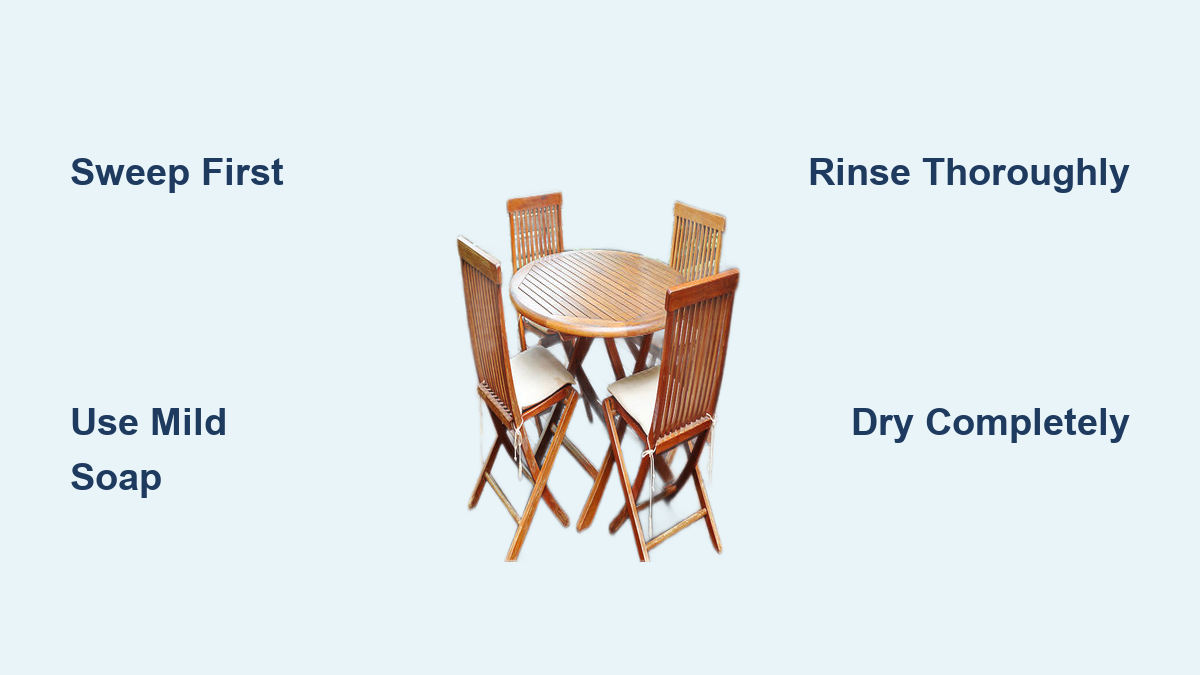
How to Clean a Teak Table
Nothing beats the rich warmth of a teak table, whether it’s a beloved outdoor dining set or a sleek indoor centerpiece. But over time, even the toughest teak can look dull, stained, or gray. The good news? Cleaning a teak table doesn’t require harsh chemicals or expert skills. With the right approach, you can restore its original luster or embrace its natural silvery patina, all while protecting its legendary durability.
This guide walks you through how to clean a teak table for every situation, from routine maintenance to deep restoration and stain removal. You’ll learn what tools to use, what to avoid, and how to decide whether to seal, oil, or let nature take its course.
Routine Cleaning for Teak Tables

Keep your teak table looking fresh with simple, regular cleaning. This method works for both indoor and outdoor tables and helps prevent grime buildup that leads to deeper issues later.
Sweep and Prep the Surface
Start by removing all items from the table, including dishes, cushions, leaves, or debris. Use a stiff-bristle brush or broom to sweep away dirt, moss, and cobwebs, especially from grooves and joints. This dry step prevents scratching during wet cleaning. Lay a tarp underneath to protect your deck or patio from drips and runoff.
Wash With Mild Soap Solution
Mix 2 tablespoons of mild dish soap into 1 liter of warm water. Dip a soft sponge or soft-bristle brush into the solution. Never use steel wool or metal scrubbers. Gently scrub the surface in the direction of the grain to avoid micro-scratches. Focus on high-traffic areas and spots with visible grime.
Rinse and Dry Properly
Rinse thoroughly with a garden hose on low pressure. Avoid high-pressure sprayers, as they damage teak’s soft grain. Ensure all soap is washed away, especially in crevices. Wipe excess water with a microfiber cloth and let the table air dry for 24 to 48 hours. As it dries, the wood returns to its natural tone, golden indoors or silvery-gray if exposed to sun.
Pro Tip: Clean your teak table every 3 to 6 months, or after heavy rain or pollen season, to maintain its appearance and prevent mold.
Deep Clean Weathered or Stained Teak
When your teak table looks dull, gray, or stained, a deep clean restores its color and removes years of oxidation. This process is ideal before sealing or oiling.
Choose the Right Teak Cleaner
Use a commercial teak cleaner like Golden Care Teak Cleaner or Walker Exterior Wood Cleaner. These formulas dissolve grime and oxidation without sanding. For spot stains, try a natural alternative: mix equal parts white vinegar and water. For mildew, use a diluted bleach solution, but rinse thoroughly.
Apply and Agitate the Cleaner
Wear gloves and eye protection. Spray or apply the cleaner generously over the entire surface. Let it sit for 5 to 10 minutes, but do not let it dry. Scrub vigorously with a soft-bristle brush or green non-abrasive pad. For large tables, a floor polishing machine with a brush attachment cuts cleaning time dramatically. You’ll see dark grime lift off as you scrub.
Rinse Immediately and Dry Fully
Rinse right after scrubbing with low-pressure water. Residual cleaner can discolor the wood. Once clean, let the table dry completely for 24 to 48 hours. When dry, the wood will appear light or blonde, ready for sealing or natural weathering.
Warning: Never use a pressure washer. It strips natural oils and leaves the surface rough and fuzzy.
Restore Color With Sealer or Oil
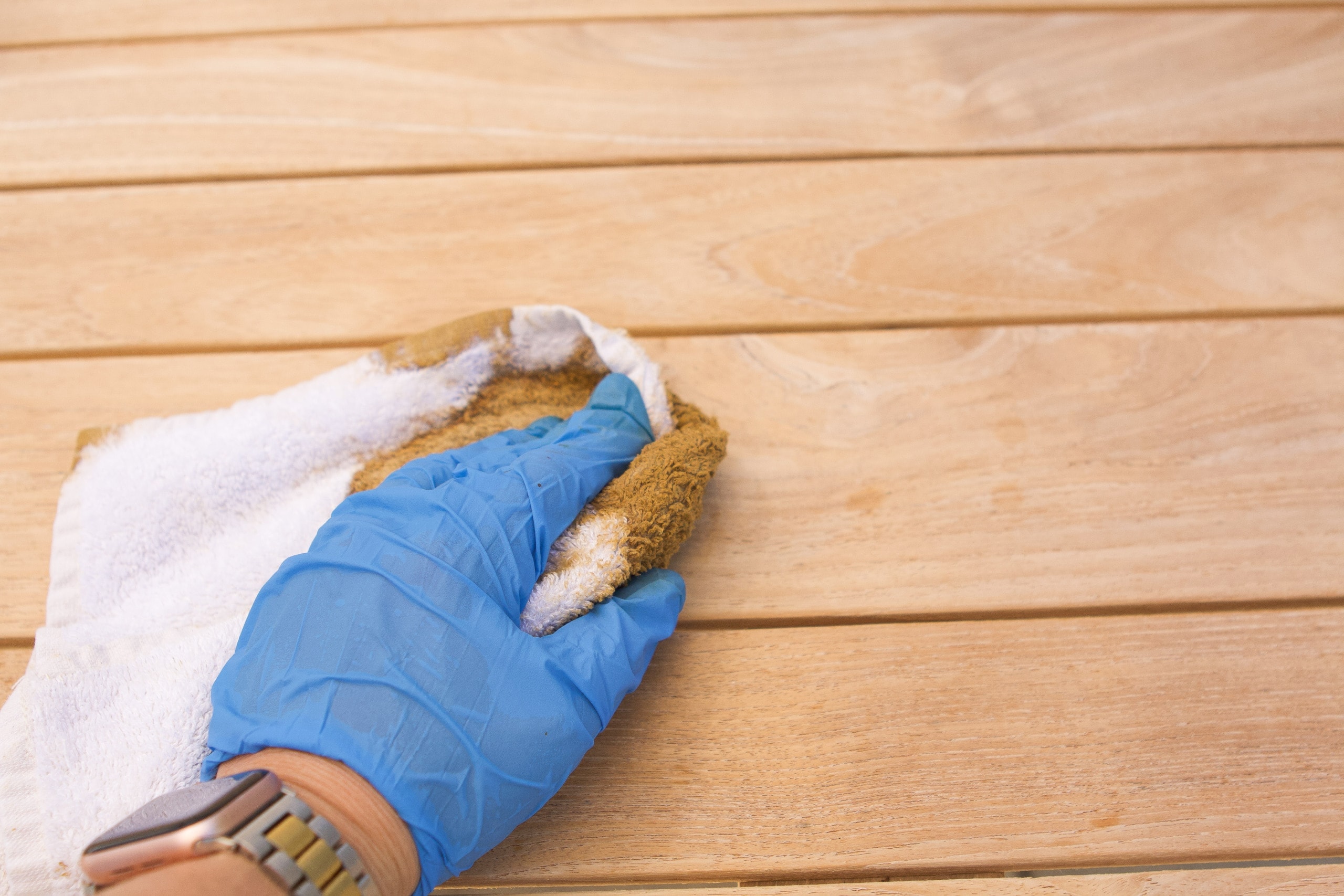
Want to bring back the honey-gold glow? Sealing or oiling protects the wood and enhances its original color, but it’s optional.
Should You Oil Outdoor Teak?
There’s debate among experts. Some say no, because teak’s natural oils make added oil unnecessary and can trap moisture or attract dirt. Others apply oil for looks, not survival. The choice depends on your preference: golden finish with oil versus natural patina without.
Apply Teak Sealer Correctly
Only apply sealer to clean, completely dry wood. Ideally, clean one day and seal the next. Stir the product well. Use a lint-free cloth or 63mm brush to apply a thin, even coat in the direction of the grain. Avoid puddling. Let it dry 2 to 4 hours, then apply 2 to 3 coats for best results.
Popular sealers include:
• Golden Care Teak Protector
• Walker Exterior Wood Oil
• Generic teak sealers (oil-based, UV-resistant)
The wood darkens instantly, revealing a rich, warm tone.
Maintain the Finish
Reapply sealer every 6 to 12 months, or when water no longer beads on the surface. Regular cleaning extends the life of the finish.
Note: Oil is best for covered or indoor teak. Uncovered outdoor tables may need more frequent reapplication due to sun and rain exposure.
Clean Indoor Teak Furniture Safely
Indoor teak doesn’t turn gray but still collects dust and stains. Cleaning is gentler than outdoor methods.
Dust Regularly
Use a soft, dry cloth or feather duster weekly. Avoid abrasive materials that scratch the finish.
Wipe With Damp Cloth
Mix a few drops of mild dish soap with warm water. Dampen a microfiber cloth, wringing it well so it’s only slightly damp. Wipe in the direction of the grain. Never soak the wood.
Dry Immediately
Follow with a clean, damp cloth to remove soap residue, then dry thoroughly with a soft towel. Standing water can cause warping or stains.
Avoid: Ammonia, bleach, or strong detergents. They strip natural oils and damage the finish.
Fix Stains, Mold, and Black Spots
Discoloration doesn’t mean the wood is ruined. Most issues are surface-level and easy to fix.
Remove Black Spots
Black spots are caused by metal contact or organic decay. Start with a vinegar-water mix. Apply, wait 10 to 15 minutes, scrub gently, then rinse. If spots persist, use a commercial teak cleaner.
Treat Mold and Green Discoloration
Green patches indicate mold from humidity and poor airflow. Use a teak cleaner or vinegar solution. Scrub lightly and rinse. No sanding is needed unless the wood feels soft, which signals rot rather than mold.
Prevention: Clean every 3 to 6 months and ensure good air circulation.
Avoid These Common Mistakes
Even with good intentions, mistakes can damage teak. Here’s what not to do.
Never Use a Pressure Washer
High-pressure water erodes the soft grain, strips oils, and creates a rough, fuzzy texture. Once damaged, the wood ages faster and looks uneven.
Skip Steel Wool and Metal Brushes
They scratch the surface and leave tiny metal particles that rust and stain the wood. Use only soft or green non-abrasive pads.
Don’t Apply Sealer to Wet Wood
Trapped moisture leads to mold under the finish and peeling. Always wait 24 to 48 hours after cleaning before sealing.
Avoid Harsh Chemicals
No ammonia, undiluted bleach, or strong detergents. They break down teak’s natural defenses and accelerate deterioration.
Don’t Paint Teak
Teak’s oils prevent paint from bonding. Paint traps moisture, leading to bubbling, peeling, and rot. If you want color, use a tinted sealer instead.
When and How to Sand Teak
Sanding isn’t usually necessary, but it helps in specific cases.
Sand Only When Needed
Light sanding with 220 to 320 grit paper is optional for smoothing rough weathered surfaces, removing deep stains after cleaning, or preparing for oiling.
Sand the Right Way
Always sand with the grain, never across. Use fine-grit paper to avoid scratches. Wipe away dust with a dry cloth before sealing.
Myth: You must sand every time you clean. False. Modern cleaners remove oxidation without sanding.
Achieve Instant Gray Patina

Prefer the silvery look but don’t want to wait 1 to 2 years? Use an instant gray sealer.
Use a Teak Whitener
Products like Golden Care Instant Gray accelerate the natural aging process. They chemically treat the wood to produce a uniform silver finish while protecting against dirt and mildew.
Application Steps
- Clean the table thoroughly.
- Let it dry 24 to 48 hours.
- Apply the whitener with a lint-free cloth or brush.
- Let it dry. No rinsing needed.
- Reapply as needed for maintenance.
This method gives a consistent, elegant look without waiting for the sun.
Protect and Store Teak Year-Round
Teak is tough, but smart care extends its life and beauty.
Cover or Store in Winter
Use breathable furniture covers to protect from snow and debris. Non-breathable covers trap moisture and encourage mold. If storing indoors, ensure the table is clean and dry first.
Leave It Outside? Yes
Teak can stay outdoors year-round, even in snow. It won’t crack or rot. But covering slows graying if you prefer the golden color.
Cushion Care Tips
• Clean fabric with mild soap and water.
• Leave foam inserts in during cleaning.
• Open zippers for faster drying.
• Store in ventilated chests during off-seasons.
Fact: A $100 secondhand teak table can look like a $3,000 piece after proper cleaning and sealing.
Frequently Asked Questions About Cleaning Teak Tables
How often should I clean my teak table?
Clean your teak table every 3 to 6 months for routine maintenance. Deep clean annually or when the wood appears dull, gray, or stained. Clean more frequently if the table is in a humid environment or exposed to heavy rain.
Can I use a pressure washer on teak?
No. Never use a pressure washer on teak. High-pressure water erodes the soft grain, strips natural oils, and creates a rough, fuzzy texture that damages the wood permanently.
Should I oil my outdoor teak table?
It depends on your preference. Teak doesn’t need oil to survive outdoors because its natural oils provide protection. Oil is purely aesthetic, helping maintain the golden-brown color. If you prefer the silvery patina, skip the oil entirely.
Why is my teak table turning gray?
Graying is natural. When exposed to UV rays and moisture, teak oxidizes and loses its surface oils, turning from golden-brown to silvery-gray. This process takes 5 to 12 months outdoors and doesn’t damage the wood’s structural integrity.
How do I remove black spots from my teak table?
Black spots often come from metal contact or organic decay. Try a 50/50 mix of white vinegar and water. Apply, wait 10 to 15 minutes, scrub gently, then rinse. For stubborn spots, use a commercial teak cleaner.
Can I paint my teak table?
No. Teak’s high oil and rubber content prevent paint from adhering properly. Paint traps moisture, leading to bubbling, peeling, and rot. If you want color, use a tinted teak sealer instead.
Key Takeaways for Cleaning Your Teak Table
Cleaning a teak table is simple when you understand the wood’s nature. Whether you want to preserve its golden glow or embrace the silvery patina, the key is gentle cleaning, the right products, and avoiding common pitfalls.
Stick to mild soap for routine care every 3 to 6 months. Use commercial teak cleaners for deep restoration when the wood looks dull or stained. Only seal or oil if you want to control the color, and always apply to completely dry wood.
Avoid pressure washers, steel wool, harsh chemicals, and painting. These mistakes damage the wood permanently. With proper maintenance, your teak table will stay beautiful for decades, proving that quality, care, and nature can coexist beautifully.